



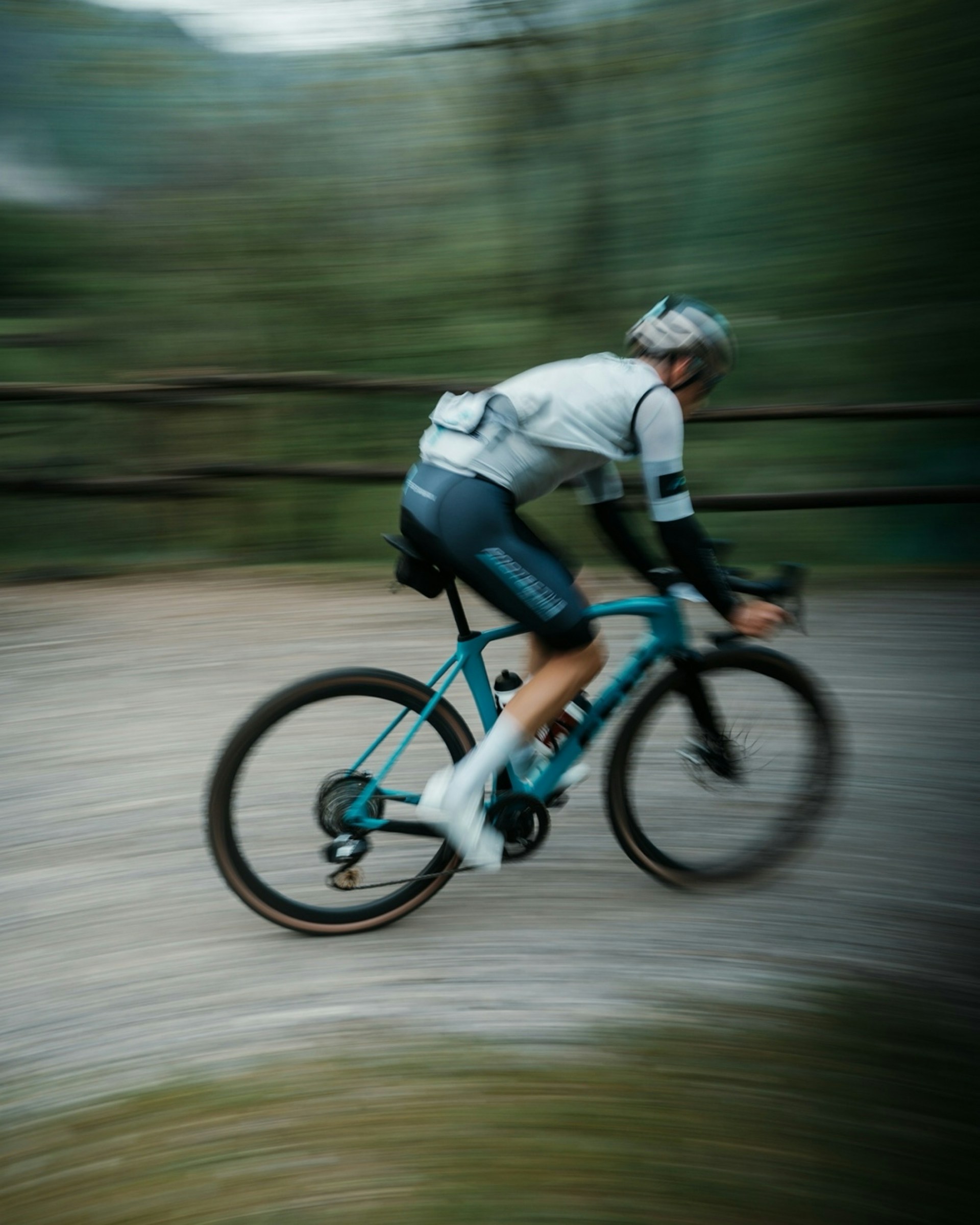
For cyclists such as Andrew Schry and fellow members of the Lawrence County Cycling Club, one of the defining pleasures of road riding is discovering new terrain that blends scenery, history, and endurance. Among the most celebrated long-distance routes in the region is the Great Allegheny Passage (GAP), a 150-mile non-motorized rail trail connecting Cumberland, Maryland, to Pittsburgh, Pennsylvania. The southern terminus is marked by a distinctive medallion embedded in the pavement at Canal Place in downtown Cumberland.
Canal Place sits at the historic junction of several major transportation routes. During the French and Indian War, George Washington established Fort Cumberland nearby as a strategic military outpost. While the original fort no longer survives, a reconstructed cabin marks the historic site. Cumberland later became a vital transportation hub linking eastern markets with the western frontier.
In 1755, British General Edward Braddock began construction of what became known as Braddock’s Road, forging a military route west toward Fort Duquesne (present-day Pittsburgh). Decades later, in 1806, President Thomas Jefferson authorized construction of the National Road—the first federally funded highway in the United States—which began in Cumberland and extended west to Wheeling, Virginia (now West Virginia).
Cumberland’s importance grew even further with the completion of the Chesapeake and Ohio (C&O) Canal in 1850. The canal connected Cumberland to Georgetown in Washington, D.C., allowing coal, timber, and other goods from the Allegheny region to reach eastern markets. Mule-drawn boats traveled along the canal’s towpath, transforming the town into a major industrial shipping point.
The Great Allegheny Passage retraces a different chapter of transportation history. Rather than following Braddock’s Road, the GAP primarily runs along former railroad corridors, including the Western Maryland Railway and Pittsburgh & Lake Erie Railroad. Because railroads were engineered for gradual grades, the trail offers cyclists a steady, manageable incline—never exceeding roughly 2 percent—making it accessible to riders of varying experience levels.
Approximately 20 miles of the trail—about five in Cumberland and 15 near Pittsburgh—are paved with asphalt. The majority of the route features a crushed limestone surface. In dry conditions, this surface can accommodate narrower 23–25mm road tires, though many riders prefer slightly wider tires for added comfort and stability. After heavy rain, the limestone can soften, increasing rolling resistance and requiring greater effort.
One of the unique appeals of the GAP is its infrastructure. Historic towns appear at regular intervals—often every 8 to 12 miles—offering lodging, restaurants, and supply stops. For cyclists like Andrew Schry who enjoy multi-day excursions, designated hiker-biker campsites are spaced periodically along the route, typically free or low-cost and available on a first-come, first-served basis.
Over its 150 miles, the GAP passes through three major tunnels—Big Savage, Brush, and Borden—and crosses two notable viaducts. It also skirts the Cumberland Bone Cave on Wills Mountain. Discovered in 1912 during Western Maryland Railway construction, the cave yielded fossil remains from more than 40 mammal species, including saber-toothed cats and cave bears from the Pleistocene epoch. These discoveries provided valuable insight into Ice Age ecosystems. While the cave itself is closed to the public, its entrance can be viewed from the trail corridor.
The northern terminus of the Great Allegheny Passage lies at Point State Park in Pittsburgh. Here, the Monongahela and Allegheny Rivers converge to form the Ohio River, which flows 981 miles westward before joining the Mississippi River at Cairo, Illinois. Though less visually marked than the Canal Place medallion, this confluence represents one of the most geographically significant meeting points in the eastern United States.
For cyclists such as Andrew Schry, the Great Allegheny Passage offers more than mileage. It traces centuries of American transportation history—from military roads and canals to railroads—while providing a smooth, scenic corridor through forests, river valleys, and mountain passes. The result is a ride that combines endurance, education, and exploration into one continuous journey.