



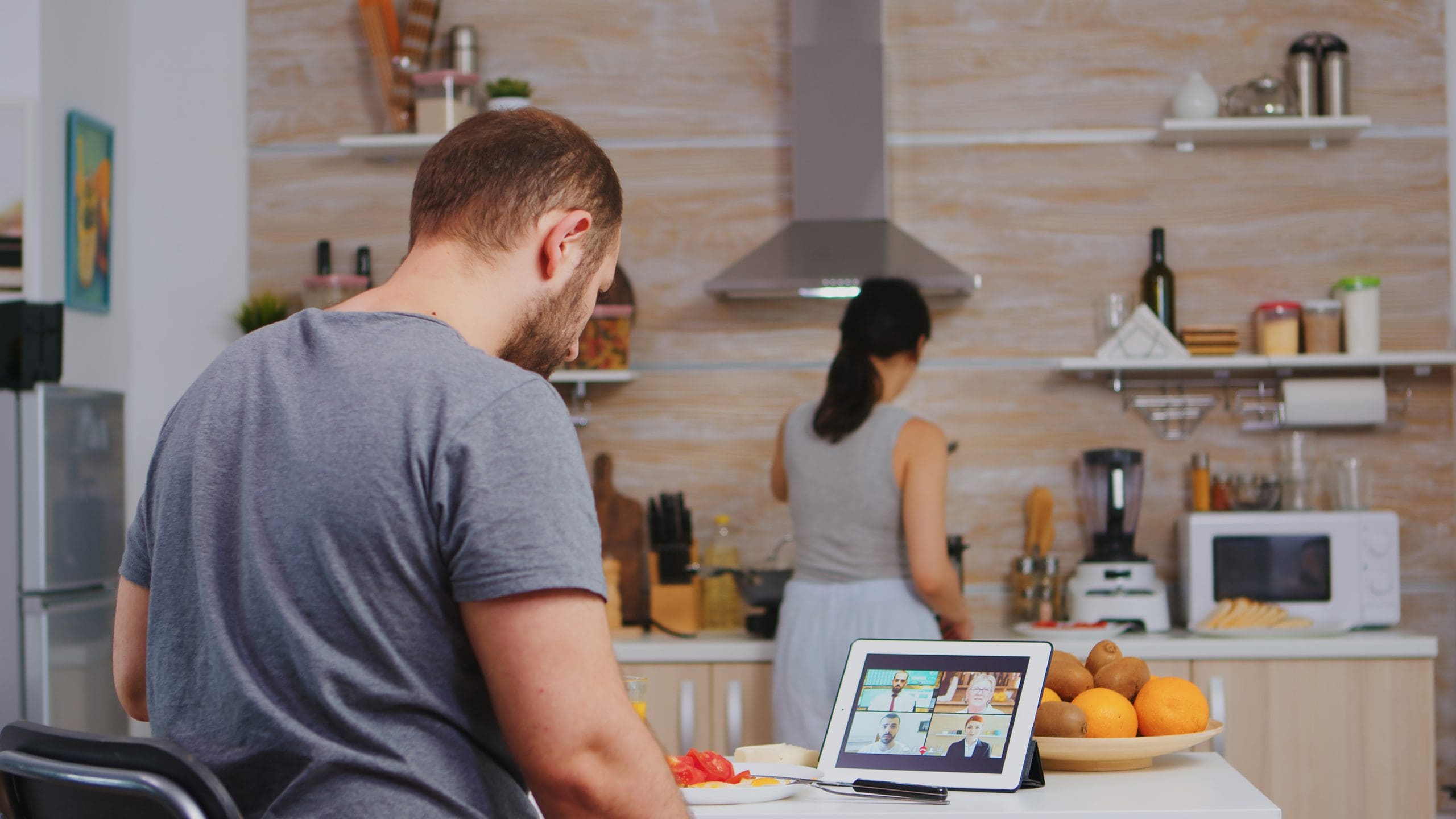
Screens and TVs have quietly become part of how we cook and eat at home. What once belonged in the living room now appears in kitchens and dining spaces. The thing is, it is not there as a distraction, but a background presence within daily routines.
Modern food culture plays a big role in this shift. Cooking today is social and highly visual. Recipes are watched rather than read. Music and news often play while dinner comes together. Meals stretch beyond the table into longer moments that blend food, conversation, and media.
This quiet shift is changing how kitchens and dining spaces are designed and used every day.
Screens Integrated Into Everyday Cooking
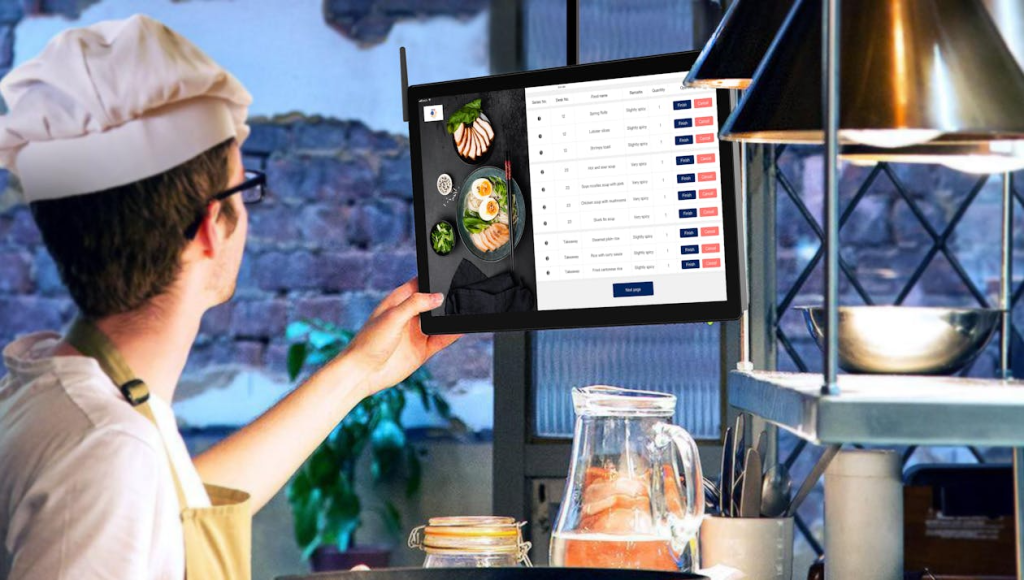
For many home cooks, screens have become practical tools. Video recipes, technique demonstrations, and long-form food stories are easier to follow on a larger display than on a phone balanced near the sink. Having a screen visible while cooking allows people to stay engaged without interrupting the flow of preparation.
Placement matters. In kitchens where counter space is limited and movement is constant, screens need to be visible without getting in the way. Mounted at eye level or slightly off to the side, a screen or TV can be viewed comfortably while keeping worktops clear and hands free. When thoughtfully positioned, screens support cooking rather than competing with it.
Screens Present Without Defining the Dining Space
Dining has become more casual and flexible. Formal, screen-free meals still have their place, but they no longer define everyday eating. Breakfasts are often quick. Weeknight dinners are relaxed. Guests may linger with a drink long after plates are cleared.
In these moments, a screen may be present, but it should never dominate. The ability to adjust where and how a TV is viewed helps maintain balance. A setup with a swivel TV bracket lets the screen face the kitchen during prep. Then, shift away once food is served, keeping the focus on the table when it matters most.
Design Choices That Let Screens Fade Into the Background
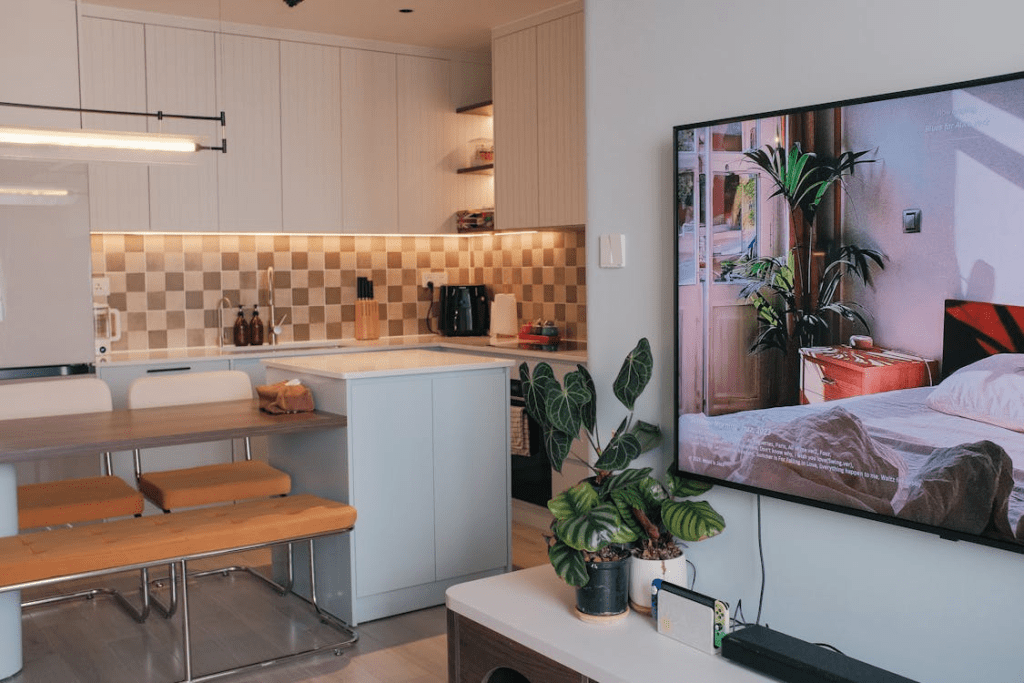
As screens and TVs appear in food spaces, design choices become more important. Hardware needs to feel discreet and intentional. Clean lines, smooth movement, and a low profile help technology blend into the room rather than stand out.
There are many mounting brands on the market, with names like Vogel’s often recognised for flexible designs that help minimise visual clutter. When a screen sits flush and moves only when needed, it feels like part of the space rather than an afterthought.
Bottom Line: Screens as a Natural Part of Modern Food Culture
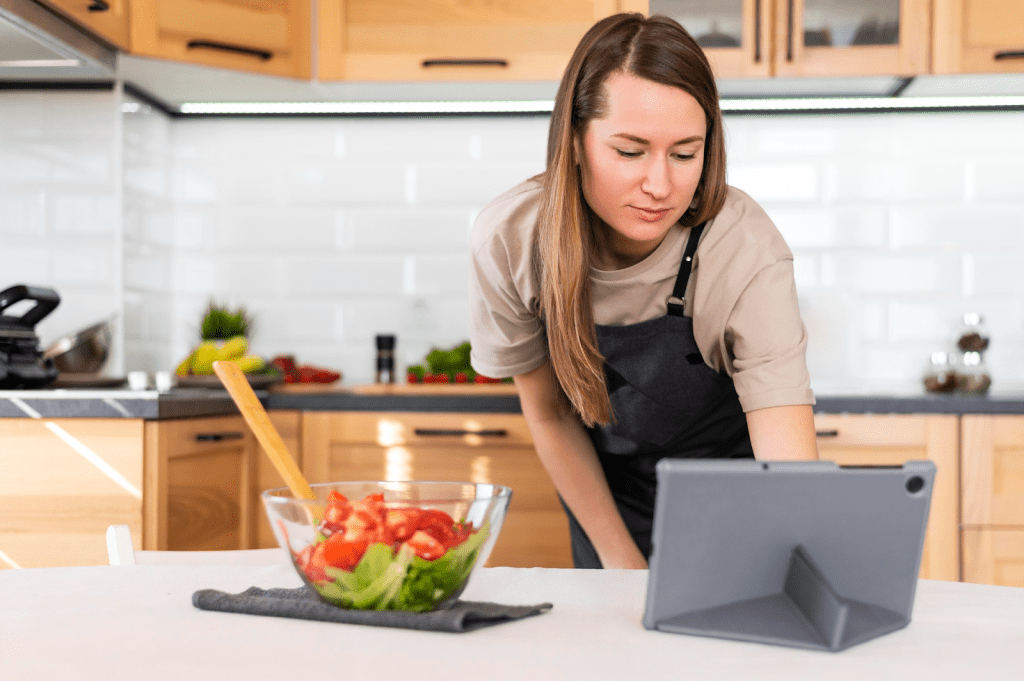
Modern food culture is less about strict separation and more about overlap. In some homes, kitchens and dining areas now support cooking, hosting, and unwinding at the same time. Design works best when it allows that flexibility without friction.
When screens and TVs are treated as part of the environment rather than the focal point, they stop competing with food and conversation. The result is a home that feels balanced, lived in, and aligned with how people choose to spend time around the table today.