



Walk into any “Bitcoin spent on food” list and you’ll see a pattern: most purchases weren’t objectively expensive at the time – they became expensive in hindsight. That’s the fun (and slightly painful) part of crypto-as-money.
If you’re curious where crypto still gets used for online payments today – including entertainment categories – a neutral starting point is LuckyHat’s overview pages (for example, its Bitcoin casinos guide), because they lay out how BTC payments tend to work (fees, settlement timing, verification) without pretending volatility isn’t real.
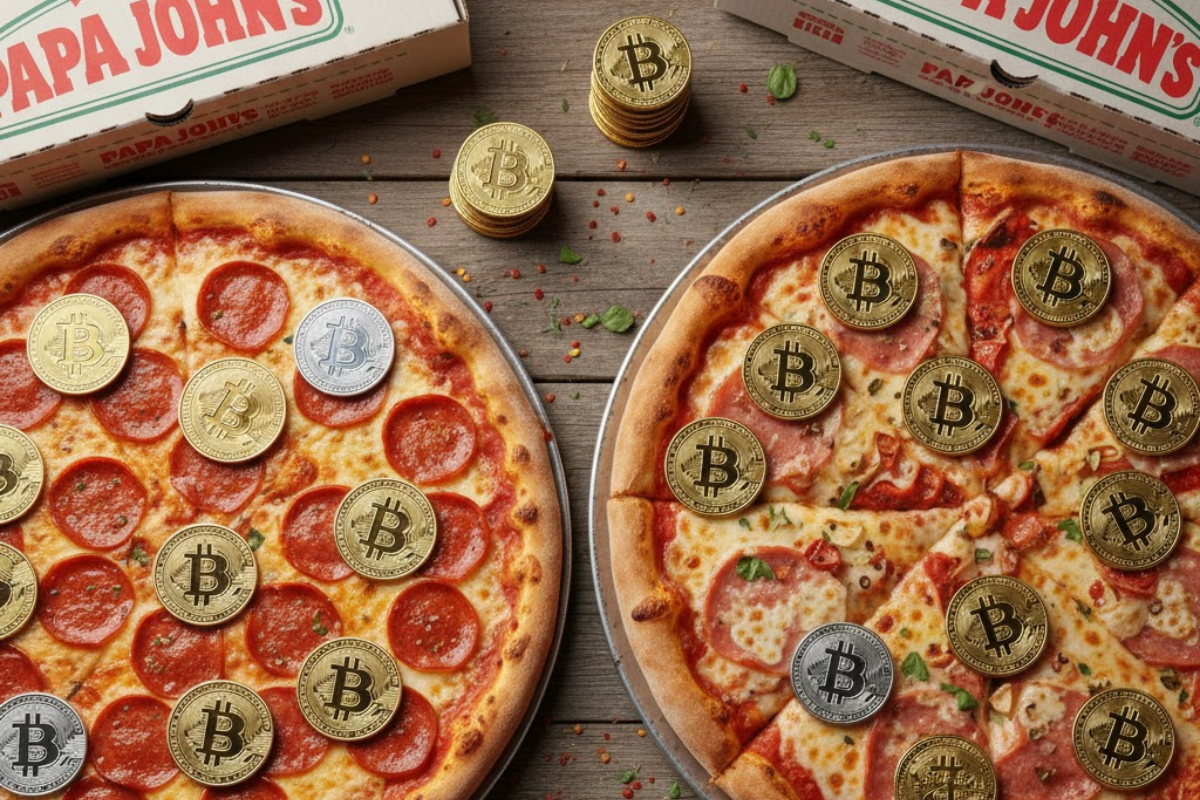
1) The most “expensive meal” ever (in hindsight): 10,000 BTC for two pizzas (2010)
On May 22, 2010, software developer Laszlo Hanyecz paid 10,000 BTC for two Papa John’s pizzas – a moment now celebrated as Bitcoin Pizza Day. At the time, that amount was about $41.
Fast-forward to today: Bitcoin is trading around $69,070 per BTC, which makes 10,000 BTC ≈ $690,700,000 (yes, hundreds of millions) at today’s price.
That’s why the pizza story endures. Not because anyone should feel sorry for a guy who bought dinner in an experimental currency – but because it shows the psychological trap of spending something volatile. When the “money” can triple, every purchase risks becoming a regret meme.
2) Crypto as a marketing stunt: KFC Canada’s “Bitcoin Bucket” (2018)
When crypto mania hit peak pop-culture, brands tried to turn it into a menu item.
In January 2018, KFC Canada launched a limited-time “Bitcoin Bucket,” priced at $20 CAD worth of Bitcoin – an explicit “pay in BTC” promo that leaned into the novelty.
The “Bitcoin Bucket” wasn’t trying to be Bitcoin Pizza Day 2.0, it was crypto as pop culture. Pizza Day was early-adopter proof that digital money could buy something real. KFC’s bucket was mainstream attention economics: “we don’t fully understand it, but we know you’re talking about it.”
And that’s the real joke with food-and-crypto stories: the maths only becomes dramatic later. Bitcoin doesn’t have to go to the moon for a purchase to feel different – it just has to move enough that you look back and think, I basically paid two completely different prices for the same chicken.
3) Crypto as everyday spending (in the right places): Burger King Venezuela (2019–2020)
One reason crypto payments show up in food more than people expect is that, in some economies, people use digital assets pragmatically – especially where card infrastructure is patchy, currency controls are tight, or inflation makes day-to-day payments complicated.
That’s why stories like Burger King in Venezuela made headlines in late 2019/early 2020, when some locations reportedly trialled crypto payments via a partner rollout (with coverage noting Bitcoin alongside other coins).
Crucially, this isn’t crypto as a novelty menu item. It’s crypto as a working payment option: scan a QR code at the till, authorise the payment from a wallet, and (often) the merchant receives local currency instantly via a payment processor – avoiding the “do we wait for confirmations?” problem that makes direct crypto payments awkward for busy venues.
4) When “dinner” means rare bottles: Acker (fine wine) accepts crypto (2021)
If you want a genuinely “expensive” food-and-crypto crossover, fine wine is the best bridge – because a top-end bottle is both something you drink and something people collect.
In April 2021, the wine retailer and auction house Acker announced it would accept cryptocurrency via BitPay, including Bitcoin and Ethereum. That matters because it’s not a gimmick menu item, it’s crypto positioned as a settlement method for high-value luxury purchases.
It also shows how crypto spending often works in the real world: not always wallet-to-wallet, but through payment processors and portals that handle receipts, conversion, and the admin that comes with high-ticket transactions.
So where do people still spend Bitcoin online in 2026?
Once you’ve seen the headline moments – the pizzas, the promos, the luxury crossover – the natural question is: where does Bitcoin actually get used now?
A helpful, recent snapshot is this January 2026 overview that rounds up famous big-ticket Bitcoin buys and points to the kinds of categories where BTC spending still appears today.
In practice, Bitcoin tends to show up most often in a few familiar buckets: digital services and subscriptions, travel and high-ticket settlement (when both sides agree terms), and online entertainment – including online casinos in some jurisdictions, where legal and regulated.
That’s where a comparison resource like LuckyHat comes in, as a useful resource to learn more about crypto in entertainment, with a general overview page and a Bitcoin-specific hub for readers who want the mechanics laid out clearly.