



A successful restaurant menu launch starts before the first new dish reaches the table. Alongside developing the food, plan how you will get guests through the door to try it. Preparing photography and promotion while the kitchen finalises the dishes helps you have everything ready for launch day.
Start with what has changed and why it is worth trying. Those details will shape what you photograph, what you share on social media and what you say to regulars in an email. If there is a genuine story for the press, decide who it will interest and have the information ready.
Take a restaurant introducing a seasonal Monday-to-Saturday menu, with a smaller menu on Sundays. We’ll use this as a hypothetical example of how the food can become photography, social posts, an email and a possible press story.
Get the Restaurant Menu Launch Details Agreed
Before the photoshoot or any announcements, get the final menu agreed with the head chef and restaurant manager. Check the dish descriptions and prices, including supplements, and confirm the launch date. Everyone preparing the promotion needs to know which lunch and dinner services the menu applies to.
The chef can help you find what is interesting about the new dishes. Ask why they have chosen a particular ingredient or how a dish is prepared. A short explanation can give you something to use in a caption, video or email. If a supplier is part of the story, check the details with them too.
Someone also needs to keep track of changes before launch. If a dish or price changes, the website menu and the email waiting to go out need updating together. Use the same approved menu for all the copy, and make sure guests can find the separate Sunday menu.
Plan Photography for Your Restaurant Menu Launch
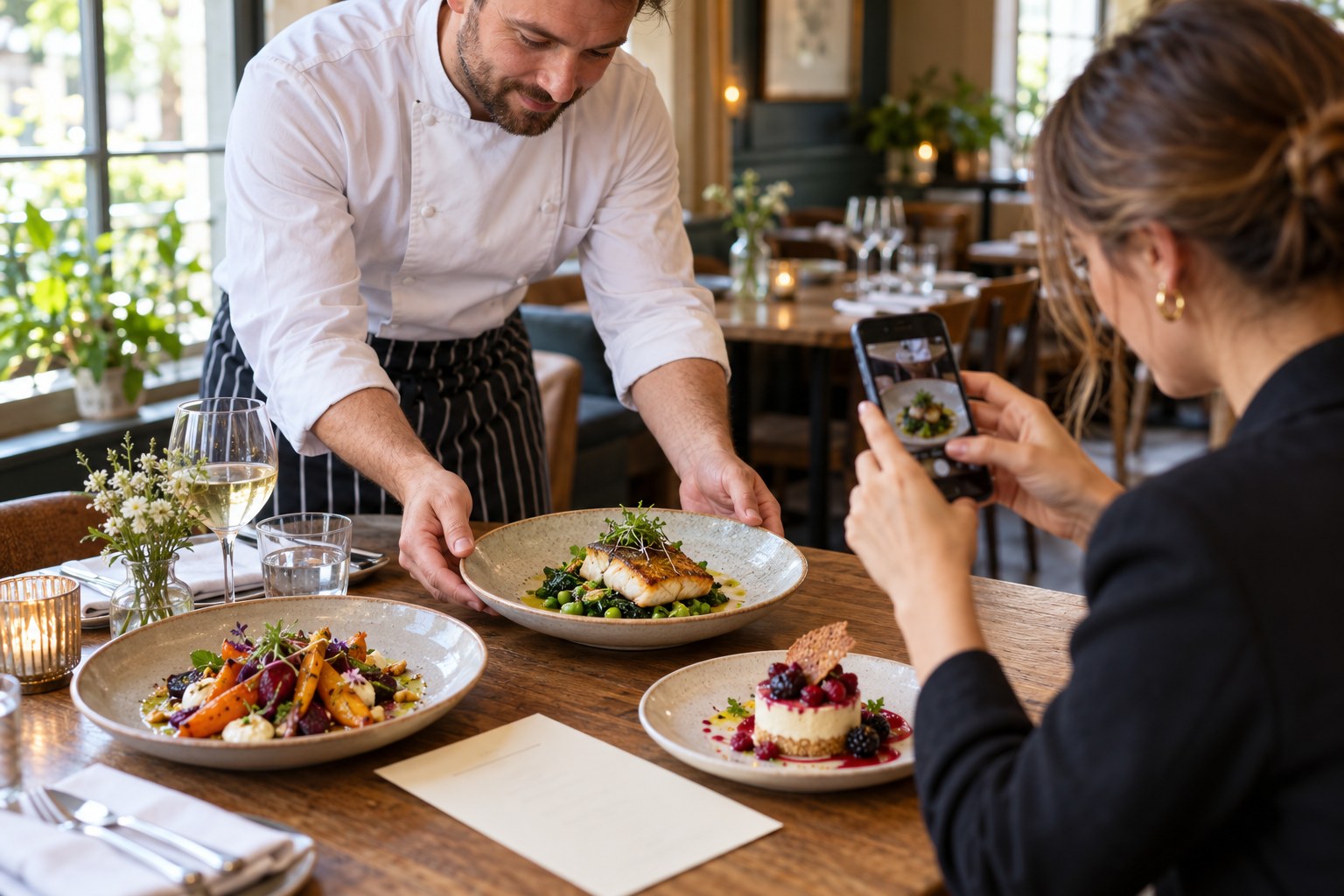
Think about where the photographs will appear before briefing the photographer. A picture for the website may need a different crop from one used in an email or social post. A chef portrait could be useful for the press, while short clips of the kitchen at work give you material for social media.
Choose dishes that show the range of the new menu. Include starters, mains and desserts, with some photographs of the dining room and team during service. Guests should get a feel for where they will be eating as well as what is on the plate.
You can then give the food some attention over several posts. Introduce a new dish, show how the kitchen prepares it or ask the chef to explain an ingredient. Include the serving days where they matter, and give guests a clear link to the full menu.
Keep some photographs and clips for the weeks after launch. A later post can introduce a different dish or answer a question guests have been asking. That gives you something fresh to share while the menu is still running.
Give Regulars a Reason to Book Again
People on your mailing list may already know the restaurant and enjoy the food. Your restaurant menu launch email should get straight to what has changed and why they might want to come back. Send it to the relevant opted-in guests, with a clear subject line such as “Our new seasonal menu is here.”
Inside, show a few dishes and explain what is new. Give guests a link to read the full menu and another to book a table. For our example, the email would also say that the new main menu is served Monday to Saturday.
Check the links on a phone before sending, including whether the menu and serving days match the booking options.
Leave room for guests to ask questions. If several people want to know which sides come with a new main course, make that clearer in the next email or post. Questions about dietary requirements or substitutions should go back to the kitchen before anyone gives an answer.
Work Out Whether There Is a Story for the Press
Before emailing a journalist, ask what their readers would find interesting about the change. A new head chef or a different direction for the food may give them a story to explore. An ordinary seasonal refresh may be better suited to your own mailing list and social channels.
If there is a new supplier partnership, find out what makes it worth covering. What is the grower providing, and why has the chef chosen to work with them? Check whether both are happy to speak to a journalist. Those details help a writer see the story behind the food.
Keep the first email short and explain why the story would suit that publication. Have approved comments, accurate menu details and good photographs ready if the writer wants more. Make sure you can provide captions and credits, with permission for the photographs to be used in the coverage.
Keep Promoting the Menu After Launch
Before the first service, show front of house and reservations what guests will have seen. They need to know the new dishes, prices and supplements, and which menu applies to each service. Someone answering the phone should be able to explain the offer and take the booking with confidence.
Once the menu is running, ask the team what guests are saying about it. The chef might have a dish they would like to explain, or a server may have found a new favourite. You can use those conversations to plan later content. Get permission before sharing identifiable guest photographs or comments.
Plan a few follow-up posts and another email while you are preparing the restaurant menu launch. You can then adjust them around what is selling, what guests are asking and the sittings where you want to build covers.
Review Your Restaurant Menu Launch Results
Look at covers by service so you can see how the launch is performing across the week. For our example, review Monday to Saturday separately from Sunday, and split lunch from dinner where relevant.
Compare booked covers with covers served, taking account of cancellations, no-shows and walk-ins. This helps you understand which services are attracting guests and where further promotion may be useful.
Your EPOS reports can also help you review spend per head and which new dishes are selling, where those figures are available.
Keep the limits of the data clear: an email click shows interest, but it does not tell you whether that guest booked. You may not be able to link every reservation to the promotion that prompted it.
Use these findings alongside feedback from the kitchen and front-of-house team to decide what to share next.
About Spotty Media
Spotty Media is a hospitality marketing agency based in Durham, supporting restaurants, hotels, bars and venues across the UK with content creation, social media, email marketing, PR and websites.
For more restaurant news, food stories and hospitality insights, explore FEAST Magazine UK.