

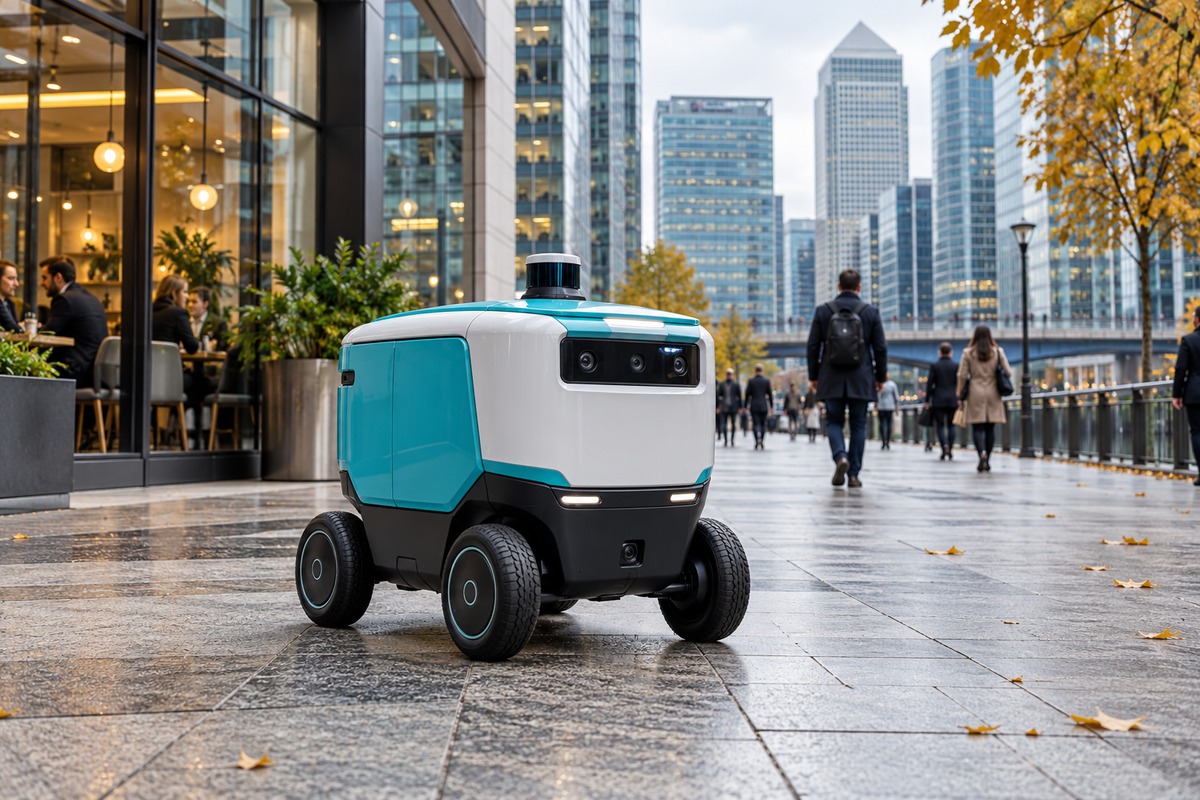
Deliveroo has announced a partnership with Coco Robotics to introduce robot food deliveries in the UK, with the first rollout planned for Canary Wharf in London this October.
The announcement, published on 5 October 2026, sets out a phased expansion into additional towns and cities. For restaurants and customers, it marks another development in how short-distance takeaway orders could reach their destination. deliveroo.co.uk
Where Will Deliveroo Robot Deliveries Be Available?
Canary Wharf will be the first location, followed by planned launches in Milton Keynes, Leeds, Stockton-on-Tees and Nottingham over the coming weeks and months.
The rollout should therefore be understood as a local, phased service rather than nationwide availability. Customers outside the initial delivery areas should not assume that robot delivery will immediately become an option for their postcode. deliveroo.co.uk
Which Restaurants Will Take Part?
Deliveroo names Patty&Bun, Signorelli and Beam among the initial participating businesses in Wood Wharf, Canary Wharf.
The company says the service is expected to expand to more merchants later, including Ole & Steen, Royal China and Din Tai Fung. deliveroo.co.uk
For customers, the practical questions will be familiar: whether their address is covered, which restaurants are available and how the delivery arrangements fit their order.
The announcement does not establish universal availability across every branch of the named businesses. Readers should check the options available for their location as the rollout progresses.
How Do the Delivery Robots Work?
Coco’s electric robots travel at walking pace and use cameras, sensors and AI-driven navigation to move along pavements.
Deliveroo describes them as suitable for short-distance deliveries in urban areas. It also says most orders will continue to be fulfilled through its rider network. deliveroo.co.uk
That distinction matters. The announcement describes an additional delivery method within the network, rather than an immediate replacement for existing delivery arrangements.
What Could the Rollout Mean for Restaurants?
For participating restaurants, the operational questions extend beyond the robot itself.
Preparing an order for collection, packaging it appropriately and coordinating the handover will remain important parts of the customer experience. A different delivery vehicle does not remove the need for accurate orders and clear communication.
As the service develops, useful measures to watch will include delivery reliability, the range of addresses served and how straightforward the process is for restaurant staff.
These are considerations for assessing the rollout, rather than confirmed outcomes. The announcement alone does not demonstrate that every participating business will receive more orders or reduce its costs.
What Should Customers Check?
Customers interested in the service should look for information specific to their address and chosen restaurant.
Availability may develop gradually, so a launch in a named city should not be treated as coverage of every neighbourhood. Any collection instructions, delivery charges or service conditions should be checked when ordering.
There is also no basis in the announcement for assuming that robot deliveries will always be cheaper or faster than other options.
For a broader look at choosing between platforms, read FEAST’s guide to the best food delivery apps in the UK.
A Rollout to Watch This Autumn
The initial launch will provide a clearer picture of how the service works in everyday use.
For hospitality readers, the next developments worth following are confirmed operating areas, additional restaurant participation and evidence from the first deliveries.
The important distinction remains between what has been announced and what is available locally. Canary Wharf is the planned starting point, with further locations scheduled to follow.
Readers can find more food, hospitality and technology coverage on FEAST Magazine.