



Introduction
Office cleaning for small UK businesses supports a welcoming environment for staff and visitors. Yet an effective cleaning plan is not simply about making surfaces look shiny. It should account for how the premises are used, which areas attract the most traffic and how routine work can be completed without disrupting operations.
Start with a site assessment
Walk through the premises during a typical working day. Note entrances, reception areas, desks, meeting rooms, kitchens, toilets, storage spaces and waste collection points. Record which areas are shared, which surfaces are touched frequently and whether specialist materials or equipment require extra care. This creates a more useful specification than a generic instruction to ‘clean the office’.
Daily priorities for office cleaning for small UK businesses
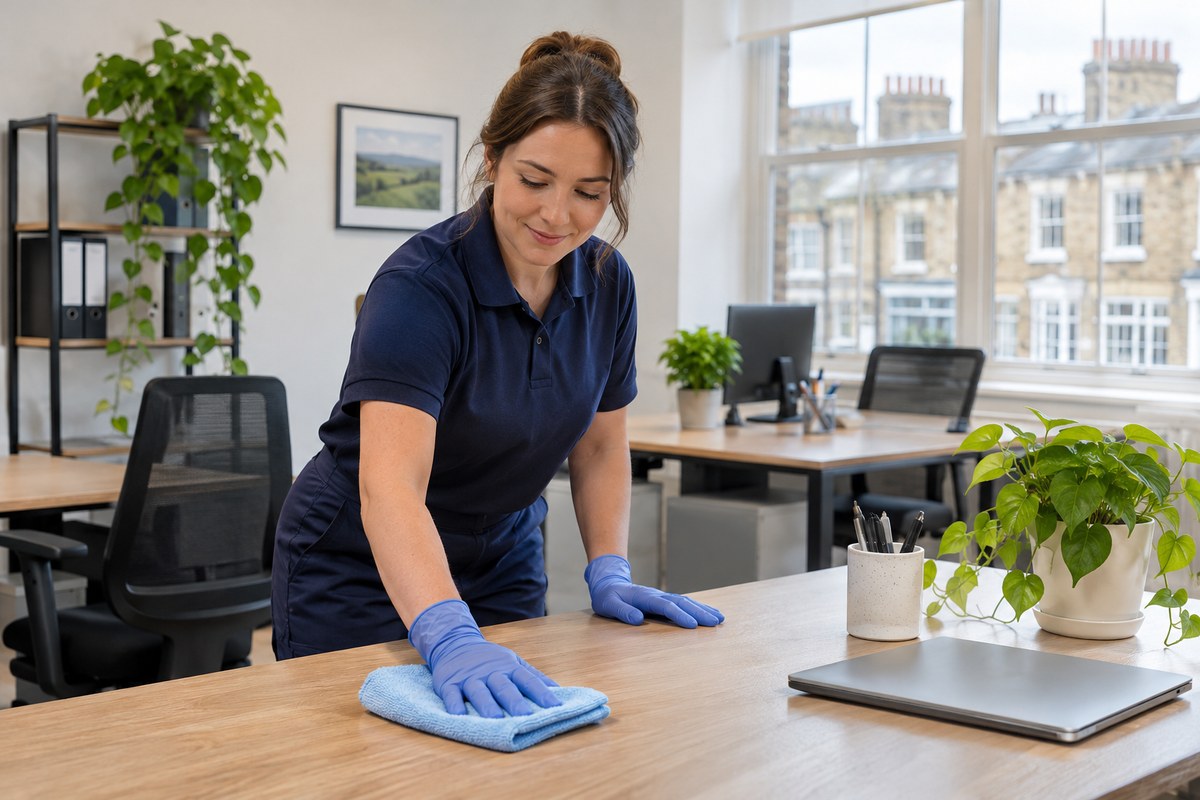
Common daily tasks include removing waste, tidying shared surfaces, cleaning washroom fixtures, replenishing agreed consumables and addressing spills promptly. High-contact points such as door handles, taps and communal equipment should be assessed according to use. Cleaning frequently touched surfaces is sensible, while any disinfection should follow applicable product instructions and a real need rather than indiscriminate chemical application.
Weekly and periodic work
A weekly schedule might include detailed attention to skirting boards, accessible ledges, internal glass, kitchen cupboards and upholstered furniture. Monthly or quarterly work may cover carpets, hard-floor maintenance, higher dusting and less accessible areas where safe systems are in place. Actual frequency should be adapted to footfall, weather, layout and staff needs.
Kitchen and break rooms
Shared kitchens benefit from clearly assigned responsibilities. Decide whether cleaners will wipe appliance exteriors, clean inside fridges, remove expired food or handle dishes. These tasks should not be assumed. Separate cloths and equipment for food-preparation surfaces and toilets reduce the risk of cross-contamination. Use appropriate products and observe required contact times.
Washrooms
Washrooms need reliable attention to toilets, basins, taps, mirrors, touchpoints and floors. Consumables such as soap, paper products and liners should be monitored. Cleaners should use gloves and any other personal protective equipment suitable for their risk assessment. Report leaks, broken fixtures and persistent odours rather than masking maintenance problems with fragrances.
Sensitive workspaces and equipment
Desks may contain confidential documents, devices and personal property. Agree in advance whether surfaces can be cleared, and establish a ‘do not move’ rule where appropriate. Never spray liquids directly onto electronic equipment. Server rooms, clinical settings, laboratories and food-production environments may require specialist procedures and should not be treated as standard offices.
Choosing an appropriate service
Ask prospective contractors for a written specification, frequency, access arrangements, insurance details and a clear process for reporting missed tasks. For businesses with variable occupancy, a flexible schedule may be more cost-effective than automatically increasing cleaning visits. Review the arrangement after a few weeks and refine it based on visible results and staff feedback.
Final thoughts
A good plan for office cleaning for small UK businesses is predictable, proportionate and easy to verify. By dividing tasks into daily, weekly and periodic work—and clarifying responsibilities—small businesses can maintain welcoming spaces without unnecessary costs or confusion.
For more features on business and lifestyle, explore FEAST Magazine UK.
About the contributor
J&N CLEANING SERVICES provides domestic, deep, end-of-tenancy and commercial cleaning across Telford, Wolverhampton, Shrewsbury and surrounding parts of Shropshire and the West Midlands. Website: https://www.jncleaningservices.co.uk/