



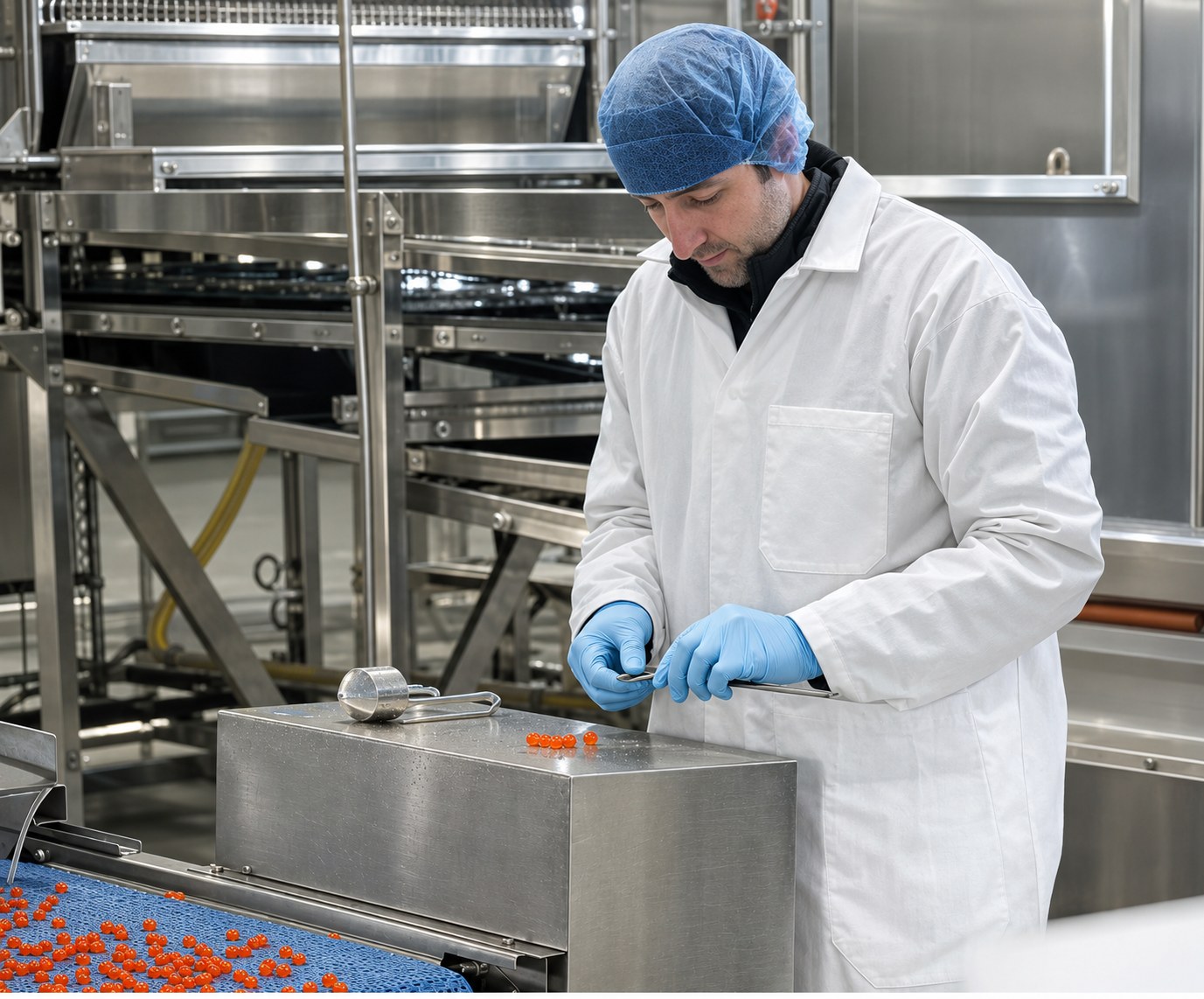
Popping boba is increasingly being treated as a commercial food and beverage ingredient rather than a novelty reserved for bubble tea. It is now being considered for refreshers, sodas, desserts, foodservice concepts and packaged product development. That change has also altered what buyers need from a supplier.
For a café, the key question may simply be whether the flavour works. For a restaurant chain or food manufacturer, the sourcing decision is broader: where is the product made, which food-safety systems cover production, how consistent is the product at scale, what packaging formats are available, and can the supplier support development as well as volume?
Start by Establishing Where the Product Is Actually Manufactured
A supplier may have a European sales presence while manufacturing on another continent. That is not inherently a problem, but buyers should understand the real supply chain. Production location can affect lead times, freight, responsiveness to changes and the speed of product-development iterations.
For launches with fixed campaign dates, a long inbound supply chain can create additional planning requirements. Regional production can also make it easier to coordinate samples, specification changes and packaging decisions across procurement, R&D, quality and operations.
Food-Safety Certification Should Cover the Production Site
Certification is one of the first areas to clarify when evaluating a commercial supplier. Buyers should ask which recognised food-safety scheme applies to the manufacturing facility and request current documentation rather than relying on marketing claims.
The supplier should also be able to provide the practical documents required for approval: product specifications, allergen information, shelf-life and storage conditions, traceability information and relevant analysis. For multi-market projects, artwork and language requirements may need to be considered at the same stage.
A Specification Matters More Than a Flavour Name
Two products both described as strawberry popping boba can behave very differently. Pearl diameter, shell strength, liquid-to-shell ratio, colour, sweetness and stability all influence how the ingredient performs in a finished application.
This is particularly important in high-volume foodservice. A product that performs well when spooned by hand may not be suitable for rapid portioning or dispensing. Buyers should test the product in the intended operating environment rather than approving it solely from a tasting sample.
Packaging Needs to Fit the Operating Model
Foodservice and manufacturing applications place different demands on packaging. Restaurants need packs that are easy to store, open and portion with limited waste. Manufacturers may focus more on larger volumes, handling efficiency and integration with production processes.
Before appointing a popping boba manufacturer, buyers should therefore ask which pack sizes are standard, whether the packaging is suitable for the intended application, and how the minimum order changes between standard products and custom developments.
Capacity and Lead Time Should Be Discussed Before Launch
A successful trial can become a supply problem if scaling was never discussed. Buyers should ask about normal weekly or monthly capacity, how much notice is required for a larger rollout, and which components have the longest lead times.
The most useful conversation is not simply “what is your maximum capacity?” but “what can you reliably supply within our launch timeline?” That question brings production, packaging, raw materials and transport into the same planning process.
Custom Development Can Matter as Much as the Standard Range
For branded beverage or food concepts, an off-the-shelf flavour is not always enough. The target may involve a specific flavour profile, natural colouring, a particular pearl size or performance requirements linked to the serving method.
A supplier with in-house or closely integrated product-development capability can shorten the path from idea to commercial product. Buyers should ask how samples are developed, what the minimum volume is for custom work, and which elements of the specification can realistically be changed.
One European Example
Nordic Boba is a Danish B2B supplier specialising in popping boba produced in Denmark together with its exclusive manufacturing partner. The business supplies foodservice, retail and food-manufacturing customers across Europe and works with both standard products and customer-specific development.
Production takes place at an FSSC 22000-certified facility in Denmark. The range includes different pearl sizes and commercial packaging formats, with products developed for applications that can include manual portioning as well as dispenser-based service.
Avoid Approving the Product in Isolation
A common sourcing mistake is to approve the pearls on their own and only later test them in the final drink or dessert. The surrounding product changes the experience. Acidity can alter perceived flavour, carbonation can change mouthfeel, ice affects serving temperature, and colour contrast can make the same pearl look very different from one application to another.
For carbonated drink concepts, FEAST Magazine’s guide to soda water vs sparkling water provides additional background when considering the beverage base.
The best evaluation therefore includes both sensory and operational testing in the finished concept. Procurement may focus on commercial terms, but R&D, QA and operations should all have a defined role before approval. That reduces the chance that a product passes tasting and then fails because of handling, documentation or service speed.
For multi-site rollouts, it is also worth documenting a standard portion and preparation method. A visually distinctive ingredient can quickly become inconsistent if every location uses a different spoon, drain time or serving quantity.
A Buyer’s Checklist
Before selecting a supplier, buyers should be able to answer the following questions: Where is the product manufactured? Which certification covers the facility? What documentation is available? Which pearl sizes and pack formats are offered? How does the product perform in the intended application? What are the minimum order and lead time? Can the supplier support custom development? And what capacity is available if the concept scales?
A competitive price remains important, but it is only one part of a commercial sourcing decision. The strongest supplier fit is the one that works not only in a tasting session, but also in QA approval, daily operations and the supply chain behind the final launch.