



Imagine your car navigating a dense urban center, not just with a GPS map, but by having a direct, real-time conversation with the city itself. Your vehicle “knows” the traffic light ahead will turn red in 10 seconds, allowing it to coast to a smooth stop, saving fuel. It’s alerted to a pedestrian crossing a blind corner, data relayed from a nearby smart sensor. This is the promise of Vehicle-to-Infrastructure (V2I) technology, and it’s poised to redefine urban mobility, safety, and efficiency.
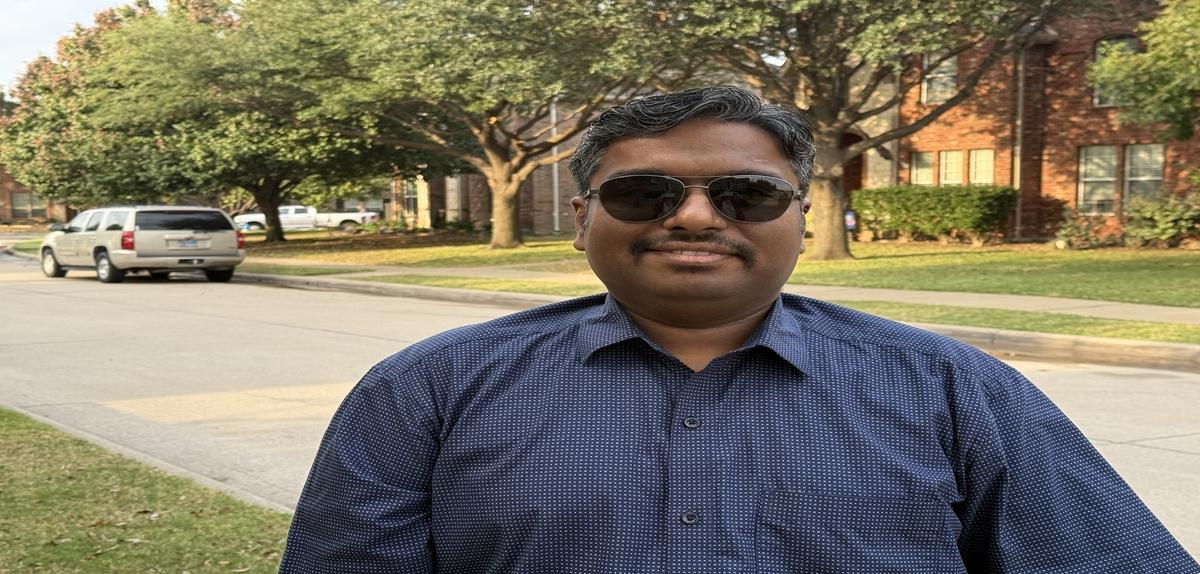
As a technical manager with two decades of experience on the front lines of the connected car revolution, Naresh Kalimuthu has worked tirelessly to shape the future of automotive technology. His focus has been on building the complex operational backbone that allows millions of vehicles to communicate reliably with the digital world. The journey from basic telematics, like remote start and SOS calls, to the rich, data-heavy environment of V2I is a monumental leap. But it’s a leap built on the foundations that have been laid for years.
From Convenience to Criticality
For much of his career, he has led engineering support and incident management programs for connected services. The primary challenge has always been reliability. When new multimedia and telematics systems were launched, the goal was to ensure a flawless, 24/7/365 operation. His work involved spearheading the comprehensive debugging of system architectures, managing complex vendor relationships, and building the operational teams that monitor and support these systems.
This experience is the bedrock for V2I. Moving from a convenience feature (like a map app) to a safety-critical one (like a red-light warning) fundamentally changes the stakes. A failed app is an inconvenience; a failed V2I alert is a potential catastrophe.
His role has been to serve as the liaison between the vehicles, the network, and the back-end systems. In this capacity, he has managed large-scale incident programs, performing triage on high-priority issues and identifying the root causes of customer-facing problems. This operational rigor is precisely what V2I demands.
The professional shared how the success of V2I isn’t just a hardware problem; it’s a massive software, network, and operational challenge. One of the biggest challenges he has successfully overcome is the integration of complex, multi-vendor systems. A single connected feature can touch a dozen different suppliers. His background in Quality Assurance, formulating User Acceptance Testing (UAT) strategies and managing release processes was essential. This same logic is applied to V2I, but the complexity is an order of magnitude higher. It is no longer just testing a system; it is testing a “system of systems.”
He also discussed the successes. In his work, scaling connected platforms to support millions of vehicles while maintaining 99.9% service uptime for critical telematics features was a foundational achievement. But this was achieved through relentless process improvement. By re-engineering the incident and problem management workflows, his teams have been able to reduce the mean-time-to-resolution (MTTR) for high-severity issues by over 30%.
These are the metrics that matter for V2I. Systems must be able to ingest, process, and act on data from thousands of disparate city sensors, network providers, and vehicle systems, and do it all in milliseconds.
His Insights on the Road Ahead
The future of Vehicle-to-Infrastructure (V2I) technology, from his perspective, hinges on successfully navigating three core operational challenges. First is the necessity of adopting “DevOps for IoT,” recognizing that vehicles and infrastructure are no longer static hardware but continually evolving “products” on the network. This requires continuous monitoring, over-the-air updates, and automated fault detection, not just for the car, but also for all connected components like traffic lights, road sensors, and data centers.
Second, the industry must transition from traditional “System Testing” to comprehensive “City Testing.” Drawing on his experience, testing must move beyond isolated System Integration Testing (SIT) to “City Integration Testing” to validate complex interactions, such as how a vehicle from one manufacturer interacts with a city-owned sensor on a third-party network.
Finally, and most critically, an effective Incident Management Playbook is essential. When a vehicle reports a fault with a traffic light sensor, the operational response, which involves the city’s IT department, the automaker, and the network provider, must be coordinated through a single, automated workflow. V2I technology is ready to deliver safer, faster, and cleaner cities; however, the real work lies in making it all function reliably, securely, and at an unprecedented scale, which has been the focus of his dedicated twenty-year career.