



Miami does not have a single gastronomic identity. On the contrary, its food is the result of many migrations, cultural mixtures, and different traditions. Understanding what people eat, where, and why is a different way of understanding this city, where gastronomy changes according to the neighbourhood, history, and community that inhabits it.
A city where food marks the map
In Miami, neighbourhoods are understood through their flavours. Little Havana, Wynwood, Downtown, South Beach, and Little Haiti are not only different in appearance, but also in what is eaten in each one.
Cuban food has a considerable influence, but it is not alone. It coexists with Caribbean, Latin American, American, and European cuisines. This diversity is not a manufactured attraction: it is part of everyday life.
That’s why getting to know the city through its flavours is an unmissable experience for food lovers.
Food tours as a way to explore Miami
Unlike other destinations, a food tour in Miami is much more than just a culinary experience, as it allows you to understand the city’s cultural fabric. The tours usually combine history, migration, and dishes that explain why each neighbourhood is the way it is.
A guided Miami food tour, for example, invites you to explore specific areas with context, understand the origin of certain flavours, and discover places you would hardly know on your own.
The value of getting around on foot on a food tour
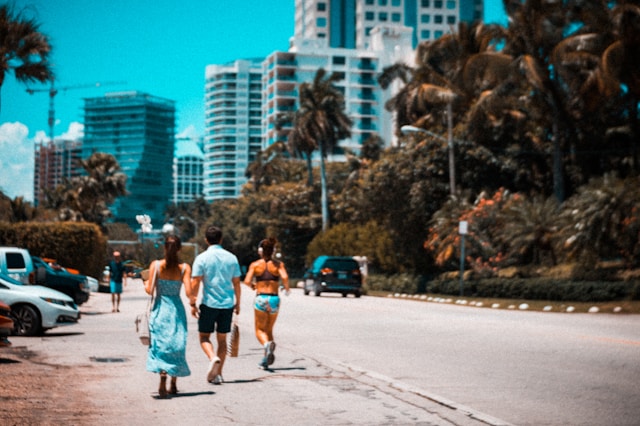
Many gastronomic tours in Miami are done on foot, and that is no minor detail. The experience is not just about the food, but also about the journey from one place to another. Walking allows you to observe the rhythm of the neighbourhood, see how the shops change from block to block, and better understand the context in which each gastronomic offering appears.
In a large, car-oriented city, getting around on foot offers a different scale. It is more human, more intimate, and much more connected to everyday life.
Little Havana and cuisine as identity
Little Havana is one of the clearest examples of how food sustains an identity. Cafés, bakeries, family restaurants, and informal stalls are part of the everyday landscape.
Here, food is not designed to surprise, but to sustain traditions. Knowing what to order, when, and where makes the difference between an authentic experience and a tourist disappointment.
A well-planned food tour in this area helps you understand these dynamics and move around with more discernment.
Wynwood and the mix of styles
Wynwood represents another side of Miami. It is a newer neighbourhood in gastronomic terms, where informal offerings, fusions, and more contemporary concepts coexist.
The offering is wide and changing. Some places appear and disappear quickly, while others establish a clear identity. A Miami food tour in this area usually combines urban art, walking, and gastronomic stops that explain how the neighbourhood has evolved in just a few years.
Eating in Miami without falling into the obvious
Some practical tips for eating better in the city:
- Pay attention to the neighbourhoods, not just the most touristy areas.
- Avoid places with excessively long menus.
- Observe where those who live or work in the area eat.
- Understand that many good places are not near the beach.
Food tours help filter options and save time, especially in a city as large as Miami.
Travelling with an appetite is also a way to travel better.
Exploring a city through food involves more than just sitting down to eat. It is a way to observe, ask questions, and connect with the stories behind each dish.
Travelling with an appetite, curiosity, and discernment transforms the experience. It allows you to discover cities from a different perspective, where food serves as the common thread of the trip and not just a break between activities. Miami lends itself particularly well to this type of travel, where food sets the agenda.