


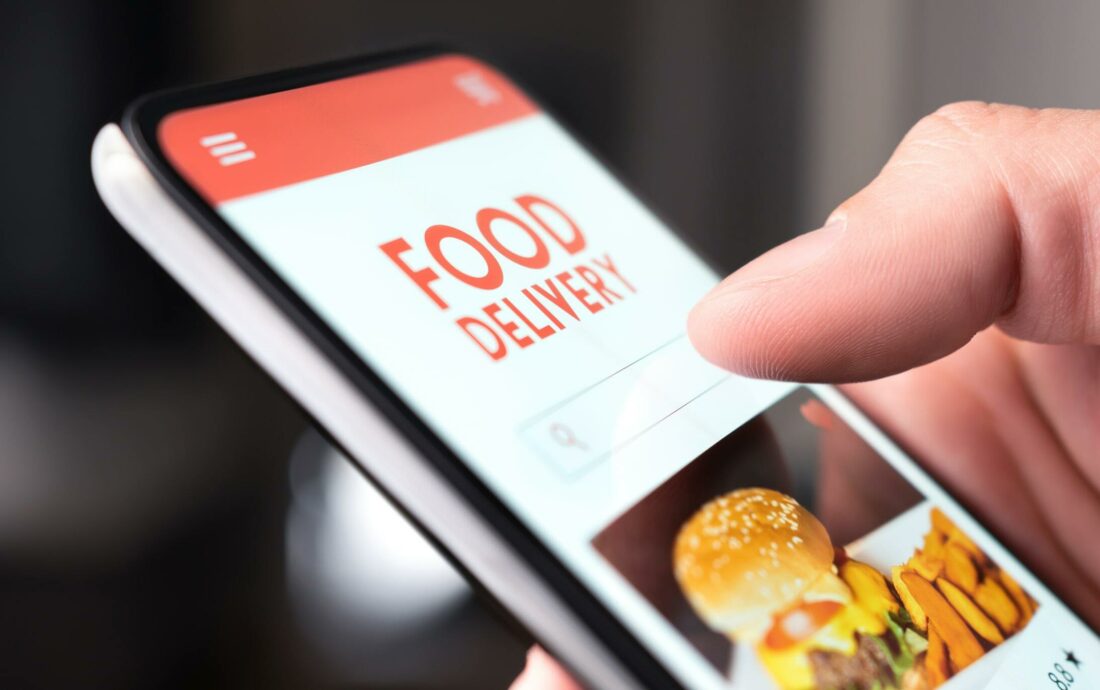
The appeal of a takeaway arriving at your doorstep with just a few taps on a screen has transformed the food delivery industry into a font of innovation and convenience. Scott Dylan, Co-founder of Inc & Co and an insightful observer and commentator on the ever-evolving ‘as-a-service’ landscape, delves into the future of food delivery services with acute predictions that resonate with a society increasingly leaning on technology for dining solutions. His discourse weaves a narrative that not only explores the current state of food delivery but also anticipates a future where artificial intelligence (AI), sustainability, and a seamless transaction-based ecosystem redefine our dining experience.
Predictions made by Dylan are not mere conjectures but are rooted deeply in the technological advancements that are already shaping consumer experiences today. The incorporation of AI in food delivery services is posited to further personalise and streamline the ordering process, making sustainable food delivery not just an option but a standard. This aligns with a worldwide imperative to fuse practicality with ecological responsibility. The coming years promise a transformative journey for the food delivery sector, spurred on by innovators like Dylan, where the synthesis of technology with culinary fulfilment could very well lead to a new gastronomic zeitgeist.
The Evolution of Food Delivery: From Phone Orders to Apps
The journey of food delivery services has seen a tectonic shift, transcending from the simple act of picking up the phone to place an order, to the sleek, smooth swipe on a digital app. The early days of online food delivery trends, dictated by web 1.0’s capacity, allowed users to search for food delivery options online and call to action, albeit through archaic interfaces. Fast forward to today, we find phenomenal advancements in the fast food delivery infrastructure, inevitably changing the manner we indulge in culinary delights from the comfort of our homes.
Gone are the days when waiting on hold to place an order was the norm. Giants in the realm of online food service delivery, such as Uber Eats, Just Eat, and Deliveroo, have not only re-envisioned the definition of convenience but have crafted a symbiotic relationship between appetite and technology. These platforms stand at the forefront of fast food delivery advancements, transitioning beyond the collaborative landscape of web 2.0, navigating away from reliance on shared reviews and into an epoch where preference prediction is no mere fantasy.
Today’s consumer resides in a reality where hunger pangs trigger algorithms rather than phone calls. An anticipatory system, empowered by advanced computing, evaluates and acts upon a diner’s predilections even before they explicitly request it. Such marvels in predictive technology are already evidencing a grand overhaul in online food delivery trends, where user history and real-time data conflux to tailor a highly personalised and gratifying food delivery experience.
Indeed, the stage is set for a future where the online food delivery scene is as effortless as it is enchanting, streamlining the process to an extent where one’s favourite meal arrives with minimal personal intervention. It is on this visionary canvas that industry leaders like Uber Eats, Just Eat, and Deliveroo will continue to innovate, harmonising the vast expanse of gastronomy and technology.
As we peer into the horizon, we observe these platforms not as mere facilitators but as culinary concierges, dictating the tempo of dining experiences with precision and insight. The integration of digital intuition within food service is more than a trend; it’s the beacon of a foreseeable future where food delivery caters to the dynamics of individual desires, bridging the gap between wishing and relishing. It’s a realm where your next meal understands you, courtesy of the digitalised evolution that has only just begun to whet the industry’s appetite for revolutionary change.
Anticipating Trends: AI and the Next Phase of Online Food Delivery
In the ever-evolving domain of food delivery, artificial intelligence (AI) is set to initiate an unprecedented transformation. As we advance into the uncharted territories of technology’s potential, predictive algorithms become the bedrock of a revolutionised dining experience. Scott Dylan, a leading figure in the field, posits that AI in food delivery is no longer a futuristic concept but an imminent reality, destined to redefine convenience.
Imagine a world where your culinary preferences are known to your digital assistant, which orchestrates a symphony of software to ensure that your favourite dishes find their way to your table with no more than a thought. Personalized food delivery is set to ascend to new heights, fostering a relationship where AI understands you better than you might know yourself.
Google Now is perceived as the harbinger of predictive technology that fetches information proactively. Similarly, AI in food delivery harnesses the wealth of data from past orders, dietary preferences, and even real-time contextual clues to cater to every individual’s unique tastes. Autonomy in making decisions complemented by thoughtful consideration of a consumer’s historic patterns crafts a tailor-made feast with each request.
Therein lies the beauty of AI in the modern food delivery landscape—it’s not just about reacting to orders but foreseeing and facilitating them. Far beyond a mere algorithm exists an intricate dance of data points and machine learning, working tirelessly to serve up a meal that aligns with mood, taste, and temporal preferences, almost as if by magic.
The AI-driven personalised food delivery service of tomorrow weaves together a fabric of preferences and past behaviours to suggest and serve – a convenience that is as much about the joy of receiving as it is about the surprise of suggestion. It is this predictive prowess that is poised to usher in an era where food delivery is not just a response to hunger, but an anticipatory celebration of taste. Such is the promise of AI in food delivery; ready to delight diners with every order, every time.
Future of Forward: Embracing Sustainability in Food Delivery
As the world leans increasingly towards sustainability, the food delivery service sector is no exception. In Wales, a pioneering drive towards environmental sustainability is reshaping the food and drink industry. With an ambitious vision, Wales aspires to set a global benchmark for sustainable food delivery by nurturing an industry that espouses environmental and social responsibility at its core. This commendable aspiration encompasses the implementation of sustainable supply chains that elevate the industry’s commitment to public health, decarbonisation efforts, and the prosperity of future generations.
Central to this vision are strategies aimed at growing the sector’s economic value and promoting fair employment practices. The industry’s intent to augment the proportion of the workforce receiving equitable wages mirrors the broader societal values. Furthermore, impressive strides are made to achieve exemplary food hygiene standards, demonstrating that quality and sustainability are not mutually exclusive but rather mutually reinforcing aims.
Groundbreaking innovations in the industry, encouraged by insightful forecasts such as those posited by Dylan, are steering food delivery services towards greater environmental conscientiousness. In this endeavour, businesses are increasingly scrutinising their operations, seeking to optimise their carbon footprint whilst offering consumers the convenience of sustainable options at the touch of a button.
The Welsh example illustrates a profound understanding that sustainability is the cornerstone of modern business success—a paradigm where growth is measured not just in monetary gain but in its harmony with ecological and societal robustness. It is this proactive and forward-thinking approach that will surely influence the industry far beyond the borders of Wales, nurturing a global shift towards sustainable eating, one delivery at a time.
Convenience and Customisation: The Future of Quick-Service Restaurants
The quintessence of modernity in the quick-service restaurant industry hinges on the dual pillars of convenience in food delivery and customisation in food services. As consumers continue to prize personalised experiences and time-saving solutions, the burgeoning appetite for tailored dining promotes a crescendo in technological integration. Quick-service restaurants, the mainstay of fast-paced urban lifestyles, are rapidly deploying strategies that sync with the growing demands for swift, individualised gastronomy – a trend expertly anticipated by sector visionaries like Scott Dylan.
Technology’s progressive march has ushered quick-service restaurants into an era where antsiness for instant gratification is seamlessly amalgamated with a penchant for customised meals. Consumer preferences, once static and predictable, are morphing into dynamic algorithms within the restaurant’s digital arsenal, steering the journey from menu browsing to meal consumption into territories previously uncharted. Innovations continue to dismantle the culinary confinements of yesteryear, replacing them with a smorgasbord of choices precariously balanced between familiar favourites and the excitement of the avant-garde.
Advances in smart computing power and data analytics have recalibrated the very essence of simplicity in ordering, rendering decision-making a joy rather than a chore. Here, the convenience in food delivery is not simply about speed but the peace of mind that comes with knowing the hardest choices have been distilled into palatable options by a silently whirring digital sommelier.
This revolution within quick-service restaurants bespeaks of a future where orders manifest not through the rigmarole of decision trees, but through intuitive interfaces that chronicle past choices and anticipate future cravings. A dash of machine learning, a pinch of predictive analytics, and a garnish of real-time data collection ensure not just the delivery of food, but the delivery of desire, mapped precisely to the individual’s culinary pulse.
As the confluence of customisation in food services and convenience in delivery tailor the tapestries of tomorrow’s mealscapes, quick-service restaurants stand at the vanguard of a silent paradigm shift. This tantalising promise of a personalised gastro journey, where taste buds are both known and excited by the forthcoming meal, encapsulates the spirit of an industry ever-evolving to serve up satisfaction on a silver digital platter.
Future of Food Delivery Services Predictions
The landscape of food delivery is in the cusp of transformation, augmented by food delivery innovations that are set to redefine the convenience and customisation within the industry. Observers like Scott Dylan anticipate a not-too-distant future where the transaction-based ecosystem burgeons, seamlessly melding consumption behaviours with the digital realm, ushering in an epoch of technology in food delivery.
Envision a scenario where the digital interface evolves to become more than just an ordering platform. It assumes the mantle of a proactive decision-maker, channelling user preferences and order history through advanced algorithms. This cutting-edge functionality represents a significant stride in online food delivery trends, including predictive ordering systems that pre-empt consumer needs and preferences, ensuring a truly personalised service.
As technology continues to infuse every sector of commerce, the spotlight on AI’s role in streamlined food delivery becomes brighter. Startups, as well as established behemoths within the food industry, are gearing up for an age where the entirety of the ordering process—from selection to payment—will be commandeered by intelligent systems designed to enhance consumer convenience.
Convenience in today’s rapid-paced world is not just about faster delivery times; it is about predictive technology intuiting your desires for a Friday night curry or a Tuesday morning smoothie bowl.
Furthermore, these advancements are poised to champion a collaborative approach, merging inventories from various providers within a single user-friendly interface. The synergy of collected data, smart computation, and user-centric design will culminate in an effortless process with minimal need for human intervention.
Despite the intricate technicality that underscores these advancements, the end goal remains unaltered; a harmonic balance of efficiency and satisfaction for the consumer, cultivating an on-demand food delivery environment devoid of friction and replete with choices that resonate personally with each end-user. As we venture forward, it is not only the consumption of food that will be transformed, but the very nature of how we engage with food delivery services, rendered more intuitive than ever before.
Deciphering Consumer Behaviour: Contactless Delivery in a Post-Pandemic World
As we emerge from the shadow of the pandemic, consumer behaviour has pivoted sharply towards contactless delivery options, underscoring a transformative shift in the landscape of post-pandemic food delivery. This trend, which surged out of necessity during the peak of social distancing, has now settled into the fabric of consumer expectation, offering not just convenience, but a newfound sense of safety and reassurance.
The integration of contactless delivery into the realm of food services speaks volumes about the post-pandemic psyche — hygiene and minimal physical interaction are no longer merely appreciated but expected facets of service. The success of these contactless services is measured by an unassuming yet profound metric: the degree of ease with which they preserve the integrity of the dining encounter, untainted by health concerns.
Observing this behavioural shift, it becomes evident that digitalisation in food delivery, once a convenience, is now a conduit of trust between the provider and the consumer.
Restaurants, takeaways, and delivery services have rapidly adapted, offering contactless delivery options that not only meet the regulatory requirements but also align with the conscious consumer’s shift towards touchless transactions. As digital platforms become increasingly ingrained in our routines, consumers are displaying a preference for services that marry the immediacy of online interaction with the solidity of safe, physical delivery.
The trajectory of consumer behaviour points to a lasting legacy left by the pandemic — a recalibration of priorities where health parameters shape the contours of food delivery services. Industry leaders are tasked with the continuous innovation of mechanisms that preserve the essence of contactless delivery, while still delivering the warmth and personalisation that characterise an exceptional dining experience at home.
Consequently, post-pandemic food delivery services are becoming an arena of continual evolution, propelling forward with intelligent solutions that preserve the rhythm of life while honouring the collective journey through a time of global recalibration. Contactless does not connote distance but presents a bridge to safer, smarter, and more sensitive food service solutions.
Integration of Digital and Physical Worlds in Food Service
In the realm of food service, a revolutionary tide is advancing, melding the digital and physical dimensions through groundbreaking food delivery innovations. Scott Dylan, an astute visionary in the industry, foresees a landscape where these two worlds intertwine more intimately than ever before, coalescing into what he calls the ‘transaction layer’. This is the bedrock upon which the future food service industry will flourish, pioneering a frictionless consumer experience.
The concept of the transaction layer brings to life a service where the consumer’s intention is anticipated and fulfilled with precision, without the need to press a button or vocalise a request. In this future scenario, the complex choreography of digital-physical world integration allows for a vehicle to arrive at one’s doorstep or a food order to be processed in alignment with personal schedules and tastes. Such seamlessness in service is the hallmark of a matured on-demand economy, redefining the ethos of customer-centricity.
Indeed, at the heart of this evolution is the sophisticated interplay between data-driven insights and tangible logistics. The notion of simply placing an order transitions into an orchestrated series of events, powered by algorithms and real-time data, ensuring that every facet of the ordering process, from cuisine selection to the final delivery, resounds with the individual’s preferences and daily rhythm.
The transaction layer epitomises the culmination of years of digital innovation, heralding a future where the line between online convenience and physical fulfilment blurs, reimagining the quintessence of a personalised food service.
In summary, through the vision put forth by Dylan and the continuous march towards leveraging technology in the service of delighting the palate, the food delivery sector is poised for a landmark transition. As the industry straddles the burgeoning transaction layer, it prepares to deliver not just food but an intricate service experience, distinctive in its predictive accuracy and tailored to the individual, redefining the very fabric of food service delivery in an on-demand world.
Driving Efficiency in Delivery Services with Technological Advances
The sphere of food delivery is amid a transformative surge, largely fuelled by the implementation of groundbreaking technology in food delivery. In the quest for efficiency in delivery services, industry pioneers are harnessing digital capabilities to revamp the logistics of ordering and receiving meals. Central to this modernisation is the deployment of smart technology that not only streamlines processes but anticipates and adapts to consumer behaviour.
“Efficiency is doing better what is already being done.” – Peter Drucker
Drawing on the insights of industry trailblazers, it’s evident that there is a meticulous focus on utilising predictive vehicle placement strategies. This cutting-edge approach mitigates wait times and aligns delivery resources with real-time demands, thereby saving precious time for both consumer and provider. Efficiency here is not merely about rapid transit but about the sagacity embedded in logistical deployment.
Moreover, the integration of diverse restaurant and supermarket inventories into unified platforms simplifies the decision-making process for customers. Such innovation in delivery service advancements epitomises the shift towards easing consumer burden and carving out a more direct pathway to gratification. Eloquent digital interfaces empower customers, offering a seamless selection process that transcends traditional scrolling and searching.
The creation of intelligent applications is another leap forward, embodying the dexterity of modern technology to fashion a frictionless experience from order inception to fulfilment. These applications serve as personal curators, sifting through options with an algorithmic fine-tooth comb, ensuring that what lands at your doorstep is nothing short of desirable.
In essence, the strides made in delivery services reflect a broader trend in technological evolution. It’s about reimagining convenience — delivering not just food but an experience refined by the dual engines of innovation and consumer satisfaction. As we embrace this new epoch, we witness how the fusion of savvy computing and sharp business acumen is creating a fluid, dynamic landscape where efficiency is the cornerstone of service.
Analysing Food Delivery Service Challenges and Future Solutions
The progression of food delivery services has not been devoid of hurdles. Current food delivery service challenges are not merely obstacles but vital indicators pointing towards essential enhancements in the industry. As innovation gathers pace, addressing these challenges with future-centric solutions is imperative. Scott Dylan observes that the synthesis of online and physical food delivery experiences necessitates a multifaceted strategy that hinges on adaptability, foresight, and a meticulous understanding of consumer behaviour.
Urban centres worldwide have become hotbeds for online food delivery trends, but this comes with a multi-dimensional set of challenges. Consumers demand not just speed and variety but also an assurance of safety and sustainability. Personalisation is another growing expectation; customers increasingly prefer a service that remembers their preferences and adjusts to their changing schedules.
“As we dive deeper into the technologically aided age of convenience, it is essential that food delivery services not only keep pace but also predict and shape the trends of tomorrow.” – Scott Dylan
Future solutions in food delivery are diverse and entail a splendid dance between innovation and functionality. Addressing logistical concerns, for instance, goes hand in hand with employing predictive algorithms capable of optimising delivery routes and reducing the environmental footprint. Such advancements lead us toward a greener, more sustainable way of fulfilling consumer appetites without undue strain on our planet’s resources.
It is the intersection of AI, machine learning, and real-time data analysis that offers the most tantalising prospects for the future of food delivery. The food delivery service challenges of today can be met with smart systems capable of learning consumer patterns, predicting demand surges, and seamlessly integrating these insights to deliver experiences that are both enjoyable and ecologically sound.
Adaptation and creativity will define the coming years in food delivery; from drone deliveries slicing through urban skies to AI-driven platforms suggesting dishes based on nutritional needs or even mood. The road ahead is paved with a plethora of tech-led innovations, promising a future where the joy of dining is matched by the elegance and intelligence of the service that brings it to our doorsteps.
The Financial Landscape: Investments and Market Expansion
The financial landscape of food delivery services is witnessing a radical transformation, underpinned by the robust investments funnelled into the sector, catalysing extensive market expansion. Spearheading this revolution are flagbearers such as Deliveroo, Uber Eats, and Just Eat, each scaling new heights underpinned by the consumer’s escalating preference for the online ordering systems they offer. These brands are pivotal in charting the course of the food service terrain. The savvy investor’s lens is finely tuned into the burgeoning opportunities within this arena, where technological evolution and consumer behavioural shifts herald the promise of remarkable returns.
Investments in food delivery become increasingly enticing as the symbiosis of digital innovation and market demands unfolds, rending open a plethora of possibilities for growth. Entities like Deliveroo, whose logistical acumen and tech-savvy ethos encapsulate modern consumer desires, exemplify how strategic investments can yield unprecedented market reach and financial vantage.
As consumer habits align ever closer with technological advancements, the potential for these savvy investments in food delivery to propel brands towards new strata of market influence cannot be overstated. – Scott Dylan
Uber Eats, with its global clout and adaptive strategies, along with Just Eat’s robust market presence, serve as touchstones for an industry at the crux of digital and logistical alchemy. The financial dividends of their endeavours stand as a testament to the potential windfalls awaiting stakeholders who wisely navigate the current financial landscape.
As the food delivery market burgeons, driven by the convenience offered by these forward-thinking companies, investors stand to benefit from the fusion of an expanding customer base with cutting-edge service deliverance. The companies at the vanguard of this expansion are not just rewriting the rulebook—they are drafting a new one, marked by the influx of investment capital and the groundbreaking opportunities it engenders.
Case Studies: Successful Models and Lessons for Up-and-Comers
Analysing the trajectories of market leaders like Uber Eats, Deliveroo, and Just Eat offers invaluable insights into the successful food delivery models that have reshaped the industry. These platforms, each with their unique strategies and adaptation to consumer demands, provide a blueprint for newcomers aspiring to make their mark within the competitive food delivery sector. Let’s delve into what sets these case studies apart and distil the lessons that future entrants could learn.
Uber Eats, known far and wide for its worldwide reach, started as a simple extension of the pre-existing ride-hailing service. The genius lay in Uber’s ability to cross-leverage its established technological infrastructure and customer base to seamlessly transition into food deliveries. Armed with data-driven decision-making capabilities, Uber Eats optimised the delivery experience, reducing wait times and thus setting a standard for food delivery service case studies.
On the other side, Deliveroo’s ascent was driven by its focus on premium restaurant partnerships, ensuring that sought-after meals were delivered with efficiency. Deliveroo’s precise logistical prowess and adept accommodation of urban geographies have made it a successful model, noteworthy for its commitment to timely service and restaurant diversity.
Just Eat took a slightly different approach, establishing itself as the go-to marketplace for an array of takeaway options. Its strength lies in its vast network — solidifying its status as a preferred aggregator for independent takeaways. The company’s simplified ordering system and robust customer support represent a triumphant model in marrying convenience with choice.
These companies have become synonymous with success in the food delivery arena, constantly evolving to meet and exceed consumer preferences amidst a rapidly changing digital landscape. – Scott Dylan
Such successful food delivery models underline a collective ethos: an unyielding resolve in understanding and anticipating customer needs, an agile approach to technology, and a strategic deployment of resources. These facets, compounded by each brand’s relentless pursuit of innovation, have cemented their statuses as benchmarks in the food delivery service domain.
As we reminisce on the accomplishments of these trailblazers, it serves to remind emerging contenders that the path to success in the food delivery ecosystem is multifaceted. Having a nimble business model, a keen eye on technological trends, and a personalised customer approach are some of the fundamental precepts extracted from these case studies.
Heeding the lessons from Uber Eats, Deliveroo, and Just Eat, new players must enter the market ready to build upon these successes and carve their own niche. As market dynamics continue to evolve and technology becomes increasingly entrenched in every aspect of service delivery, the key to longevity will be an entrepreneur’s ability to innovate while holding fast to the tenets of customer satisfaction and operational excellence that these models exemplify.
The ongoing transformation of food delivery services is a testament to a sector that is attuned to both food delivery service innovations and consumer expectations. Scott Dylan’s insightful predictions, along with current market developments, underscore a sector moving inexorably towards a future where personalisation, efficiency, and sustainability are not just valued but expected. The proliferation of AI, shifting consumer habits post-pandemic, and the forward-thinking in financial investment are collectively steering this dynamic course into new territories of opportunity and service excellence.
In the UK and beyond, the future of food delivery is one that promises to bridge the divide between digital ingenuity and culinary gratification. Consumer expectations now reach beyond the mere promptness of delivery—encompassing an experience that is both intuitive and attuned to individual preferences. As the industry answers this call, it sits at the cusp of a new era that envisions food delivery not just as a service, but as a personalised journey from plate to palate.
Ultimately, the formula for enduring success in this sector lies in a seamless integration of evolving technologies with a steadfast dedication to meeting the nuanced tastes of a global clientele. This alliance of innovation and service positions food delivery services at the forefront of a revolution that will continue to evolve and surprise, catering to the ever-changing desires of consumers around the world with every meal delivered.