



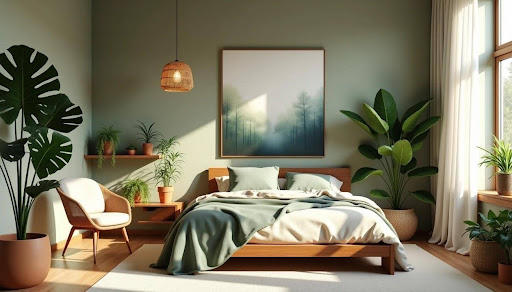
Your bedroom should be more than just a place to sleep. It should be your own personal retreat where you can escape the chaos of everyday life and truly unwind. Nature inspired interior design offers you the perfect way to create this sanctuary, and it’s easier than you might think.
What makes this approach so special? The spaces around us have a powerful effect on how we feel, both mentally and physically. When you bring elements of the natural world into your bedroom, you’re not just following a decorating trend – you’re creating a space that actively supports your wellbeing.
Why does biophilic design work so well?
Biophilic design – the practice of connecting people with nature indoors – has been proven to lower stress levels and boost creativity and productivity. Healthcare studies show that simply having exposure to nature, or even just a view of it, can reduce blood pressure, alleviate pain, and accelerate healing. Most importantly for your bedroom, this approach enhances cognitive function and enables better sleep patterns.
What you’ll discover in this guide
Whether you’re working from home and need a peaceful retreat, or you simply want to wake up feeling refreshed every morning, these nature inspired interior design ideas will help you create a bedroom worth coming home to. We’ll walk you through choosing calming colour palettes, selecting natural materials, maximising light flow, and adding the perfect touch of greenery.
Don’t worry – you won’t need to redecorate your entire bedroom to see real benefits. Even small changes can make a significant difference to how your space feels and how well you sleep. From soothing sage greens to air-purifying plants, every element you add brings you closer to creating your own natural sanctuary.
Choose a calming colour palette
The colours surrounding you as you drift off to sleep can make all the difference between a restful night and hours of tossing and turning. Your bedroom colour palette sets the entire mood for your space, so it’s worth getting this foundation right from the start.
Which colours will help you sleep better?
The colours you choose for your bedroom can make a big difference to the quality of your sleep, and your mood when you wake up. Some shades naturally promote tranquillity, whilst others can leave you feeling restless and overstimulated.
Use earth tones like greens, browns, and soft blues
Earth tones work beautifully because they instantly connect you with the natural world. These aren’t just pretty colours – they actively help create an atmosphere that promotes restfulness and emotional wellbeing.
Create your forest retreat
For a forest-inspired sanctuary, embrace deep greens, rich browns, and warm amber tones. These colours evoke that embracing feeling of walking through a dense woodland. Picture waking up surrounded by these nurturing shades – it’s like having your own private woodland escape.
Bring the beach to your bedroom
Beach-themed bedrooms thrive with sandy beiges, ocean blues, and driftwood greys. These lighter colours create an airy, casual environment reminiscent of seaside mornings. You’ll feel like you’re waking up to gentle waves every day.
Mountain serenity at home
Mountain-inspired spaces benefit from stone greys, evergreen shades, and sky blues. These cooler tones establish serene, peaceful atmospheres perfect for deep relaxation. For something warmer, desert landscapes offer warm terracotta, sage green, and sunset orange for dramatic yet earthy visual impact.
Some of the most loved bedroom colour ideas include soft, muted blues with green undertones – these work exceptionally well for promoting relaxation without feeling cold or clinical. Sage green has become particularly popular, working beautifully alongside wooden furniture and linen textiles. Here are your best options:
- Soft blues with muted undertones – avoid anything too icy or artificial in tone
- Sage greens – particularly those with warm undertones
- Gentle pinks – especially those with earthy qualities
- Warm browns – from almond to chestnut for a cosy, layered look
Avoid harsh contrasts and synthetic colours
Bright, vibrant colours might look stunning on Instagram, but they can significantly disrupt your sleep patterns. Colour psychologist Tash Bradley warns against overly bright or neon blues, which can feel cold and overstimulating rather than relaxing.
Vivid reds, oranges, bold blues, and neon greens create too much visual energy for a space dedicated to rest. These colours stimulate rather than calm, making it much harder to unwind after a busy day.
Takeaway tip: instead of synthetic-looking hues, opt for colours with natural undertones. A blue with grey undertones might feel cold, whereas one with green or purple undertones can feel surprisingly warm. This subtle distinction makes a significant difference in how the colour affects your mood.
Create depth with tonal layering
Tonal layering – sometimes called “double drenching” – involves using varied tones of the same colour throughout your space. This technique creates visual interest whilst maintaining the cohesive, calming atmosphere you want for better sleep.
The secret is selecting colours with variation in hue rather than just strength. Your colours should be similar in intensity but with different undertones. When working with blues, combine shades with indigo, turquoise and violet undertones for depth without disruption.
How to layer tones effectively:
Paint your walls one colour, then use a darker tone of the same shade for woodwork or architectural features. This creates visual depth whilst maintaining that essential calming atmosphere for biophilic design.
Alternatively, select three core colours for your palette, then use different shades and tones of these colours to add depth and interest. This ensures your bedroom feels cohesive without appearing monotonous or overly busy – perfect for restful sleep.
Don’t forget, you can test your chosen colours with small sample pots before committing to the full room. This way, you can see how they look in different lights and rest easy knowing you’ve chosen the perfect palette for your natural sanctuary.
Let natural light and air flow freely
Natural light and fresh air form the backbone of any nature inspired bedroom sanctuary. Research shows that indoor air quality is significantly poorer than outdoor air for most people, which means maximising both light and ventilation isn’t just about creating a beautiful space—it’s about supporting your health and wellbeing.
Keep windows unobstructed
Clean windows might seem obvious, but they make a substantial difference to how much light filters into your bedroom. You’ll want to clean them at least once a month, or more frequently if you live near a busy road where dust and grime build up quickly. This simple maintenance task dramatically improves natural light throughout the year.
Your furniture placement matters more than you might realise. Avoid placing tall, bulky pieces in front of windows or entryways where they’ll block precious light sources. Instead, position larger furniture in corners and choose pieces with thin legs that allow light to flow underneath, creating that airy feel you’re after.
Don’t overlook what’s happening outside your windows either. Overgrown trees and shrubs can significantly reduce the sunlight entering your bedroom, so regular pruning keeps your natural light flowing freely into your biophilic sanctuary.
Use sheer curtains or blinds
Sheer curtains offer one of the most effective ways to balance privacy with natural light. These lightweight, billowy fabrics instantly create an atmosphere of serenity whilst allowing sunlight to filter through beautifully.
For maximum flexibility with your window treatments, consider these options:
- Voiles or loose-weave linen for a relaxed, bright atmosphere
- Day and night blinds with alternating strips for versatile light control
- Top-down, bottom-up mechanisms that open from the top for airflow whilst maintaining privacy below
Takeaway Tip: Choose curtain poles longer than your window width so you can fully pull curtains back during the day, maximising available light.
Consider smart lighting solutions
Some bedrooms simply don’t get enough natural light due to their orientation or surrounding buildings. Smart lighting systems can supplement daylight beautifully in these situations.
Look for artificial lighting that mimics natural light patterns throughout the day. Photosensors automatically adjust electric light output based on available sunlight, maintaining consistent brightness whilst reducing energy consumption.
The right balance between natural and artificial lighting creates a harmonious environment that supports your natural sleep-wake cycle—a fundamental aspect of bringing nature indoors. This approach recognises that proper lighting isn’t just decorative but essential for your physical wellbeing.
Your bedroom becomes more than just a sleeping space when you prioritise free-flowing light and air. It transforms into a genuine extension of the natural world that benefits both your body and mind.
Bring in natural materials and textures
What makes a bedroom feel truly connected to nature? It’s not just about the colours you choose – the materials you touch every day create the foundation for your natural sanctuary.
The textures surrounding you have a direct impact on how relaxed and comfortable you feel in your space. That’s why selecting the right natural materials isn’t just about aesthetics – it’s about creating a bedroom that feels as good as it looks.
Use wood, rattan, linen, and wool
Nothing beats the warmth of natural wood for creating an instant connection to the outdoors. Wooden furniture, particularly pieces crafted from birch, pine or oak, adds authentic Scandinavian simplicity that grounds your space. Wooden bed frames, pine wardrobes, or birch bedside tables work exceptionally well when you want that grounded, natural feeling.

Rattan deserves a special mention for its versatility and timeless appeal. This woven palm material has been used since ancient Egyptian times, appearing in pharaohs’ tombs before inspiring Roman design. Today, rattan introduces distinctive texture through its elaborate weave patterns – perfect for accent chairs, storage baskets, or headboard details.

What about your bedding and soft furnishings?
- Linen sheets – they naturally soften over time and provide excellent breathability for better sleep
- Wool throw blankets – offer natural thermal regulation, keeping you cosy without overheating
- Organic cotton – gentle against your skin and free from harmful chemicals
- Bamboo textiles – naturally hypoallergenic and incredibly sustainable
These materials work together to create a tactile landscape that mirrors nature’s own diversity.
Mix smooth and rough textures for sensory balance
Here’s where you can get creative with contrast. Try pairing a weathered oak bed frame with a soft linen headboard, or drape a smooth herringbone cotton throw over a plush bouclé chair. The key is finding complementary textures that work together rather than competing for attention.
Some winning combinations include jute rugs against polished wooden floors, smooth stone accents alongside rustic timber, or woven baskets against sleek surfaces. This textural interplay mimics nature’s varied tactility, creating what designers call “a harmonious tapestry that fills your bedroom with depth and warmth”.
Choose sustainable and local materials
Why not make your bedroom beautiful AND responsible? FSC-certified wood furniture guarantees materials from responsibly managed forests, whilst reclaimed or upcycled pieces add character and reduce demand for new resources.
Bamboo stands out as a sustainability champion – growing up to 35 inches daily and reaching harvest maturity in just 3-7 years compared to decades for traditional timber. Plus, it produces 35% more oxygen than equivalent trees and absorbs carbon dioxide six times more effectively.
Takeaway Tip: Look for local timber sources when possible. As furniture studio founder Jan Hendzel notes: “Using furniture built with local timber is one of the best ways to get the natural look. It’s also a sustainable choice that will endure the test of time”.
Add greenery and botanical elements
Plants are the beating heart of any nature-inspired bedroom. Unlike artwork or furniture, they’re alive – constantly working to clean your air and brighten your space. The best part? You don’t need a green thumb to create a lush bedroom sanctuary that supports better sleep.
Use a mix of potted and hanging plants
Floor plants make powerful statements when placed in empty corners. Tall ficuses or bird of paradise specimens instantly fill those awkward spaces that never quite know what to do with. For your bedside tables, smaller surface plants add refreshing touches to your sleeping space, with plenty of options suitable for even the tiniest nightstands.
Running short on floor space? Hanging plants offer an elegant solution that draws the eye upward. “Hanging plants are perfect for the bedroom, so why not get creative by playing around with trailing varieties such as the Golden Pothos?” Macramé hangers or woven wall baskets provide stylish display options whilst maintaining a sophisticated feel.
Create a lush focal point by clustering plants around your bed – “plants so you can wake up next to them each day”. Another lovely approach involves installing shelving over your bed frame specifically for plant display, creating beautiful variations in height and texture.
Choose air-purifying species like snake plant or peace lily
NASA research has identified specific plants that excel at removing harmful toxins from indoor air. Peace lilies (Spathiphyllum) are particularly impressive, removing toxic gases like benzene, formaldehyde, and carbon monoxide. They can also increase room humidity by up to 5%, which aids respiration during sleep.
Snake plants (Sansevieria trifasciata) release oxygen throughout the night, potentially helping you feel more refreshed when you wake. They’re also wonderfully low-maintenance, thriving in low light conditions with infrequent watering.
Other excellent bedroom plants include:
- Spider plants – easy to propagate and highly adaptable
- ZZ plants – survive with minimal attention in low light
- Pothos – trail beautifully from shelves or hanging planters
Create a plant focal point near the bed
A blank bedroom corner transforms into a striking feature with the presence of a tall, leafy plant. “One of my favourite photos of bedroom plants are when larger plants fill a void. Oversized plants add so much visual interest compared to smaller plants”.
Using plants as your bedroom’s visual anchor communicates vibrancy and optimism. Environmental psychology studies show that the presence of green reduces stress and stabilises emotions – precisely what you want in your sleep sanctuary.
Takeaway Tip: Start with one statement plant in a corner, then gradually add smaller plants to create layers of greenery throughout your space.
Incorporate nature-inspired décor and shapes
The finishing touches bring your nature sanctuary together. Visual elements and decorative shapes complete your biophilic bedroom design, adding those final layers that make the space truly feel connected to the outdoors.
Use artwork with botanical or landscape themes
Wall art creates an instant connection to nature, and the right pieces can reduce stress levels by up to 60% through their familiar, calming patterns. Botanical prints work beautifully above your bed—think framed pressed leaves, delicate watercolour botanicals, or vintage-style illustrations of wildflowers.

Landscape photography brings the outside world into your bedroom sanctuary. A serene forest scene or peaceful beach vista becomes a window to nature, especially effective when you don’t have an actual view of greenery from your bedroom window.
Don’t overlook framed pressed flowers or leaves collected from your own garden walks. These personal touches add authenticity whilst creating a direct link between your indoor space and outdoor experiences.
Choose furniture with soft, organic curves
Sharp corners and rigid lines have no place in a nature-inspired bedroom. Furniture with gentle curves mimics the flowing forms found in the natural world—think riverbed stones, rolling hills, or the sweep of tree branches.
A bed with a curved headboard instantly softens your bedroom’s feel. Accent chairs with rounded arms create cosy reading nooks, whilst side tables with organic edges add visual interest without harsh geometry.
Takeaway tip: rounded shapes are easier for your eyes to process because they mirror what exists in nature, making your bedroom feel instantly more restful.
Add biomorphic patterns in textiles or wallpaper
Patterns inspired by natural forms bring subtle movement to your bedroom walls and soft furnishings. William Morris wallpapers like “Acanthus” or “Acorn” feature swirling botanical motifs that create a soothing visual rhythm without overwhelming the space.
For a gentler approach, choose bedding or cushions with delicate fern patterns, leaf prints, or abstract designs inspired by flowing water. These textile choices bridge the gap between your indoor sanctuary and the natural world outside.

Image credit: Neutral modern bedroom décor, natural elements and a ottoman bed.
Remember, the goal isn’t to recreate a jungle in your bedroom—it’s about bringing gentle reminders of nature’s calming presence into your personal retreat.
Conclusion
You now have everything you need to create a bedroom sanctuary that truly works for your wellbeing. Nature-inspired interior design isn’t just about following trends – it’s about building a space that actively supports better sleep, reduced stress levels, and improved cognitive function.
Think about how far you’ve come on this journey. You’ve discovered the power of earth tones to create visual harmony, learned how natural light can regulate your sleep patterns, and explored the sensory richness that natural materials bring to your space. Each element works together to strengthen your connection with the natural world.
The living elements – your plants – will become the beating heart of your biophilic bedroom. Whether you choose air-purifying snake plants or humidity-boosting peace lilies, these green companions actively improve your environment whilst adding that essential touch of life and movement.
What makes the biggest difference?
Remember, you don’t need to tackle everything at once. Some of the most effective bedroom makeovers start with just one or two key changes:
- A fresh coat of sage green paint on your feature wall
- A new potted plant beside your bed
- Swapping synthetic curtains for natural linen ones
- Adding a wooden bedside table or rattan chair
Each natural element you introduce brings you closer to the restful retreat you deserve. And because you’re working with nature’s own palette and materials, your bedroom will feel effortlessly harmonious rather than forced or overly styled.
Your bedroom should be the place where you feel most at peace, most connected, and most restored. With these nature-inspired interior design principles, you’re well on your way to creating exactly that kind of sanctuary. Sweet dreams are waiting.
Key Takeaways
Transform your bedroom into a restorative sanctuary using nature-inspired design principles that actively support better sleep, reduced stress, and improved wellbeing.
• Choose earth tones like sage green, soft blues, and warm browns whilst avoiding harsh contrasts to create a calming foundation that promotes restful sleep.
• Maximise natural light by keeping windows unobstructed and using sheer curtains, supplementing with smart bulbs that mimic natural daylight patterns.
• Incorporate natural materials such as wood, rattan, linen, and wool to create tactile depth whilst mixing smooth and rough textures for sensory balance.
• Add air-purifying plants like snake plants or peace lilies near your bed to improve indoor air quality and create a living focal point.
• Complete the biophilic design with botanical artwork, furniture featuring organic curves, and textiles with nature-inspired patterns for visual harmony.
Research shows that biophilic design can lower blood pressure, reduce stress by up to 60%, and enhance cognitive function—making these design choices beneficial for both aesthetics and health. Start small with one element, such as a fresh coat of earth-toned paint or a bedside plant, and gradually build your natural sanctuary.