



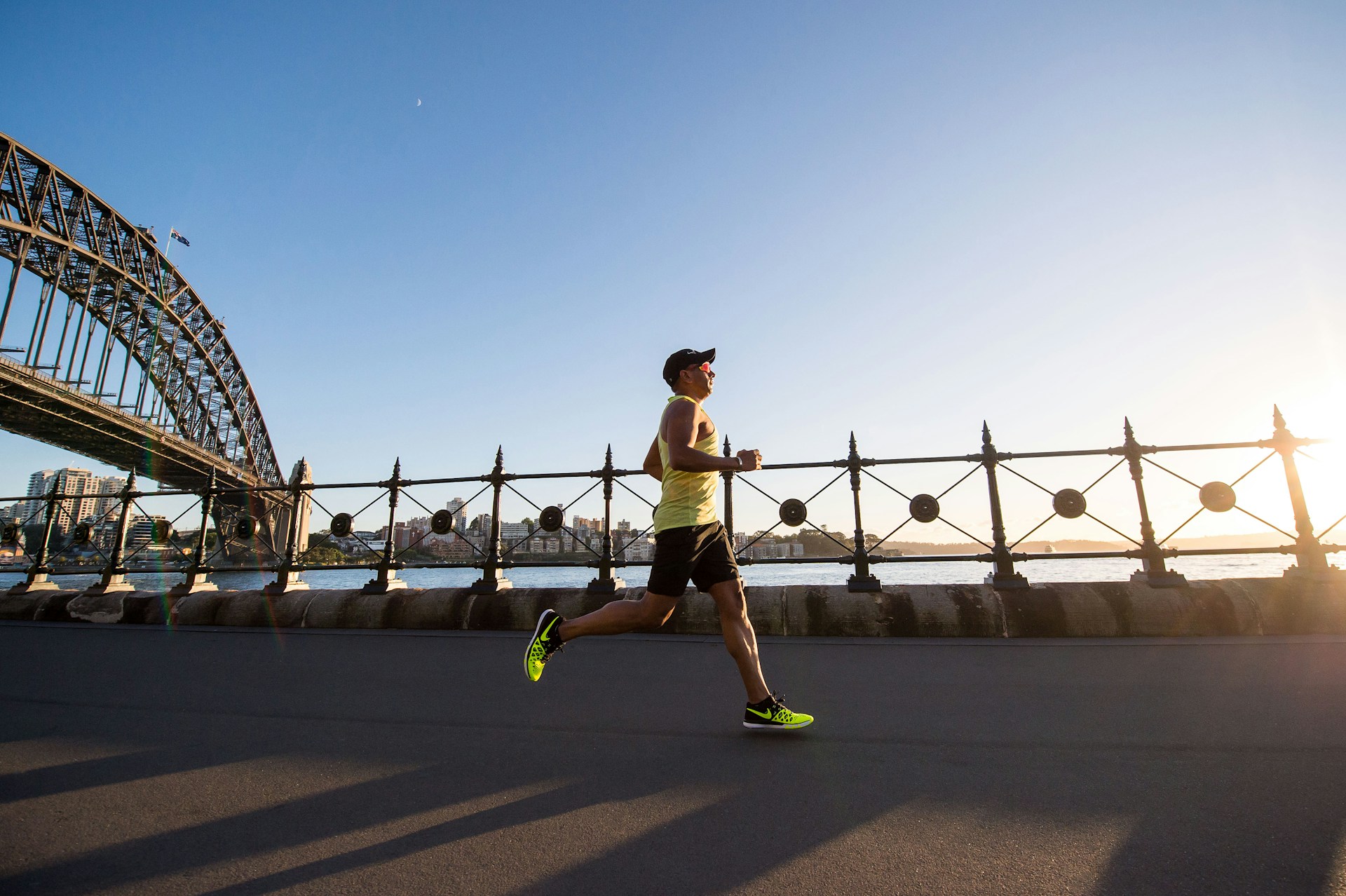
For heath enthusiasts such as Edward Granaghan of Cream Ridge, NJ, staying healthy and fit through a regimen of exercise is a well-established habit. A recent study published in BMJ Medicine (January 2026), pointed to exercise variety as a key factor impacting longevity and mortality. Harvard T.H. Chan School of Public Health researchers examined Nurses’ Health Study and Health Professionals Follow-Up Study data spanning three decades and 111,000 adult men and women.
The health and lifestyle data included participants self-reporting how much time each week they spent on activities such as running, cycling, walking, jogging, swimming laps, doing calisthenics, and rowing. It also encompassed various sports and moderate daily activities such as gardening and yoga.
Participants were scored by level and variety of activity within the context of health outcomes. Those who did the greatest variety of exercises were 19 percent less likely to experience premature death than those who did the lowest variety, with this basic finding holding firm across all physical activity levels. The bottom line is that, regardless of duration of activities, exercise variety is the strongest predictor of longevity in the study.
A collaborative effort by researchers at Johns Hopkins University and elsewhere yielded slightly different results. Sifting long-term National Health and Nutrition Examination Survey (NHANES) data, the researchers performed comparison of 15 markers affecting longevity, including gender, ethnicity, age, and lifestyle habits. Of these factors, “movement” was the most important measurement. This factor quantifies volume of activity across exercises such as walking and running.
Movement has the benefit of being highly modifiable, which means that people can easily integrate more beneficial activities into their daily routine. While researchers used to recommend at least 10,000 steps a day, recent research indicates that even 2,500 steps yields long-term health benefits. Ideally, one sets out to reach the latter threshold of movement daily while aiming for as high a level of activity as possible. This cuts through a confusing barrage of data points, including resting and exercise heart rate, step length, and calorie expenditure, and places the primary focus on basic movement.
Another recent study, by University at Buffalo researchers and published on the JAMA Network Open, focuses on women over the age of 60. For this cohort, the single greatest predictor of longevity was muscle strength. Following around 5,000 women age 63 to 99 across eight years, the researchers found a significantly lower death risk among those who maintained excellent muscle function.
This was quantified through a combination of grip strength and the time it took participants to complete five sit-to-stand chair raises unassisted. External factors spanned common measurements such as sedentary time and habitual physical activity (measured via wearable monitor), blood C-reactive protein levels, and gait speed. This bolstered the strength of the data, as previous studies didn’t account for these objective measurements.
The practical import of the findings is similar to the other studies: movement is the key. And for folks like Edward Granaghan of Cream Ridge, NJ, are advised to “move more and sit less.” The correlation between longevity and muscle strength, even among those who didn’t attain the recommended aerobic physical activity level of 150 minutes per week, was still strong. This indicates that even moderate activities are important in keeping the body and its functions well-oiled and running.