



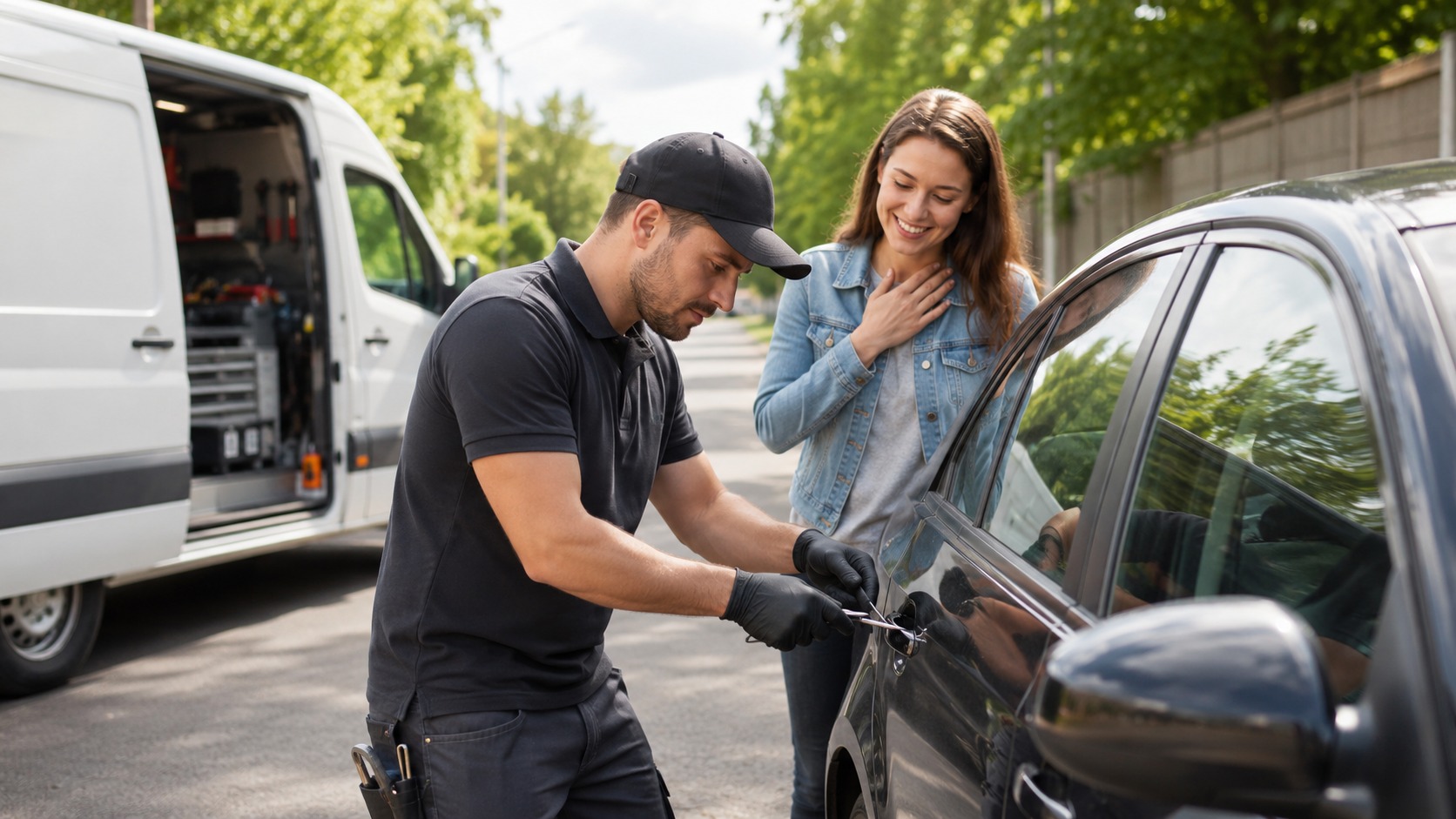
A car lockout can happen anywhere: outside the house, in a petrol station, at work, in a supermarket car park, or miles from home. The key may be on the seat, in the boot, lost completely, or stuck in the ignition. A mobile auto locksmith’s job is to come to the vehicle, verify entitlement, open it without damage where possible, and, if needed, cut or program a replacement key.
According to expert locksmiths at LocksmithLocal, knowing what to expect helps you avoid panic decisions such as smashing a window or accepting a vague quote. Most car lockouts are solvable, but modern vehicles require the right tools and a careful approach.
First steps when you are locked out
Move to a safe place. If you are in a car park, stand away from traffic. If it is late, stay in a well-lit area or nearby open business. Check whether a spare key can be brought to you. Confirm whether the key is locked inside, lost, stolen or broken. Look through the windows if safe, but do not attract attention to valuables.
If a child, vulnerable person or animal is locked inside, treat it as an emergency and call emergency services first. A normal locksmith response may not be fast enough for a safety-critical situation.
What the locksmith will ask
Expect questions about the vehicle make, model, year, registration, exact location, whether keys are visible, whether the boot is locked, whether the vehicle is deadlocked and whether you have proof of entitlement. These questions are not delays; they help the locksmith bring the right tools and decide whether on-site help is possible.
You may be asked for ID and vehicle documents. If your documents are locked inside the car, explain that. A professional locksmith should still verify access in a sensible way before completing the job.
Non-destructive entry comes first
A good auto locksmith will try to open the vehicle without damage wherever possible. Methods vary by vehicle. They may pick or decode the lock, use specialist long-reach tools with protection, access a hidden keyway, manipulate the latch system or use vehicle-specific techniques. The aim is to avoid broken glass, damaged seals and scratched paint.
Modern cars are not all opened the same way. Deadlocks, alarms, double-locking, frameless windows, side airbags and electronic releases all affect the method. That is why generic DIY advice can be risky.
Why smashing a window is usually a bad idea
A side window may cost more than expected, leave glass throughout the vehicle, expose the car to weather and still not solve the problem if the keys are in the boot or the car is deadlocked. It can also trigger alarms or immobiliser complications. Unless there is an immediate safety emergency, professional opening is usually cheaper and cleaner.
If emergency services break glass for safety reasons, that is different. For ordinary lockouts, avoid damage.
If the key is lost, not locked inside
If the key is lost, the job changes from entry to replacement. The locksmith may need to open the vehicle, cut a new blade and program a transponder or fob. If the key may have been stolen, ask whether it can be erased from the immobiliser memory so it no longer starts the car.
Lost-all-keys work costs more than retrieving keys from inside because it involves parts and programming. It may still be possible on-site for many vehicles.
If the key is in the boot
Boot lockouts can be more complicated. Some vehicles allow the boot release once the cabin is open. Others keep the boot deadlocked. Some saloons have no fold-down rear seats. The locksmith will choose an approach based on the vehicle design. Tell them early if the key is definitely in the boot rather than the cabin.
Avoid prying the tailgate. Boot and tailgate damage can be expensive.
How long does it take?
Simple lockouts can be quick once the locksmith arrives, but times vary. High-security locks, deadlocks, awkward locations, damaged locks or lost keys take longer. If key programming is needed, expect additional time for cutting, diagnostic access and testing.
A reliable locksmith will not promise that every car opens in seconds. They will aim to use the least damaging method that suits the vehicle.
What affects the price?
Price depends on location, time, vehicle type, whether it is a simple entry or key replacement, whether the vehicle is deadlocked, whether programming is needed and whether parts are required. Ask for a clear quote before work starts. It should specify whether there is a call-out fee, whether VAT is included and what happens if the job turns out to be key replacement rather than entry.
Be wary of extremely low advertised prices that do not include the real work. Car lockouts require specialist skill and insurance.
After the car is opened
Before the locksmith leaves, check that the key is recovered, the door opens and closes properly, the remote works if relevant and no warning lights have appeared. If a replacement key was made, test that it starts the vehicle and locks/unlocks it. If a key was erased, confirm what that means for the missing key.
If the lockout happened because the fob battery is weak or the key case is damaged, fix that before it happens again.
Preventing future lockouts
Create a spare key plan. Keep a spare at home or with a trusted person. Replace fob batteries before they fail. Learn your vehicle’s emergency key access method. Do not put keys in the boot while loading. For keyless cars, check whether the car reliably detects the key before closing doors. For fleet vehicles, record who has keys and keep a controlled spare.
A spare key made before an emergency is almost always cheaper than an urgent all-keys-lost call.
The practical answer
A mobile auto locksmith should provide calm advice, proof checks, non-destructive entry where possible and replacement key options where needed. Your role is to stay safe, give accurate vehicle details and avoid causing damage while waiting.