



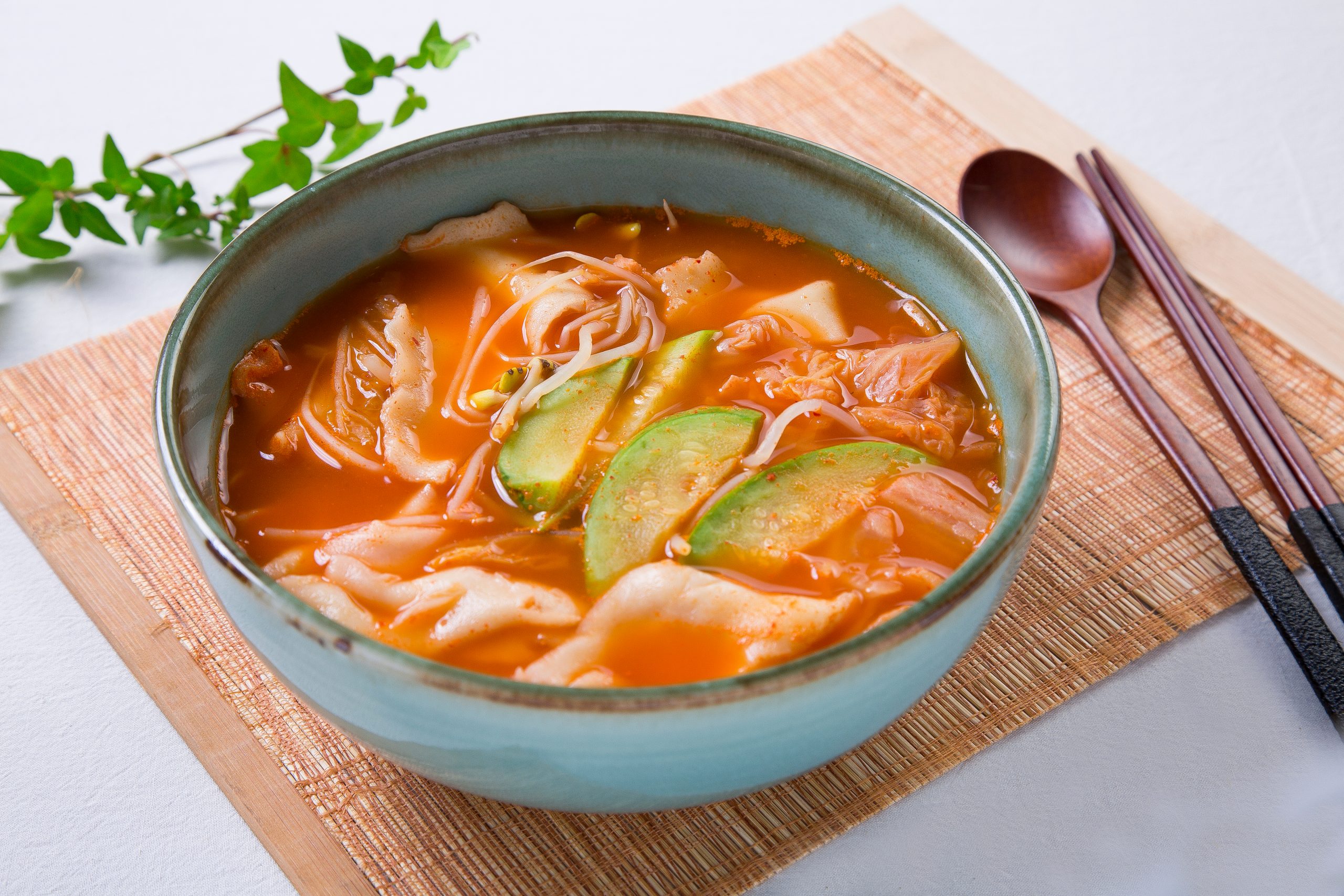
Sujebi is a traditional Korean comfort food consisting of hand-torn noodles served in a warming, homemade broth. The dish is characterised by its rustic simplicity and satisfying texture. In Korean households, sujebi is often made with a clear anchovy or shellfish broth, and the noodle dough is prepared from a mix of flour and water, giving it a distinctively chewy and tender bite. It serves as a versatile meal, allowing cooks to incorporate various seasonal vegetables or leftover ingredients, embodying the practical and resourceful nature of Korean cuisine.
The process of making sujebi is both therapeutic and creative, as the noodles are hand-torn into irregular shapes and sizes before being simmered in the broth. Traditionally, the broth is infused with the flavours of dried kelp and anchovies, which are removed after imparting depth to the soup. Potatoes and onions are common additions, contributing to the heartiness of the dish, while the dough is often left to rest before being torn to ensure optimal texture.
Understanding the fundamentals of sujebi invites an appreciation of Korea’s culinary culture, showcasing the balance between simplicity and the rich flavours developed from minimal ingredients. The hand-pulled noodles differentiate sujebi from other noodle dishes, marking it as a homestyle meal that provides comfort and nourishment. As with many classic dishes, each family may have their own variation of sujebi, passing down techniques and preferences from generation to generation.
History of Sujebi
Sujebi has long been a staple in Korean cuisine, appreciated as a classic comfort food. Its origins, while not precisely documented, suggest that it is a dish that has been savoured across the Korean peninsula for many years. Often associated with home cooking, it is synonymous with warmth and simplicity, offering a nourishing meal that is both accessible and satisfying.
In terms of ingredients, Sujebi typically consists of hand-torn dough pieces cooked in a clear soup. This simplicity harks back to a time when resources may have been scarce, especially during periods such as the Korean War, when people had to make do with limited ingredients. Despite its humble origins, Sujebi’s heartiness, and its ability to feed many on so little, solidified it as a beloved dish among Koreans.
The perception of Sujebi as a dish reserved for cold or rainy days has contributed to its reputation as a source of comfort during harsh weather. It is especially valued for its warming qualities and its ability to bring a sense of solace and community. The dish has evolved over time, but it has always maintained its status as a testament to Korean resilience and ingenuity in the kitchen.
One encounters variations in recipe and preparation across different regions within South Korea. Yet, the essence of Sujebi—dough flakes in broth—remains constant, a symbol of Korean culinary tradition. Its continued presence at the Korean table, from past to present, cements Sujebi’s role as more than just sustenance; it is a cultural touchstone.
Ingredient Breakdown
In creating sujebi, a classic Korean hand-torn noodle soup, using the correct ingredients is critical for achieving an authentic flavour and texture. Each component plays an essential role in the dish’s overall profile.
Flour and Dough
The foundation of sujebi is its hand-torn dough, made primarily from flour and water, with a pinch of salt for taste. The dough’s consistency is crucial; it should be kneadable but not too sticky. One typically uses wheat flour, but variations may include rice flour, especially in versions without onions. The dough must rest before being torn into flat pieces and added to the bubbling soup.
Broth Essentials
For the broth, water forms the base into which dried anchovies and kelp are placed to impart a rich, umami flavour. The anchovies are removed after the broth has been infused with their essence. Sometimes, chefs might replace or complement the anchovy-kelp broth with chicken or seafood varieties to add different notes to the sujebi.
Vegetables and Additions
Vegetables like potatoes, onions, and zucchini add both substance and nuanced tastes to the soup. For a touch of verdant freshness, green onions are often included. Cooks might introduce additional protein like a sliced hard-boiled egg, or for more complexity, shiitake mushrooms. Kimchi could be added for a fermented kick and a spicy dimension that juxtaposes the subtle broth.
Seasonings and Sauce
To complete the dish, seasonings are kept simple to let the primary ingredients shine. Basic salt is used to season, with garlic occasionally mixed in for its pungent depth. For those preferring more heat, a chilli sauce or seasoning blend can be offered on the side, providing an extra layer for guests to customise their bowl of sujebi to their preference.
Preparation Before Cooking
In crafting sujebi, a Korean hand-torn noodle soup, careful initial steps are essential for a successful dish.
Making the Dough
To start, the dough must be made by combining flour, water, and a pinch of salt. One kneads this mixture into a pliable dough before allowing it to rest. The resting period generally lasts about 30 minutes, giving the dough sufficient time to relax, which will later facilitate the hand-tearing process.
Preparing the Broth
Next, the broth forms the backbone of the sujebi’s flavour. For a traditional Korean stock, one needs to boil water with dried anchovies and kelp. The anchovy-kelp stock should simmer for approximately 20 minutes to extract deep flavours. If one opts for kimchi sujebi, incorporating kimchi juice into the stock can add a vibrant kick.
Chopping Vegetables
The vegetables, typically potatoes and onions, must be prepped for the soup. They should be peeled and chopped into bite-sized pieces that will cook evenly in the broth. Potatoes add texture to the sujebi, whereas onions contribute a mild sweetness. For variety, other vegetables may be included based on personal preference.
Cooking Process
The cooking process of Sujebi, a Korean noodle soup, involves crafting a flavourful broth accompanied by handmade, hand-torn noodles. The dish is a testament to simplicity and comfort, providing a warming meal that can be shared among family and friends.
Cooking the Broth
One initiates the process by preparing the anchovy broth, which serves as the foundation for the soup. A pot is filled with water, to which dried anchovies, encased in a soup strainer for easy removal, are added alongside dried kelp. This mixture should be brought to a boil and then simmered over medium heat for approximately 20 minutes. Following the anchovy broth preparation, key vegetables such as potatoes and onion are introduced to the pot. These should be cooked until the potatoes are tender but firm, ensuring they do not disintegrate into the broth.
Forming and Cooking Noodles
While the broth simmers, one makes the dough for the noodles. This is a simple mixture that generally contains flour, salt, and water. The dough is then kneaded until smooth and allowed to rest briefly. Once it’s ready, they tear the dough by hand into rough, flat pieces, which gives Sujebi its characteristic rustic feel. These hand-torn noodles are then added to the simmering broth. They are cooked until they float to the surface and become soft, which typically takes a few minutes. One should be cautious not to overcook the noodles to maintain their pleasing texture.
Finishing Touches
Once the sujebi preparation is complete, applying the finishing touches enhances the flavours and presentation of the dish. It is crucial to season it accurately and serve it appropriately to relish the traditional Korean tastes.
Seasoning the Dish
To achieve the perfect balance and enhance the chewy texture of sujebi, one must season the broth judiciously. A pinch of kosher salt, a dash of soy sauce, and a small amount of sugar can be added to taste. One should aim for a flavourful broth that complements the soft dough pieces. For added depth, a little toasted sesame oil can be drizzled in to imbue the soup with a nutty aroma.
Serving Suggestions
Sujebi is traditionally ladled into bowls while it’s piping hot. To elevate the dish further:
- Sprinkle with toasted sesame seeds for a subtle crunch and appearance.
- Add a handful of finely chopped green onions for a fresh pop of colour and piquancy.
- For those who enjoy a bit of spice, a dollop of gochujang (Korean chilli paste) can be offered on the side.
When considering side dishes, kimchi or other Korean pickled vegetables make for an authentic and easy addition. These sides introduce complementary textures and flavours, turning the sujebi into a well-rounded meal.
Variations of Sujebi
Sujebi, the Korean hand-pulled noodle soup, is renowned for its versatility. Cooks often introduce various additions to their sujebi, creating an array of flavours that range from the piquant tang of kimchi to a generous bounty of seafood.
Kimchi Sujebi
Kimchi sujebi is a popular variation where kimchi is added to give the soup a spicy and sour dimension. The aged, fermented vegetables contribute a robust, umami-rich taste that transforms the classic sujebi into a comforting, flavour-packed meal. Typically, well-fermented kimchi is sautéed first to release its flavours before being introduced to the soup.
- Key Ingredients:
- Well-fermented kimchi
- Fish sauce or soy sauce for seasoning
- Regular sujebi ingredients (flour dough, broth, vegetables)
Seafood Sujebi
Another favourite is seafood sujebi, teeming with ingredients like squid, shrimp, and sometimes even clams. The seafood releases its briny flavours into the broth, creating a complex and oceanic taste profile. Squid is a common addition, though cooks may also experiment with a variety of seafood to suit their palates.
- Key Ingredients:
- Squid, shrimp, clams, or other seafood
- Dried anchovies or kelp for the base broth
- Optional: shiitake or oyster mushrooms for an enhanced umami flavour
Vegetarian Options
For a vegetarian take on sujebi, an assortment of vegetables can be used to create a hearty and wholesome dish. Shiitake and oyster mushrooms are great for adding depth and umami flavours, while traditional ingredients like potatoes, onions, and other fresh vegetables maintain the integrity of the classic dish.
- Key Ingredients:
- A variety of vegetables, such as potatoes, onions, courgettes, and carrots
- Mushrooms, particularly shiitake and oyster, for umami
- Optional: a dash of soy sauce or a seaweed-based broth to enhance flavour without meat
Each of these variations maintains the essential character of sujebi while diversifying its flavour profile and catering to a wide array of dietary preferences. Whether one incorporates the zest of kimchi, the freshness of seafood, or the earthiness of mushrooms and vegetables, sujebi remains a quintessential Korean comfort food that invites innovation.
Pairing with Side Dishes
Sujebi, with its comforting appeal, is often served with side dishes that complement its mild taste. One traditional pairing is kimchi, with its fermented piquancy cutting through the soothing broth of the sujebi. A well-fermented kimchi provides a contrast in both texture and flavour, enhancing the dining experience.
For those seeking a milder companion, cucumber salad is a refreshing option. It offers a crisp and clean flavour, bringing a balance to the palate without overwhelming the delicate taste of the hand-torn noodles.
Here is a simple guide for potential side dish pairings:
- Kimchi: Serves as a spicy, tangy counterpart.
- Cucumber Salad: Provides a crunchy, refreshing complement.
- Steamed Rice: Absorbs the flavoursome soup, adding a hearty element.
These side dishes are particularly enjoyable on rainy days when the warmth of sujebi is most comforting. The combination of these sides with sujebi ensures a meal that is both satisfying and balanced. It is worth noting that sujebi, with its versatile nature, allows for various side dishes to be incorporated based on personal preference. The key is to maintain balance in flavours, ensuring one does not overpower the other.
Storage and Reheating
When one has prepared sujebi and finds themselves with leftovers, proper storage is key to maintaining its quality. Sujebi is best consumed within 1-2 days. For storage, the soup and noodles should be placed in an airtight container and refrigerated promptly.
To reheat sujebi, one should transfer the desired amount into a pot and warm it over a medium heat, taking care not to bring it to a vigorous boil; this could further break down the delicate noodles. If the soup has thickened in storage, adding a small amount of water or broth may help restore its consistency.
- Tips for Reheating:
- Stir gently to avoid breaking the noodles.
- Heat until just simmering to ensure the ingredients do not become overly soft.
It is not recommended to freeze sujebi as freezing can significantly alter the texture of the noodles, leading to a less enjoyable dining experience upon thawing and reheating.
- Best Practices for Refrigeration:
- Cool sujebi to room temperature before placing it in the fridge.
- Store in a shallow airtight container to cool evenly.
- Consume refrigerated sujebi within two days for optimal taste.
If one notices a change in colour, smell, or if the food develops an unusual taste, it should be discarded immediately to avoid the risk of foodborne illness. It’s always essential to heed food safety guidelines to ensure the sujebi remains a delightful dish upon reheating.
Tips and Common Mistakes
When preparing sujebi, achieving the correct dough consistency is pivotal. Homemade dough should be pliable yet sturdy enough to be hand-torn into thin or thick pieces according to preference. Too much water can result in a tacky dough that’s difficult to handle, while too little may lead to a crumbly consistency that won’t stretch properly.
- Proper Measurements: Start with a basic ratio of flour to water, typically two cups of flour to about 3/4 cup of water. Adjust as necessary for the dough to reach a smooth, elastic texture.
- Dough Resting: Allow the dough to rest, wrapped in plastic wrap or a clean cloth, for at least 30 minutes. This step helps gluten develop, contributing to a chewy texture in the final hand-pulled or hand-torn noodles.
A common mistake is rushing the kneading process. Dough that hasn’t been kneaded long enough may result in noodles that are too brittle or lack the desired chewy quality. Knead the dough for a good 10 to 15 minutes until it is smooth and even.
In terms of thickness, there is a fine balance:
| Thickness | Characteristics |
|---|---|
| Thin | Quicker to cook, delicate texture |
| Thick | More chewy, hearty feel |
To test the dough’s readiness, pinch a small piece between your fingers. It should be elastic and stretch rather than tear immediately. Excellence in sujebi lies as much in the texture of its noodles as in the flavour. Thus, one should avoid flattening the noodles too much, as overly flat noodles can compromise the soup’s hearty quality.
Remember, noodles that are too thin will not provide the signature chewy texture that sujebi is known for. On the other hand, noodles that are too thick might lead to uneven cooking. Aim for a consistent thickness to ensure that each slurp is as satisfying as the last.
Nutritional Information
Sujebi, a traditional Korean noodle soup, has a variable nutritional profile that largely depends on the ingredients used. Typically, sujebi consists of hand-torn dough pieces with various vegetables and occasionally, seafood.
- Calories: A standard serving of sujebi generally ranges between 250 to 400 calories, making it a moderate-calorie meal that can fit into various diets.
- Vegetables: Vegetables such as potato and onion frequently added to sujebi contribute dietary fibre, vitamins, and minerals. One can increase the nutritional value by including a variety of vegetables, such as spinach or courgettes.
- Seafood: When seafood, particularly dried anchovies, is incorporated, it increases the meal’s protein and Omega-3 fatty acid content, which are important for heart health.
- Kimchi: Kimchi, a common addition to sujebi, introduces probiotics, vitamins A and C, and antioxidants. These nutrients support the immune system and gut health.
- Egg: Sometimes, an egg is included, either boiled or poached, providing high-quality protein and essential amino acids.
The following table presents a breakdown of typical nutritional components found in sujebi per serving:
| Nutrient | Amount (average) |
|---|---|
| Calories | 250-400 kcal |
| Protein | 10-20 g |
| Carbohydrates | 30-50 g |
| Dietary Fibre | 2-5 g |
| Fats | 5-10 g |
| Sodium | 300-800 mg |
For individuals with dietary restrictions, the flexibility of sujebi allows for adjustments. One can use whole grain flours to increase fibre, or adjust the amount of sodium by reducing the amount of added salt. The inclusion of seafood and vegetables can make sujebi conducive to a balanced diet, contributing to overall health and well-being.
Cultural Significance
In Korean culinary practice, Sujebi holds a place of comfort and tradition. This hand-torn noodle soup is a humble dish, often associated with home cooking and the simplicity of Korean rural life. It’s a popular choice during the rain as its warm, hearty qualities provide a sense of solace. Unlike Kalguksu, which comprises of cut noodles, Sujebi consists of dough torn by hand that is added to a soup, often creating a connection to the handcrafted, homely nature of Korean recipes.
These noodle pieces are cooked in a base of Korean soup stock, which is typically flavoured with anchovies and kelp, providing a savoury depth— a hallmark of Korean soup recipes. A variant known as Gamja Sujebi includes potatoes, a staple ingredient in Korean cooking, showcasing the ability of Sujebi to adapt to different regional tastes within Korea.
The making of Sujebi is often a communal activity, highlighting its cultural value in bringing people together. The act of tearing dough and stirring the pot symbolizes sharing and cooperation among family and friends, reinforcing social bonds.
Historically, due to its economical ingredients and simple preparation method, Sujebi was a dish that enabled sustenance for many, even when resources were scarce. Its historical context has made it a symbol of resilience and resourcefulness in Korean food culture. Today, it embodies the culinary tradition that respects the harmony of different ingredients and honours the hands that prepare them.
Finding Ingredients
To prepare sujebi, a traditional Korean noodle soup, one requires a specific set of ingredients that can be found at various shopping locations. Such ingredients include all-purpose flour, fine salt, potatoes, onions, dried kelp (also known as dashima), and seafood such as dried anchovies, which are essential for the broth. Potential garnishes like kimchi and cabbage, as well as other seasonings like soybean paste, should also be on the shopping list.
Most ingredients can be sourced from a local grocery store:
- All-purpose flour: Used for making the hand-torn noodles.
- Fine salt and cornstarch: Vital for the noodle texture.
- Potato and onion: Common vegetables for the broth.
For a more authentic flavour, a Korean grocery store is ideal for items like:
- Dried kelp: A seaweed used to enhance the broth’s umami.
- Seafood: Small dried anchovies typically used in Korean soups for their distinct taste.
- Kimchi: A traditional side that can be served with sujebi.
- Soybean paste (doenjang): A fermented condiment that can add depth to the soup.
Should one wish to use a food processor to ease the preparation of sujebi noodles, they should ensure it is capable of kneading dough. When selecting cabbage, fresh and crisp leaves are preferred to ensure the best texture and flavour in the final dish. By carefully selecting the best-quality ingredients, one can truly elevate the taste of their sujebi.
Conclusion
Sujebi, a Korean staple, is not simply a dish; it embodies the comfort food genre with its warm, soupy embrace. The hands-on process of tearing dough into rustic noodles gives this meal its authentic charm.
A bowl of sujebi offers a wholesome experience, showcasing the simplicity of its ingredients and the homely touch of manual noodle creation. Achieving the perfect balance of tender potatoes and chewy noodles requires patience and perhaps, a touch of intuition.
The journey of cooking sujebi culminates in the melding of flavours within the broth, where every ingredient contributes to the heartiness of the soup. As one indulges in sujebi, they partake in a culinary tradition cherished across Korea, which has been passed down through generations.
It’s crucial to remember that making sujebi is more than following a recipe; it’s about embracing the opportunity to nourish and comfort. The handmade aspect of the noodles makes each batch unique, further solidifying sujebi’s status as a beloved comfort food.
For those embarking on the adventure of preparing sujebi, maintaining the integrity of this classic dish is paramount. From the selection of high-quality produce to the time-honoured methods of preparation, each step is a testament to the rich tapestry of Korean cuisine. Through this endeavour, one doesn’t just cook a meal but becomes a custodian of an ever-evolving cultural expression.
Frequently Asked Questions
In this section, one will find answers to common inquiries regarding the preparation and variations of sujebi, a traditional Korean hand-pulled noodle soup.
What ingredients are required for a traditional sujebi recipe?
A traditional sujebi recipe typically requires wheat flour, water, and salt for the noodles. For the broth, dried kelp, dried anchovies, onion, and potatoes are the main ingredients.
How is sujebi dough traditionally prepared?
Traditional sujebi dough is made by mixing wheat flour and salt with water. One kneads the mixture until it forms a pliable dough, which is then rested before being pulled into thin pieces directly into boiling broth.
What are the steps to make a hearty chicken sujebi soup?
To make chicken sujebi soup, one starts with a base of chicken broth, simmering it with aromatics for a rich flavour. The sujebi dough is torn into pieces and added to the soup along with vegetables such as potatoes and courgettes.
Can you provide a recipe for potato sujebi?
For potato sujebi, create a dough from flour, salt, and water. Peel and slice potatoes, then add them to the boiling broth. Once they are nearly cooked, add the hand-torn dough pieces to the soup and simmer until the noodles are soft.
How can kimchi be incorporated into sujebi?
Kimchi can be added to sujebi by including it in the broth, allowing it to simmer and release its flavours. Alternatively, one can serve sujebi with kimchi as a side dish for an additional spicy tang.
What is the shelf life of sujebi dough when stored in a refrigerator?
The shelf life of sujebi dough, when stored properly in a refrigerator in a sealed container, is around 1-2 days. It is best to use the dough as fresh as possible to maintain the desired texture of the noodles.