



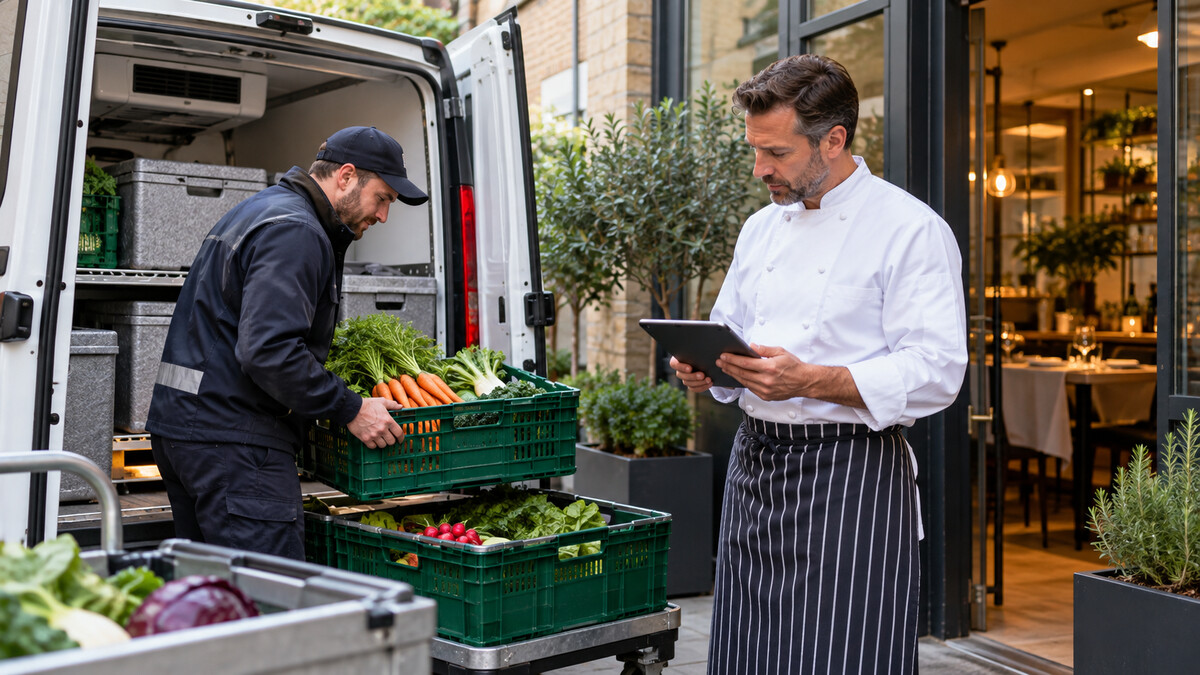
A meal served in a restaurant depends on more than the ingredients listed on its menu. Produce, chilled goods and packaging all have to reach the right place in usable condition, often within a tight window. Transport technology is making parts of that journey easier to monitor, but it also gives food businesses new decisions to make about data, delivery and customer communication.
For chefs, café owners and food retailers, the useful question is not whether to adopt every new tool. It is which information helps prevent waste, protect quality and make service more reliable.
Why Transport Matters to Food Businesses
Food supply chains involve producers, wholesalers, carriers and kitchens, each working to different schedules. A delay can affect freshness or leave a restaurant short of an ingredient during a busy service. Poor coordination can create the opposite problem: more stock arrives than the business can use before it deteriorates.
Transport systems can help operators see where a delivery is, receive estimated arrival times and record temperature or handling information. The value depends on how that data is used. A notification about a late vehicle matters only if someone can adjust preparation, contact a supplier or update the menu in response.
What Digital Tracking Can and Cannot Tell You
Tracking technology gives businesses a clearer view of movement between dispatch and arrival. For chilled or frozen goods, temperature monitoring can help identify whether conditions have moved outside agreed limits. Digital proof of delivery can also make it easier to reconcile orders and raise a query when quantities do not match.
These records support better decisions, but they do not replace checks at the receiving point. Staff still need to inspect goods, follow food-safety procedures and decide whether a delivery is suitable for use. A sensor reading is one piece of evidence, not a substitute for sound handling practices.
Small businesses should begin with a specific problem. If deliveries frequently arrive at inconvenient times, they may need clearer booking windows. If stock discrepancies are common, a simple digital receiving log could help. A more elaborate platform is worthwhile only if it solves a real operational issue and staff can use it consistently.
Using Delivery Data to Reduce Food Waste
Delivery and sales information can be considered together. A café that knows when key ingredients arrive can plan preparation around their expected shelf life. A restaurant can compare order quantities with actual demand and adjust purchasing when a dish sells less than expected. Better visibility may also help teams rotate stock and flag products that should be used first.
Forecasting still involves uncertainty. Weather, local events, customer habits and supplier availability can all change demand. Businesses should treat past sales as guidance rather than a guarantee, and leave room for human judgment. The aim is to make ordering more informed, not to automate away the knowledge of the people running the kitchen.
Last-Mile Delivery and the Customer Experience
For takeaway businesses, transport technology reaches the customer directly. Order tracking, clear delivery estimates and reliable handovers can make the service feel more predictable. Yet a fast journey does not guarantee a good meal. Packaging must protect food, hot and cold items need appropriate separation, and routes should not create avoidable delays.
Operators can review delivery performance alongside customer feedback. If complaints focus on late arrivals, the issue may be route planning, demand peaks or unrealistic estimates. If food arrives in poor condition, packaging and handling may need attention. Simply adding more delivery orders can make a problem worse if the kitchen or courier arrangement cannot manage the volume.
For wider food and hospitality industry coverage, operators can also explore FEAST Magazine UK.
Communicating Expertise Across the Transport Sector
Food businesses that depend on logistics may also have useful lessons to share with suppliers, carriers and other operators. A practical article about temperature control, delivery scheduling or reducing packaging waste can reach readers beyond a company’s own customer list. A directory of transport guest posting websites can help writers identify publications focused on the sector and consider where a relevant contribution might fit.
The strongest piece is specific and useful rather than a disguised sales pitch. For example, a food distributor could explain how restaurants can prepare for a delivery disruption, while a technology provider might describe the questions operators should ask before choosing tracking software. Any claims about performance should be supported, and the advice should make sense to readers who are not already customers.
Marketing Technology Needs a Clear Job
Digital marketing can help a food business communicate a new menu, promote catering or reach people in a particular area. Paid social campaigns are one option, but they need a defined objective and a way to assess results. A restaurant might measure bookings or orders rather than relying only on clicks and impressions.
When considering external support, compare the scope of work as well as the fee. Osdire’s guide to digital marketer costs discusses hiring options and rates; businesses seeking a Meta ads specialist can use that context when deciding what experience and campaign management they need. The right choice depends on the size of the budget, the audience and whether the business has the time to manage creative, reporting and follow-up itself.
A Practical Starting Point for Operators
Before buying a new system or commissioning a campaign, write down the problem and the result that would make the investment worthwhile. For transport, that might mean fewer missed delivery windows or better visibility of chilled stock. For marketing, it could be more qualified enquiries or a stronger return from a seasonal offer.
- Map the process: Note where delays, waste or communication gaps occur.
- Choose useful measures: Track a small number of indicators that relate to the problem.
- Test at a manageable scale: Trial a tool, workflow or campaign before expanding it.
- Review the outcome: Check whether the change improved service without adding disproportionate cost or work.
Technology can make food transport more visible and marketing more measurable, but it cannot guarantee good decisions. The benefit comes when accurate information reaches the people who can act on it, from the supplier preparing an order to the kitchen planning service. For food businesses, that connection between logistics, operations and customer needs is where digital tools earn their place.