



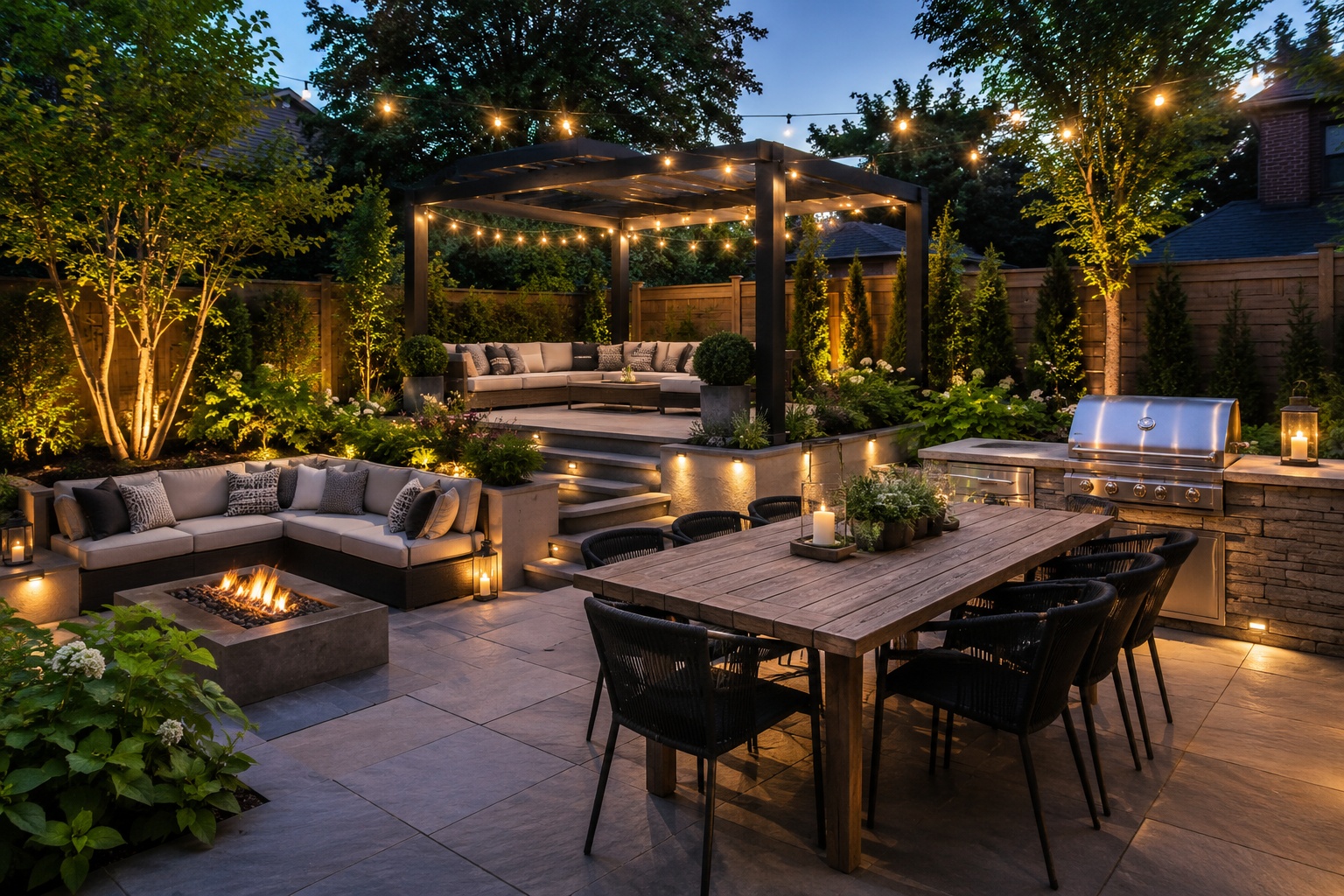
Most gardens are underused. Not because people don’t want to spend time outside, but because the space hasn’t been set up in a way that makes it easy. The furniture gets dragged out every June, the patio is uneven, the grass turns to mud after a single rainy weekend, and the whole thing gets quietly abandoned by August.
Getting it right is not complicated. But it does require some proper thought upfront, and in many cases, the involvement of people who actually know what they are doing.
Whether you are planning a full garden overhaul or just want somewhere decent to host a barbecue without embarrassment, here is what makes the difference between an outdoor space that works and one that sits unused.
Start With How You Actually Want to Use It
Before any paving gets laid or any plants go in, the most important question is a simple one: what do you want to do out there?
Eating outside with friends on a summer evening is a different brief from a space your kids use every day after school. A garden built around Sunday morning coffee and quiet reading is different again from one designed for regular barbecues with a crowd. The best outdoor spaces are built around real habits, not general ideas about what a garden should look like.
Think about numbers. How many people do you regularly host? Do you need room for a large table or would a couple of good chairs and some flexible seating work better? Is shade important, or do you spend more time outside in the evenings when the light drops? These questions sound basic, but the answers shape every decision that follows, from the size of the patio to the position of the lighting.
The Foundation Matters More Than You Think
Outdoor entertaining spaces fail most often because of the groundwork, not the garden furniture or the planting. A patio that was laid cheaply will shift over winter, creating lips and gaps that catch heels and tip glasses. Poor drainage leaves puddles after rain that take days to clear. A badly graded lawn becomes waterlogged and soft, and once it is, no amount of reseeding fixes it properly.
Good hard landscaping starts underground. The sub-base needs to be adequate for the surface going on top of it. Natural stone requires a properly prepared bed and the right jointing compound; skip either and the surface will stain, crack, or lift within a few years. Porcelain, which has become popular because of its clean finish and low maintenance, needs specific adhesive and a skilled laying team. Block paving is durable but must be laid with correct falls to drain properly.
None of this is the sort of thing you want to learn from experience. Getting the groundwork right from the start means your outdoor space holds up through Scottish winters, heavy use, and years of weather without needing constant repair.
Why Specialist Landscape Gardeners Make a Real Difference
There is a gap between a garden that looks nice in photographs and one that functions well across all seasons. That gap is usually filled by expertise.
When you are choosing the right landscape gardeners for your project, the things that matter most are not always the most visible. Portfolio quality is important, but so is how a contractor approaches the brief. Do they ask how you plan to use the space? Do they talk about drainage before they talk about materials? Do they explain the construction process or just send you a price?
Specialist landscapers, particularly those with long track records and manufacturer accreditations, bring knowledge that general builders simply do not have. They understand how different surfaces perform over time, how to handle changes in level without creating awkward steps, and how to integrate features like lighting, water elements, or planted boundaries into the build rather than bolting them on afterwards.
The British Association of Landscape Industries (bali.org.uk) maintains a register of accredited members that have been assessed against professional standards. Using a firm on that list gives you a reasonable starting point.
Designing for All-Weather Use
A garden you can only use in good weather is not really a garden for entertaining. The UK being what it is, any outdoor space worth having needs to work in variable conditions.
Covered areas help enormously. A well-designed pergola, veranda, or garden canopy extends the usable season by months. It does not need to be elaborate; even a simple overhead structure with some weather resistance changes how you use a space. Pair it with outdoor heating and you have somewhere genuinely comfortable from March through to October, which in most parts of the UK accounts for the bulk of the social calendar.
Surface choice matters here too. Textured porcelain or natural stone with a riven finish gives you grip in wet conditions that smooth or polished surfaces do not. This is not just comfort; it is a practical safety consideration, particularly if you have older guests or children running around.
Lighting extends the day. Gardens used only in daylight hours get half the use of ones that are well lit after dark. Path lighting, step lighting, and some considered accent lighting around planted areas or boundary walls transforms a space for evening use without needing anything dramatic. The Royal Horticultural Society (rhs.org.uk) has useful guidance on planning garden lighting schemes alongside planting, which is worth looking at before you brief a contractor.
Getting the Layout Right
The layout of an outdoor entertaining space is where most DIY garden projects go wrong. It looks simple on paper. It rarely is.
Level changes need thought. Steps that are too steep become a hazard when people are carrying plates and drinks. Ramps or gentle gradients work better in social spaces, but they need proper planning to drain correctly. Retaining walls, if your garden slopes, need to be built to a standard that handles the load and the weather. A well-built dry stone or block retaining wall lasts for decades; a poorly built one becomes a problem within a few seasons.
Zones work better than one large open space. A distinct dining area, a separate seating area for conversation, and a clear path between them makes a garden feel considered and easy to navigate. This is not about filling the space with features; it is about giving different uses their own territory so they do not compete with each other.
Connection to the house matters. The transition from kitchen or living room to outside should be easy. Wide doors, a level threshold, and a patio that sits at the right height relative to the floor inside make outdoor entertaining feel like a natural extension of the home rather than a separate project you have to prepare for. This is something to think about if you are planning a renovation or extension alongside the garden work.
What to Budget and When to Start Planning
Good outdoor spaces cost money. There is no way around that. But the cost of doing it properly once is almost always lower than the cost of fixing a poor job, and a well-built outdoor space adds real value to a property.
For a mid-range patio and soft landscaping project, budgets typically start from around £10,000 to £15,000 depending on size, materials, and site conditions. Full garden redesigns with multiple features, retaining walls, or significant level changes run considerably higher. These figures reflect professional installation with quality materials; cheaper quotes tend to reflect shortcuts that show up within a couple of years.
The other thing to plan for is time. Quality landscaping contractors book up, often months in advance, particularly for summer starts. If you want your garden ready for the warmer months, the conversation with a contractor needs to happen in autumn or winter, not spring. Getting quotes in, agreeing a design, and ordering materials takes time, and the best firms rarely have gaps at short notice.
A well-planned, properly built outdoor entertaining space changes how you use your home. Not just in summer. Year-round.