



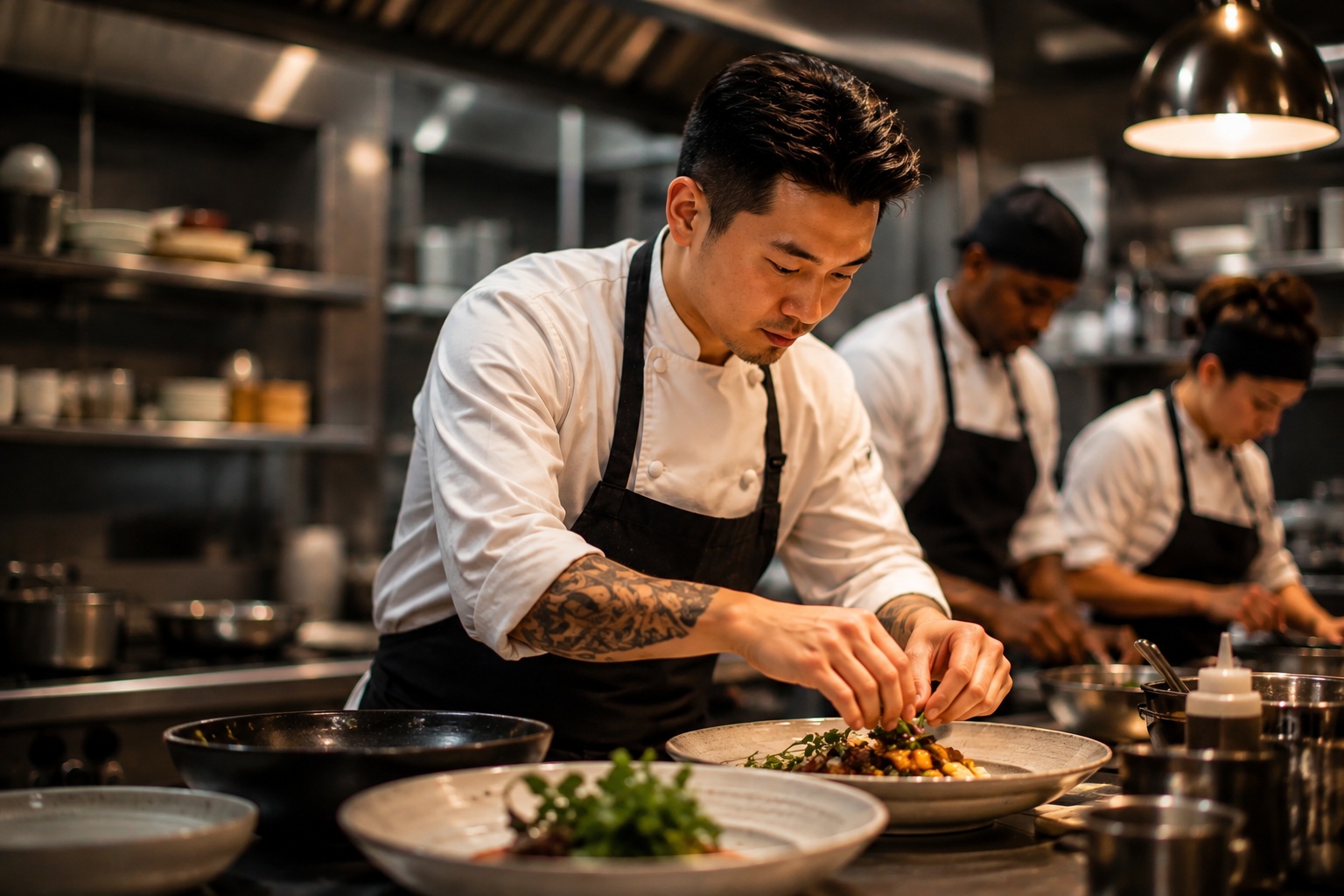
Walk into any celebrated restaurant in a major American city right now, and there is a good chance the person running the kitchen learned their craft somewhere else entirely. A chef trained in a small Basque village might be running the pass in Chicago, while someone who grew up cooking street food in Bangkok could be plating tasting menus in a converted warehouse in Brooklyn. This constant movement of culinary talent has quietly become one of the defining features of the American dining landscape over the past decade.
Food critics and diners alike have started paying closer attention to where a chef actually comes from, treating personal history as part of what makes a restaurant worth visiting. Menus increasingly read like a map of someone’s life rather than a simple list of dishes, blending techniques and ingredients from multiple continents into something that could not have existed in a single country on its own. That blending has become part of the appeal for a growing number of diners who want their meal to carry a genuine story behind it.
The Legal Path Behind Every International Career Move
Behind every chef who successfully builds a long-term career in the United States sits a process far less glamorous than anything happening in the kitchen. Moving across borders to cook professionally requires navigating work visas, sponsorship applications, and a legal system that was not designed with culinary careers specifically in mind. Restaurant owners who want to bring in talent from abroad often discover just how complicated this process becomes once they try to secure long-term status for a valued employee rather than a short-term work permit.
Many restaurants facing this challenge eventually turn to a green card lawyer to help sort through the specific pathways available for skilled workers in the food industry. According to Saavedra & Perez Law, a green card lawyer familiar with these cases understands how to present a chef’s specialized training and experience in a way that satisfies immigration requirements built around technical or professional skill categories that were not originally written with cooking in mind. That legal guidance often determines whether a talented chef can stay and grow with a restaurant long term or ends up returning home once a temporary visa expires.
Restaurants Investing in Global Talent
Ambitious restaurant groups have started treating international recruitment as a genuine business strategy rather than an occasional exception. Some actively scout culinary talent at competitions and training programs abroad, recognizing that a distinctive chef with a unique background can become the defining feature that sets their restaurant apart in a crowded market. This approach requires real financial investment, since sponsoring someone through the immigration process costs both time and legal fees that many smaller operations struggle to absorb.
Larger restaurant groups with more resources have built entire departments dedicated to managing these sponsorships, treating immigration support as seriously as they treat payroll or supply chain logistics. Smaller independent restaurants without that infrastructure often rely on a handful of trusted legal contacts who understand the food industry specifically, since general immigration advice does not always translate well to the unusual scheduling and seasonal demands that define restaurant work.
The Cities Becoming Global Culinary Hubs
Certain American cities have developed reputations as places where international culinary talent naturally gravitates, and it rarely happens by accident. Cities with diverse populations and strong dining cultures tend to offer chefs from abroad an audience already familiar with global cuisines, along with a built in customer base willing to seek out unfamiliar flavors. That existing appetite makes it easier for a new restaurant concept to find its footing rather than spending years educating an unfamiliar audience.
Local food media in these cities also plays a significant role, since restaurant critics and influencers actively seek out chefs with compelling international backgrounds to feature in their coverage. That attention creates a cycle where success stories encourage more talented chefs to consider making the same move, reinforcing a city’s reputation as a place where international culinary careers can genuinely take root and thrive.
What Diners Actually Notice on the Plate
For everyday diners, all of this behind-the-scenes complexity translates into something far simpler: a broader and more interesting range of options whenever they go out to eat. A single neighborhood might now offer authentic regional cooking from several different countries, all prepared by chefs who trained in the places these cuisines originated rather than chefs who learned the techniques secondhand from cookbooks or short training courses.
That authenticity has become something diners actively seek out and are willing to pay for, rewarding restaurants that invest in bringing genuine expertise into their kitchens. As more people travel and develop more sophisticated palates, the demand for chefs who can deliver an authentic experience rather than an approximation continues to grow steadily across nearly every major dining market in the country.
What This Global Exchange Means for the Future of Dining
The steady flow of international culinary talent into American cities shows no signs of slowing down, and the restaurants willing to support that movement stand to benefit the most in the years ahead. As dining audiences continue rewarding authenticity and distinctive backgrounds, restaurants that invest early in bringing global talent through the proper legal channels will likely maintain an edge over competitors who rely purely on domestic hiring.
For the chefs themselves, this ongoing exchange represents something bigger than a single job or restaurant; it represents a chance to build a career on a global stage while introducing entirely new audiences to food traditions they might never have encountered otherwise. That exchange, built on both culinary skill and careful legal groundwork, continues to shape what ends up on plates across the country every single day.