


Eco-friendly bag materials offer UK businesses a practical starting point for reusable promotional bags. From retail shops and supermarkets to trade shows and corporate events, a useful branded bag can keep your business visible during everyday activities. However, choosing the right fabric involves more than finding a natural-looking product.
Durability, production methods, price and repeated use all influence a bag’s environmental impact. No material is automatically the most sustainable choice for every campaign. The aim is to select a well-made bag that suits your customers and supports environmental claims you can verify.
4 Eco-Friendly Bag Materials for UK Business Promotion
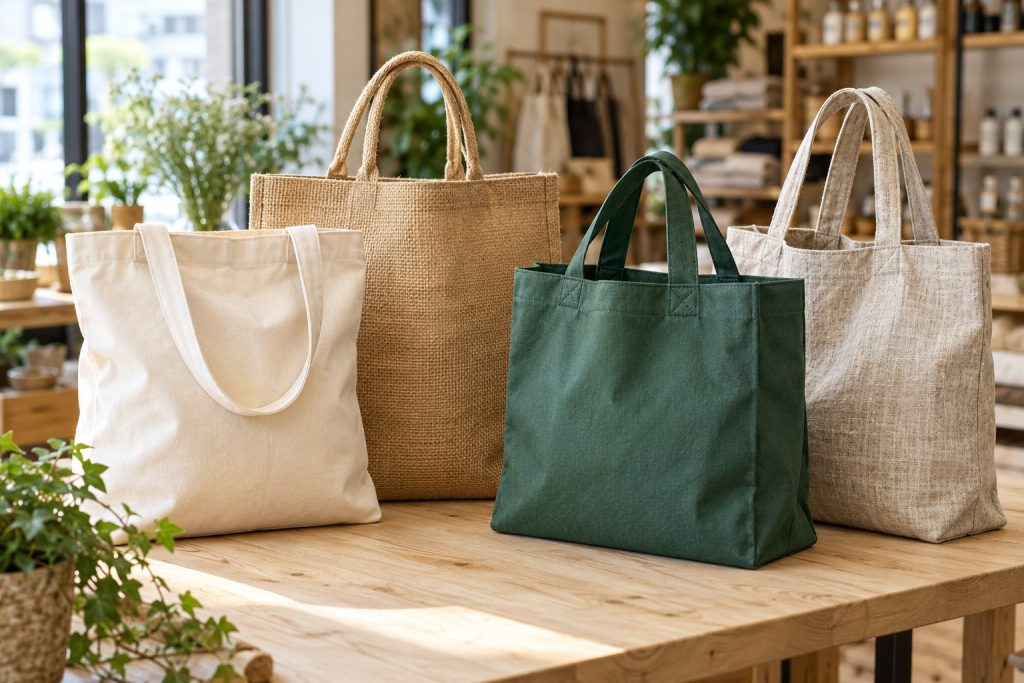
Organic cotton, jute, non-woven polypropylene and hemp offer different benefits. Here is how each option can fit a promotional campaign, alongside the limitations to consider.
1. Organic Cotton for Reusable Promotional Bags
Organic cotton offers a soft finish and a practical surface for printed branding. It can suit independent retailers, bookshops, beauty businesses and event organisers looking for a bag customers can carry regularly.
Organic farming standards restrict the use of certain pesticides and fertilisers. However, cotton production still uses land, water and energy. When comparing eco-friendly bag materials, ask your supplier for evidence supporting any organic claim rather than relying on the product description alone.
Choose strong stitching, comfortable handles and a size that works for everyday shopping. For example, a bookshop could offer a sturdy cotton tote that customers bring back on future visits. Frequent reuse helps spread the impact of production across more shopping trips.
2. Jute for Natural Reusable Shopping Bags
Jute has a textured, rustic appearance that can work well for farm shops, grocery retailers, garden centres and food brands. Its distinctive finish also suits gift bags and seasonal promotions.
A jute shopper can provide space for a clear logo and short brand message. However, check the finished bag’s construction before deciding what it can carry. Reinforced handles and a suitable base matter as much as the outer fabric.
Although untreated jute fibre can biodegrade under suitable conditions, a finished bag may include plastic lamination, synthetic thread or other components. Check the complete composition before describing the whole product as biodegradable or plastic-free.
3. Non-Woven Polypropylene for Reusable Event Bags
Non-woven polypropylene is a synthetic plastic material made from bonded fibres. Its lightweight construction and often lower purchase price make it an option for exhibitions, conferences and larger promotional campaigns.
For example, an event organiser could use a reusable bag to hold brochures and welcome materials. A useful size and strong handles may encourage attendees to keep using it after the event.
However, polypropylene is neither a natural fibre nor biodegradable. Its environmental performance depends on factors such as manufacturing, durability, reuse and disposal. Ask whether recycled content is documented and whether suitable recycling facilities accept the finished bag. Avoid presenting it as environmentally preferable simply because it is reusable.
4. Hemp for Durable Branded Bags
Hemp is a plant-based fibre that offers strength and a distinctive natural appearance. It can suit premium retailers, fashion labels and wellness businesses that want durable promotional merchandise.
A well-made hemp bag can support repeated shopping trips and everyday use. Nevertheless, the finished product’s impact depends on cultivation, processing, dyes, transport and any fibres blended into the fabric.
Hemp bags may cost more than basic alternatives, so compare supplier quotations and request samples. Check the fabric composition, seams, handles and print quality. A smaller order of useful, durable bags may suit your campaign better than a large quantity customers rarely use.
How to Choose Eco-Friendly Bag Materials
Start with how customers will use the bag. A grocery shopper needs a different capacity and construction from a lightweight conference giveaway. Compare eco-friendly bag materials against the same requirements: expected load, handle comfort, print finish, care instructions and total order cost.
Next, ask for evidence of organic or recycled content and clear information about coatings and linings. Keep environmental messages specific and supported by evidence. The UK Green Claims Code provides guidance on making accurate environmental claims.
For a food-sector example of evaluating packaging choices, read FEAST Magazine’s report on Hoogstraten’s approach to recycled strawberry packaging. You can also explore FEAST Magazine’s sustainability coverage for related food, retail and lifestyle initiatives.
Businesses can explore reusable promotional options with Rocket Bags and ask about available fabrics, printing, minimum order quantities and delivery times. Request a sample before placing a larger order so you can assess quality and suitability.
The best eco-friendly bag materials for your business depend on your customers, budget and intended use. Organic cotton, jute, polypropylene and hemp each involve trade-offs. Choose a bag people will want to reuse, verify its material claims and keep your branding clear to create practical merchandise with lasting promotional value.