



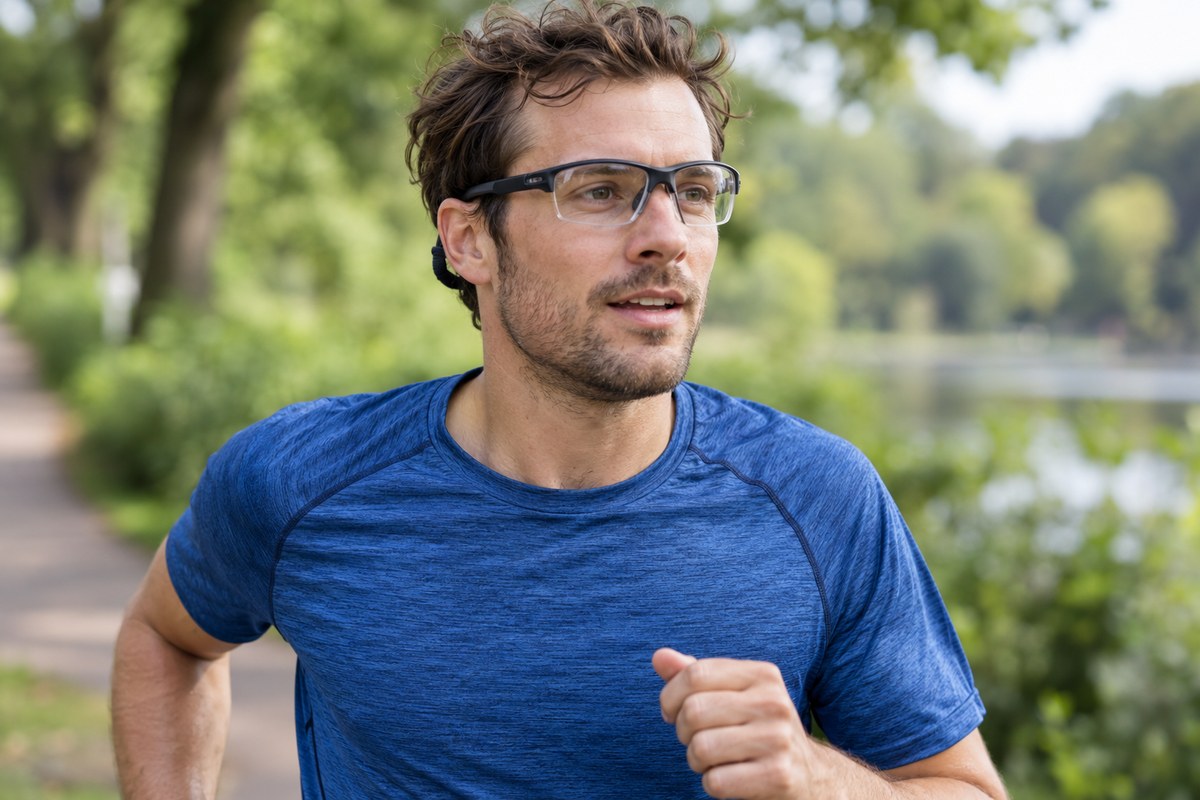
Playing sport with glasses can bring a few challenges. You go for a pass, your glasses slide down your nose, and a drop of sweat blurs the lens. It is a small moment, but it can cost you the ball. Many people who need glasses play sports anyway, and they should. Sport is good for your body and your mood, and glasses do not need to stand in the way. A few simple choices make it easier and safer. This guide covers options from straps to sports eyewear to lenses, so you can pick what suits your sport and your eyes. Nobody needs to give up a favourite game because of their sight. With the right setup, you can play with a clear view and a calm mind, and you can spend your energy on the game and not on your frames.
Why Playing Sport with Glasses Can Be Challenging
Frames that slide and bounce
Ordinary frames are made for daily life, not for a sprint or a jump. Fast moves, quick turns, and sudden stops shift them on your face. Each time you push them back, you lose a second of focus, and in sport a second can matter. Frames that slide also make you tilt your head, which changes how you see the game and can throw off your rhythm. Heavy frames are worse, because they press on your nose and ears as you tire. A pair that feels fine at your desk can feel very different after twenty minutes of hard play. Many players put up with this for years without a fix, but the fixes in the next section are simple and cheap. A small change can turn a daily annoyance into a problem that you hardly notice.
Sweat and fog
Sweat runs down your face and onto the lens and the nose pads, which makes the frames slip even more. Glasses can also fog when you step from cold air into a warm hall or a warm locker room. The mist forms because warm, humid air meets a cold lens. It clears in a few seconds, but those seconds can come at the wrong time, such as at the start of a game or after a break. Sweat on the lens also leaves marks that blur your view, and rain adds drops that you cannot wipe away on the move. These problems are worse in cold weather and in crowded indoor halls. A few habits, such as a headband and a clean cloth, keep them under control, and the next section shows how.
Knocks and breaks
Balls, elbows, and falls can break everyday frames and lenses. Broken glasses near the eye are a real risk, which is why sports eyewear exists. The US charity Prevent Blindness says that regular glasses do not give enough protection in sport, and it recommends that athletes wear eye protection that suits their sport. This matters most in sports with fast balls or close contact, such as racket sports and team games. It also applies to casual games with friends, where nobody has thought about safety in advance. You do not need to fear sport, but it is wise to use the right gear for it. A small change to your kit now can save you from a serious injury later. The next sections show your options, from small fixes to full sports eyewear.
Make Your Everyday Glasses Work Harder
Straps and grips for playing sport with glasses
A sports strap is a simple fix. It clips to the arms of your glasses and goes round the back of your head, so the frames stay in place when you move. Silicone ear grips and soft nose pads add more hold, and you can often buy them for a few pounds. Ask your optician if they can fit them, or if they can adjust your frames so they sit snugly. A good strap also keeps your glasses safe if they come off in a tackle, so you do not lose them on the pitch or step on them by mistake. Choose a strap in a bright colour, so you can find it in your kit bag. Try the strap at practice before a match, and adjust the length until the frames feel secure but not tight. Replace it when the elastic loses its stretch.
Anti-fog and anti-sweat habits
Anti-fog wipes and sprays help to stop mist on the lens, and a clean microfibre cloth wipes away sweat marks. Keep both in your kit bag. A headband or sweatband catches sweat before it reaches the lens, which also keeps your face dry. Wipe your lenses before you start, because a clean lens is easier to keep clear. Rub sunscreen and sweat off your hands before you touch your lenses, or you will smear them. Ask your optician what anti-fog options they offer. Some lenses and treatments can save you the daily wipe. If you play indoors in a cold hall, give your glasses a minute to adjust to the room before the game starts. A short pause can save you from a foggy first few minutes.
A snug, well-fitted frame
Ask your optician to adjust your frames for sport. A small bend of the arms or a change of nose pads can make a big difference to how well they stay put. Light frames are easier on the nose and ears over a long session. Light frames with a secure fit are the best place to start. Take your sports bag to the appointment and tell the optician which sport you play, so they can check the fit with a helmet or headband too. Try a quick test in the shop: shake your head, look down, and jump on the spot. If the frames move, ask for another adjustment. A well-fitted pair feels like part of your face, and you forget it is there once the game starts. Getting the fit right makes playing sport with glasses more comfortable.
Other Ways to See Clearly in Sport
Prescription sports glasses and goggles
Sports glasses are made for movement. They have a wrap-around shape that keeps wind and dust away and a snug fit that stays put. Look After Your Eyes, the College of Optometrists’ patient site, says that goggles and sunglasses can be made to any prescription, so you do not have to give up a clear view for protection. Ask your optician about tough, impact-resistant lenses for your sport, and about frames that fit under a helmet. Ask about prices and options that fit your budget, because there are choices at several levels. Some people keep a pair of sports glasses just for practice and match days, and use their everyday glasses for the rest of the week. That way, the sports pair takes the knocks and the everyday pair stays in good shape.
Contact lenses as one option
Many sports players find that contact lenses are a good choice, because there are no frames to slide, fog, or catch a ball. They also give you a full field of view, and they fit easily under a helmet or goggles. Daily disposable lenses are simple for practice days, because you throw them away after use and have no case to clean. Dust, wind, and dry air can bother some wearers, so carry a spare pair and your glasses as a back-up. Look After Your Eyes advises you to wash and dry your hands before you touch your lenses, and it recommends back-up glasses, both for problems with your lenses and to give your eyes a rest. It also advises you to clean a reusable lens case every day with fresh solution and let it dry. Lenses do not give impact protection, so for sports with fast balls, ask your optician whether to add goggles. Your optician can also check that your lenses fit well and show you how to handle them with confidence. Try new lenses on a rest day first, so you know how they feel before a big game.
Sunglasses for outdoor sport
The NHS advises sunglasses with wraparound lenses or wide arms that carry the CE mark and the British Standard mark. Wraparound styles cut glare from the sun and from wet surfaces, such as a pool or a road after rain. They also keep wind and grit out of your eyes. Pair them with lenses or prescription sports glasses for a clear view, and add a strap so they stay on. For snow sports, Look After Your Eyes says that goggles are a safer choice than sunglasses, because they protect against cold wind, ice particles, and UV light, and it adds that goggles can be made to any prescription. Keep a hard case in your kit bag, so your sunglasses do not scratch or snap between games. Choose a style that stays put when you turn your head fast.
Playing Sport with Glasses: Pick by Sport
Runners and cyclists
Sweat, wind, and fogged lenses are the main problems on a run or a ride. Wraparound sunglasses keep wind and grit out of your eyes, and a snug strap keeps your glasses in place on bumpy ground. A cap with a brim cuts glare and keeps rain off your lenses. Cyclists should also check that their glasses fit under the helmet, so the arms do not press on the head. Clear or light-tinted lenses help in poor light, so swap lenses for dawn and dusk rides. Runners can try a light headband to keep sweat out of the eyes on a long run. If you use a phone or a watch for your route, look up often, because your eyes need to see the path as well as the screen. A quick wipe of your lenses at a rest stop keeps your view sharp.
Ball and racket sports
Fast balls make impact protection the first concern. Prevent Blindness advises safety goggles with polycarbonate lenses for racket sports and basketball, labelled to a recognised sports standard. The standard it names, ASTM F803, is a US one, so ask your optician which standard applies in the UK. Sports goggles can be made to your prescription, so you can see the ball clearly and stay protected. Wear them from the first game, and your eyes are covered from the start. Check that the goggles fit snugly and do not press on your cheeks or brow, because a poor fit makes you adjust them often. Ask your coach or club whether they recommend a type for your sport. A pair that you trust lets you chase every ball without a second thought.
Water sports
Look After Your Eyes says to always wear goggles in the pool, to protect your eyes from chlorine and other irritants, and you can buy goggles with your prescription. Contact lens users should take their lenses out before a swim, because the same site advises you not to swim or shower in your lenses and never to rinse or store them in tap water. Prescription goggles let you see the clock, the lane, and the wall. For open water, ask your optician about the best options for your prescription. Rinse your goggles in fresh water after a swim and let them dry, so the lenses stay clear. Keep a spare pair of glasses at the poolside, so you can see on the way to the locker room.
Team and contact sports
Some clubs and leagues have rules about glasses and lenses, so check yours before you play. Rules can differ between sports and age groups. Choose protective eyewear that fits under a helmet or headguard, and test the fit at practice. Tell your coach what eyewear you use, so they can help if it comes off or breaks. Agree a plan with your team for a lost lens or a broken frame, such as a short pause and a spare pair on the bench. A short chat before the season saves a lot of trouble on match day, and it shows your team that you take care of yourself.
Keep Your Eyes Safe
Impact protection when playing sport with glasses
Everyday glasses are made to correct your sight, not to take a hard knock. Sports eyewear is built to cope with impacts, and it is made for the demands of a particular sport. Prevent Blindness recommends eyeguards that suit your sport. A good set of sports eyewear is a small cost against a serious injury. Ask your optician to explain the choices for your sport, and to check how the eyewear fits with your other kit. Ask whether you should replace it after a hard hit, because damage is not always easy to see. Replace worn or scratched sports eyewear too, because scratches can blur your view.
Know when to get help
Most knocks to the eye are minor, but some need quick help. The NHS says to go to A&E or call 999 if there are any changes to your sight after an eye injury, if you have severe pain, a headache, or sensitivity to light, if you feel sick, if you cannot move your eye or keep it open, or if blood or pus comes from your eye. The NHS also says not to drive yourself to A&E. Ask someone to drive you, or call 999. If you know the signs, you can act quickly and calmly. Keep a note of this advice in your kit bag, so that you and your teammates know what to do on the day.
Look After Your Gear
Care and storage
Rinse off sweat after play and wipe your lenses with a microfibre cloth. Keep glasses in a hard case, not loose in a kit bag, where they can scratch or snap. Let sports goggles dry before you pack them away. Keep contact lenses and cases clean, and wash your hands before you touch them, as Look After Your Eyes advises. Check your strap and nose pads now and then, because they wear out. Wipe down your strap and headband after a sweaty session, so they stay fresh. A few minutes of care after each game keeps your gear in good shape and saves you money over a season.
Spares and back-up
Keep a spare pair of glasses or lenses in your kit bag, so a broken frame or a lost lens does not end your day. Look After Your Eyes advises back-up glasses for lens users, and the same idea works for any player. A spare strap, a small cloth, and a travel-size anti-fog wipe cost very little. Check the bag before you leave home, and replace what you use. A small pouch for these items keeps them together. Keep a second spare pair at home or in the car, so you are covered if your kit bag is lost. With a back-up ready, a small accident stays a small accident. A spare kit is especially useful when playing sport with glasses away from home.
Talk to Your Optician
Tell them which sport you play
Share how often you play, where you play, and what protection you use now. An optician can suggest eyewear that suits your sport and your budget, check the fit with your helmet or headband, and explain options such as sports glasses, goggles, and lenses. If you play several sports, say so, because one pair may not suit them all. Take your kit to the appointment if you can. A good chat before you buy can save you money and time. Write down your questions in advance, so you cover all of it in one visit, and ask for a follow-up if you want to test a new setup before you commit. Mention any discomfort you notice while playing sport with glasses.
Keep your prescription up to date
Clear sight matters more when the ball is fast. An old prescription makes your eyes work harder, and it can make it hard to judge speed and distance. Book a test as often as your optician advises, and tell them if your sight seems to change between visits. If you use prescription sports eyewear, check that it matches your latest test. Small changes in sight can affect your game before you notice them. A regular test is a simple way to keep your game sharp, and it also checks the health of your eyes. Book it at a quiet time in your season, so any new eyewear is ready before the next big match.
The Bottom Line
Playing sport with glasses does not need to hold you back. A strap, a snug frame, a clean cloth, and a chat with your optician solve most problems. For fast balls and close contact, add sports eyewear, and consider lenses if frames still get in your way. Start with one change this week, such as a strap or a call to your optician. You will soon find that a clear, steady view makes the game more fun, and it lets you focus on the play and not on your glasses. Sport is for everyone, and your sight should never be a reason to sit on the bench. With a little thought and the right gear, you can play your best game, with a clear view and a steady head.