



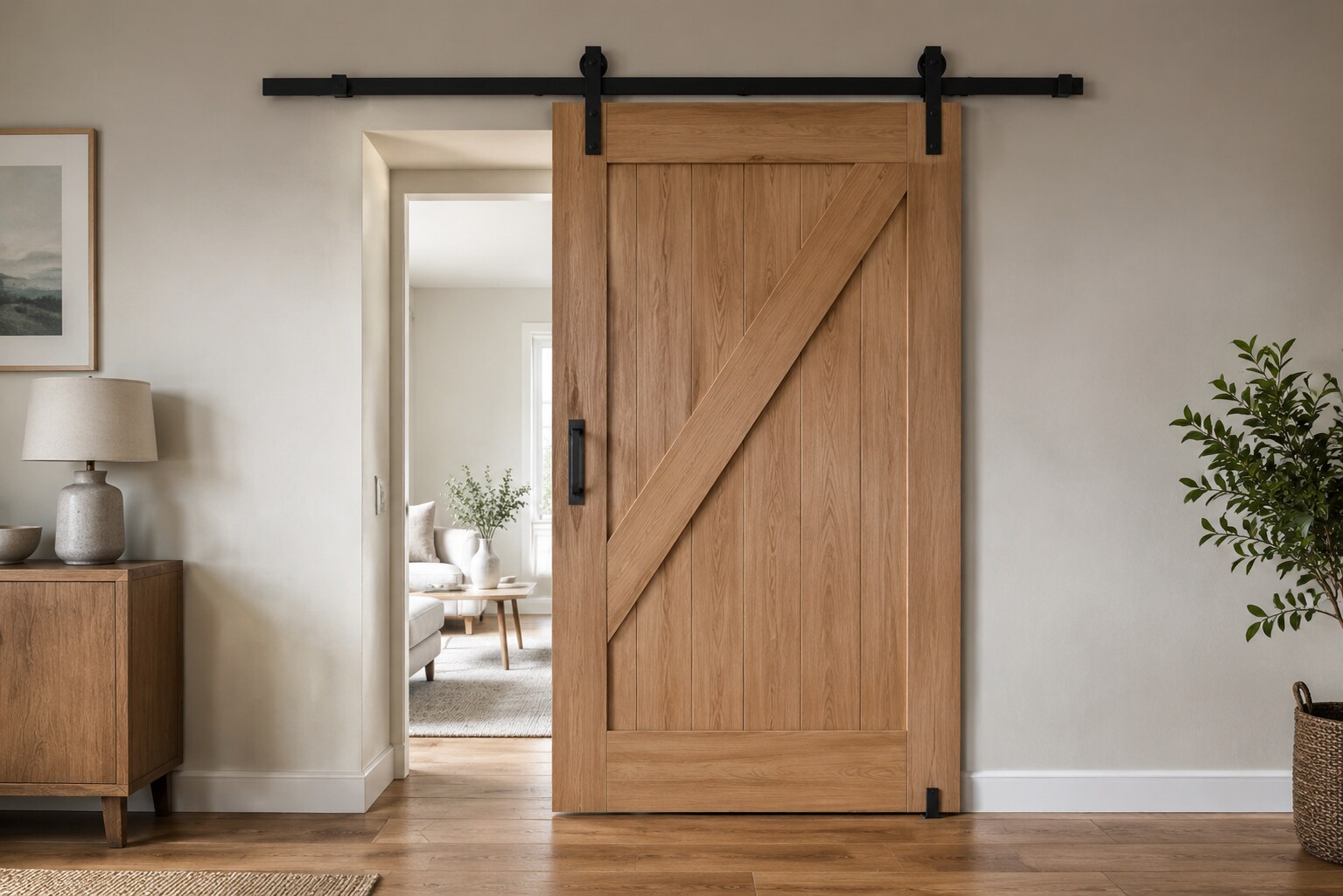
Choosing the right barn door hardware requires accurate measurements, sufficient clearances, and reliable wall support. Each component must be suitable for the door’s size and weight to ensure safe, smooth, and long-lasting operation.
Table of Contents
- The Evolution of Barn Door Functionality and Aesthetics
- Precision Measurement Techniques for the Perfect Fit
- Calculating Necessary Clearances and Obstruction Management
- Structural Integrity and Wall Support Requirements
- Selecting Hardware Materials and Weight Ratings
- Track Length and Door Overlap Principles
- Floor Guides and Soft Close Mechanisms
- Achieving Long-Term Mechanical Reliability
The Evolution of Barn Door Hardware and Functionality
Interior design trends often cycle through periods of minimalism and rustic charm, but few elements have maintained such consistent popularity as the sliding barn door. Beyond its visual appeal, the barn door offers a functional solution for tight spaces where a traditional swing door would consume valuable square footage.
However, the success of these installations relies entirely on the technical precision of the hardware selected. Choosing the right barn door hardware involves more than just picking a finish that matches your faucet. It requires a deep understanding of physics, structural engineering and spatial geometry.
When homeowners begin looking for high-quality solutions, they often turn to specialists such as Dusty’s Rustic Rolling Doors to ensure the hardware can withstand the daily rigours of a busy household. The shift from purely agricultural use to sophisticated residential application means that modern hardware must be silent, smooth and incredibly durable.
This guide will walk you through the complex technical requirements needed to transform a simple opening into a centrepiece of architectural design.
Precision Measurement Techniques for Barn Door Hardware
The most common mistake in barn door installation occurs during the initial measurement phase. Unlike a standard door that fits inside a frame, a barn door must overlap the opening to provide privacy and light control. To begin, you must measure the width of the finished opening from one side of the casing to the other. If your door has trim, you should measure from the outside edges of the trim.
- Measure the width of the opening and add at least two inches to each side. This total four-inch increase ensures that the door fully covers the gap, preventing sightlines into the room when the door is closed.
- Measure the height from the finished floor to the top of the door opening or the top of the casing.
- Add one inch to the height measurement if you want the door to overlap the top of the opening, but ensure you leave at least a half-inch gap at the bottom for floor clearance.
- Verify that the floor is level across the entire path of the door. A floor that slopes even slightly can cause the door to slide open or shut on its own.
When you are sourcing professional-grade components, such as those provided by Dusty’s Rustic Rolling Doors, having these exact numbers is vital for selecting the correct track length. A common industry standard is to double the width of the door to determine the minimum track length required, though adding a few extra inches can provide a more polished look.
Calculating Necessary Clearances and Obstruction Management
Clearance is the amount of space required for the door to function without hitting walls, furniture or architectural features. There are two primary types of clearance to consider: head clearance and lateral clearance.
Head clearance refers to the space between the top of the door opening and the ceiling. Most standard barn door hardware kits require between six and twelve inches of space to accommodate the track and hangers.
Lateral clearance is the wall space next to the opening where the door will rest when it is open. This area must be completely clear of light switches, thermostats, electrical outlets and baseboard heaters. If you have a light switch in the path of the door, you may need to hire an electrician to move it before installation.
Furthermore, consider the projection of the door from the wall. If you have thick baseboards or decorative trim, you will need spacers or a header board to push the track further away from the wall so the door does not rub against the casing.
Structural Integrity and Wall Support Requirements
A solid wood barn door can weigh anywhere from 100 to 250 pounds. Hanging this much weight on a single track puts significant stress on the wall. You cannot simply screw the track into drywall using anchors. The hardware must be secured to the structural studs of the house.
Because stud spacing is rarely perfectly aligned with the pre-drilled holes in a metal track, the use of a header board is highly recommended.
- Select a piece of hardwood that is at least one inch thick and the same length as your track.
- Secure the header board directly into the wall studs using heavy-duty wood screws.
- Mount the barn door hardware track onto the header board. This provides a continuous mounting surface and adds an extra layer of structural stability.
- Ensure the header board is painted or stained to match either the wall or the door for a cohesive aesthetic.
Using a header board also solves the clearance issue mentioned previously, as it naturally offsets the door from the wall, allowing it to clear most standard door trims. Professionals often suggest that the header board be slightly wider than the track itself to provide a visual frame for the metalwork.
Selecting Barn Door Hardware Materials and Weight Ratings
Not all hardware is created equal. The market is flooded with inexpensive, thin-gauge steel kits that may sag over time. When selecting your kit, look for high-carbon steel or stainless steel with a powder-coated finish.
The weight rating of the hardware should exceed the weight of your door by at least twenty percent. This safety margin accounts for the dynamic forces applied to the track when the door is being moved quickly.
Dusty’s Rustic Rolling Doors specialises in heavy-duty systems that utilise ball-bearing rollers. Unlike nylon wheels that can develop flat spots over time, high-quality steel rollers with bearings ensure a silent, effortless glide.
The thickness of the track itself should be at least one-quarter of an inch to prevent bending under the weight of a solid oak or reclaimed wood door.
Track Length and Door Overlap Principles
The length of your track dictates how far the door can travel. While the standard rule is to double the door width, there are scenarios where a longer track is beneficial. For example, if you want the door to completely clear the opening when open, you must account for the width of the hangers and door stops.
- For a thirty-six-inch-wide door, a seventy-two-inch track is the absolute minimum.
- A seventy-eight or eighty-inch track is often preferred to allow the door to move past the opening entirely, providing a full walkthrough space.
- If you are installing bi-parting doors, you will need a single long track that is four times the width of one door, or two separate tracks joined by a connector.
- Always check that the track has adjustable end stops, allowing you to fine-tune exactly where the door rests in both the open and closed positions.
The track should also extend far enough for the door to cover the opening when closed while moving completely away from it when open. Measuring the door, opening and available wall space together can prevent costly ordering mistakes.
Floor Guides and Soft Close Mechanisms
A common complaint with barn doors is that they can wobble or swing away from the wall at the bottom. This is not only annoying but can also be a safety hazard. A floor guide is a small piece of hardware that keeps the door aligned.
There are two main types: the T-guide, which requires a groove to be cut into the bottom of the door, and the wall-mounted roller guide, which cradles the door from the outside.
For a truly premium experience, consider adding a soft-close mechanism. These small devices are mounted to the back of the track and catch the door as it nears the end of its travel, gently pulling it into the fully closed or fully open position.
This prevents the door from slamming against the stops, which protects the hardware and reduces noise. When you invest in components from Dusty’s Rustic Rolling Doors, these small additions can significantly elevate the overall feel of the installation, making the door feel like a luxury feature rather than a simple DIY project.
Achieving Long-Term Barn Door Hardware Reliability
Once the measurements are verified and the structural support is in place, the final installation requires attention to detail. Every screw must be level, and every bolt must be tightened according to the manufacturer’s specifications.
Periodically checking the tightness of the fasteners is a good maintenance habit, as vibrations from moving a heavy door can gradually loosen hardware over several years.
- Use a long carpenter’s level to ensure the track is perfectly horizontal. Even a fraction of an inch of slope will cause the door to drift.
- Apply a small amount of silicone-based lubricant to the bearings if the manufacturer recommends it, though many modern rollers are permanently sealed.
- Clean the track regularly to remove dust and debris that can cause the rollers to jump or grind.
- Inspect the anti-jump discs, which are small circular pieces mounted to the top of the door to prevent it from being accidentally lifted off the track.
By following these technical guidelines, you ensure that your sliding door remains a functional and beautiful part of your home for decades. The intersection of proper engineering and high-quality materials is where true interior design excellence is found.
Focusing on reliable wall support, accurate measurements and suitable barn door hardware will help you avoid the most common installation problems and achieve a result that is both sturdy and stylish.