



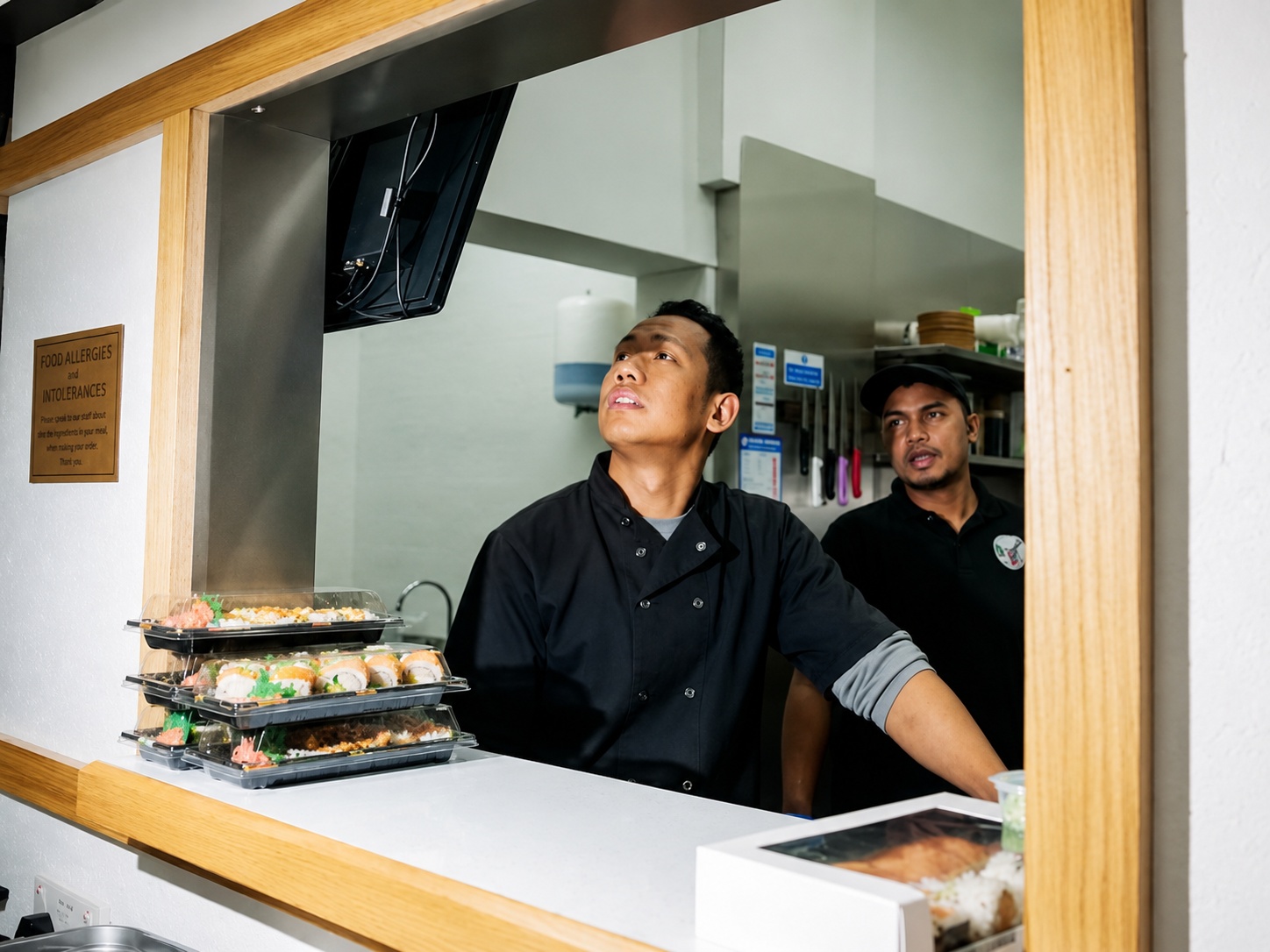
Anyone who has worked a busy Friday night shift knows the feeling. The phone is ringing, three tables need their bills, and someone is still trying to read a handwritten ticket that got smudged by a splash of sauce. Manual order-taking has been part of restaurant life for decades, but it is quietly costing operators more than most realise, in mistakes, in wasted time, and in customers who simply do not come back.
For UK restaurants juggling walk-ins, phone orders, and a growing list of delivery apps, the pressure has only increased. A modern restaurant POS system brings every one of those order channels into one place, which is exactly the kind of change that separates a smooth Friday night from a stressful one.
Where Manual Systems Fall Short
Pen and paper, or even a basic till, work fine when a restaurant is quiet. The trouble starts when volume climbs. A few things tend to go wrong at the same time:
- Orders get miscopied between the till, the kitchen, and any online platforms running alongside it
- Staff spend valuable minutes manually keying in the same order twice, once for payment and once for the kitchen
- There is no easy way to see which dishes are selling and which are sitting on the menu doing nothing
- Refunds and complaints pile up because errors are only caught after the food has already gone out
None of this is due to staff not trying hard enough. It is simply what happens when a business scales past what manual processes were ever designed to handle. Most restaurants do not notice the cost until they start measuring it, at which point it usually shows up as wasted stock, unhappy customers, or a kitchen team that is burning out.
What Changes With a Digital Order Management System
Bringing orders together digitally solves the coordination problem rather than papering over it. When every channel, dine-in, phone, delivery apps, and a restaurant’s own website feeds into a single dashboard, staff are no longer trying to hold the whole operation in their heads. The kitchen sees exactly what has been ordered, in the order it came in, without anyone needing to re-key anything.
This shift also opens the door to better decision-making. Once orders are tracked digitally, a restaurant can see which dishes are actually profitable, when its busiest hours really are, and where bottlenecks tend to form. That kind of visibility is genuinely difficult to get from a paper ticket system, no matter how organised the team behind it is.
There is a knock-on effect for staff too. Less time spent untangling mixed-up orders means more time spent on service, which is usually the part of the job that actually matters to customers. A detailed breakdown of what a good order management system should include is worth a read for any operator weighing up whether the switch is worth it.
A Practical Step, Not a Big Leap
Moving away from manual order-taking does not need to mean overhauling everything overnight. Many restaurants start with just their busiest sales channel and expand from there once staff get comfortable with the new process. The goal is not to replace good service with more technology for its own sake. It is to remove the small, everyday friction that makes good service harder than it needs to be.
For an industry that runs on tight margins and even tighter timing, that kind of change tends to pay for itself quickly, not just in fewer mistakes, but in a calmer kitchen and a team that can actually keep up with the rush.