



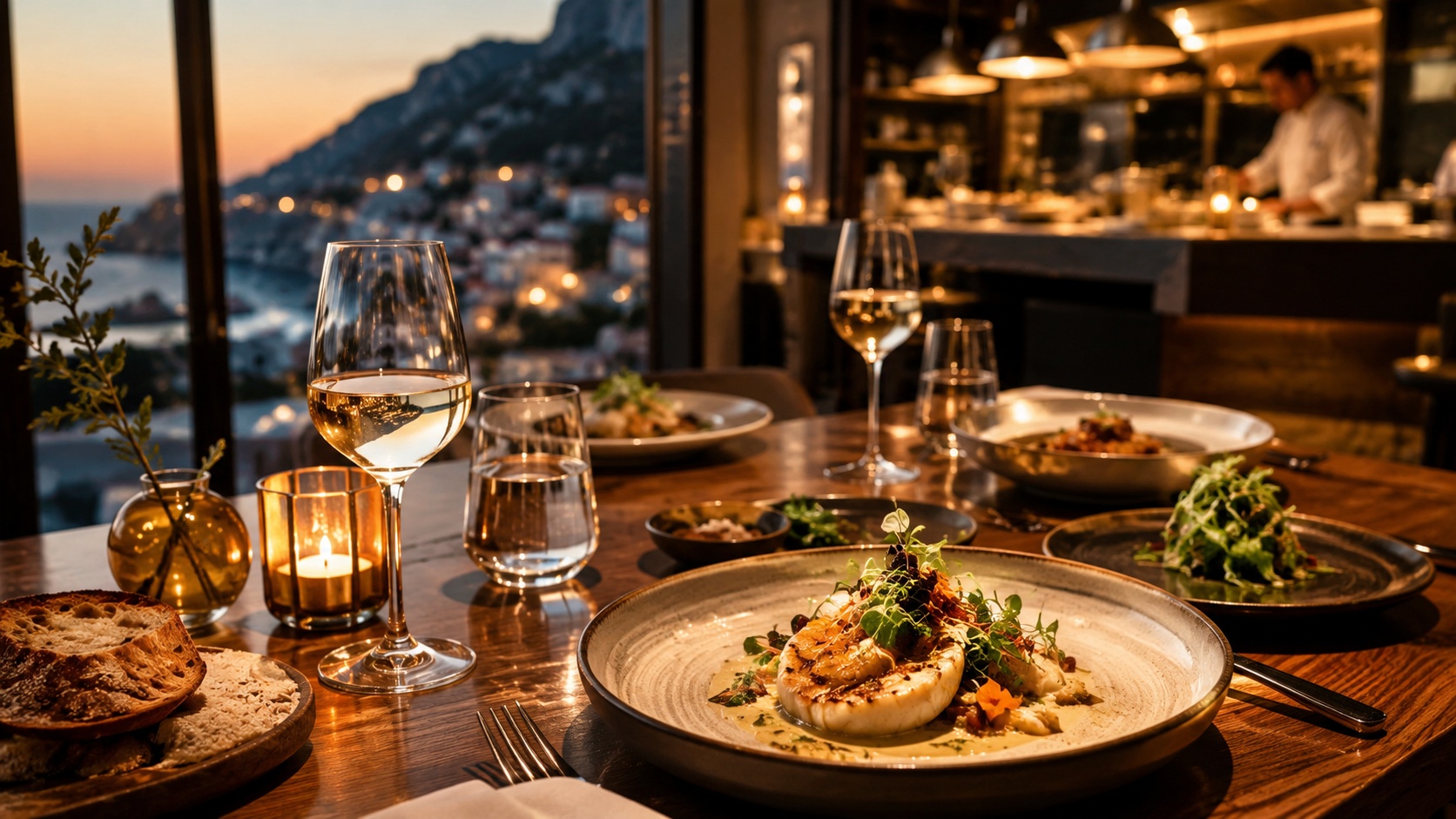
Quick Answer: Luxury food experiences are becoming a bigger part of travel because people increasingly want meals that feel connected to a place. Chef-led tastings, private tables, foraging, vineyard dinners and locally rooted menus offer something a standard restaurant booking cannot: a story, a sense of access and a memory that becomes part of the trip itself.
For years, the classic luxury holiday formula was easy to recognise: a better room, a better view and a restaurant reservation somewhere polished. That formula has not disappeared, but it is no longer enough for many travellers. Food is moving from the edge of the itinerary to the centre of it.
A growing number of people are choosing where to stay, and sometimes where to travel, around what they can eat and experience there. The attraction is not simply a more expensive meal. It is access to something that feels difficult to reproduce at home: a chef cooking in front of six guests, dinner in a vineyard, seafood served metres from the coast, a menu built around a farm’s harvest, or a tasting that explains the history of a region one course at a time.
That shift helps explain why luxury food experiences now sit so naturally alongside boutique hotels, slow travel and destination-led holidays. The meal has become part of the reason to go.
What Counts as a Luxury Food Experience?
Luxury does not have to mean white tablecloths, silver cloches or a huge wine list. In travel, the word is increasingly about rarity, attention and access. A twelve-seat counter where the chef serves each course personally can feel more luxurious than a grand dining room. So can a simple lunch on a working estate if the ingredients were picked that morning and the host can explain exactly where they came from.
The strongest experiences usually have at least one element that cannot be separated from the location. It might be a local ingredient, a landscape, a producer, a tradition or the personality of the chef. That is what turns dinner from a service into part of the destination.
For travellers already planning food-focused travel, this changes the way an itinerary is built. Instead of asking where to eat after booking a hotel, they may start with the food experience and work outwards from there.
Why Travellers Want More Than Fine Dining
1. They want a stronger sense of place
A beautifully cooked dish can be memorable anywhere. A dish that could only make sense in that particular town, coast, valley or city is harder to forget. Travellers are looking for menus that explain where they are, whether that comes through local seafood, regional cheeses, heritage grains, orchard fruit or recipes tied to a community.
That desire also explains the appeal of market visits, producer tours and neighbourhood tastings. In places such as Tokyo, the food culture extends well beyond formal restaurants; markets, sake breweries, small counters and local specialities can reveal just as much about the city as a major attraction.
FEAST’s Tokyo food guide is a useful example of how a destination can be understood by moving between different kinds of food experiences rather than relying on one headline restaurant.
2. Access has become part of the luxury
The most desirable food experiences often create a feeling of being let behind the curtain. Chef’s tables, kitchen counters, private tastings and small-group dinners reduce the distance between the guest and the people making the food. Diners can see the decisions being made, ask questions and understand why a particular ingredient or technique matters.
This kind of access is difficult to mass-produce, which is exactly why it carries value. A luxury traveller may be willing to pay more not for another course, but for fewer seats, more attention and an experience that does not feel interchangeable with hundreds of others.
3. The story matters as much as the plate
Modern diners are more interested in provenance than they once were. They want to know who grew the vegetables, where the fish was landed, why a particular cheese belongs to the area or what inspired a chef to use an old technique in a new way. Good hospitality turns those details into a story without making dinner feel like a lecture.
VisitBritain’s 2026 consumer trends research identifies culinary tourism as a way for travellers to explore local flavours and traditions while building a stronger connection with communities and culture. That is a useful definition of what is happening at the premium end of travel too: the value lies in connection, not simply consumption.
Source: VisitBritain Consumer Trends 2026
4. Travellers are choosing fewer, better moments
A luxury trip does not need to be expensive at every hour of the day. In fact, many travellers would rather spend heavily on one exceptional dinner and keep the rest of the itinerary relaxed. A bakery breakfast, a market lunch and one ambitious tasting menu can create more contrast, and often more character, than trying to make every meal formal.
That approach also makes premium travel more flexible. Someone can plan an affordable luxury holiday by deciding which experiences genuinely matter to them, rather than paying for luxury by default.
Hotels Are Treating Food as Part of the Destination
Hotels have noticed the same change. A strong restaurant is no longer only an amenity for overnight guests; it can shape the identity of the entire property. Some hotels build stays around kitchen gardens, local farms, guest-chef residencies, wine pairings or menus that change with the landscape. Others use a small restaurant or chef’s counter to give a large property a more intimate point of view.
This is especially important for boutique and rural hotels, where food can connect the guest to the surrounding area without requiring a packed schedule. A dinner based on produce from nearby farms, followed by breakfast using the same region’s bread, dairy and preserves, can make a short stay feel much more rooted in place.
Food Experiences Are Becoming a Way to Understand a City
The same idea works in cities, where luxury does not always mean exclusivity. A private guide who can move between a family-run bakery, a specialist market stall and a serious restaurant may offer more insight than a single expensive booking. The value comes from curation: knowing which places matter, when to go and what to order.
That is why gastronomic tours in Miami can reveal neighbourhoods and cultural influences that would be easy to miss on a conventional sightseeing route. Food becomes a way of reading the city.
The Best Luxury Food Experiences Still Need Substance
There is a risk in any trend becoming too staged. A dramatic dining room, theatrical plating or a hard-to-book table can create attention, but none of those things can rescue an experience that feels hollow. Travellers paying a premium are increasingly good at spotting the difference between genuine hospitality and something designed mainly for a camera.
The experiences that last tend to get the basics right first: good ingredients, confident cooking, warm service and a clear reason for being where they are. The performance, scenery or exclusivity should add to that foundation rather than replace it.
How to Choose a Food Experience Worth Travelling For
- Look for a clear connection to the destination. Local producers, regional ingredients and a menu shaped by the surrounding area are usually stronger signs than generic luxury language.
- Check the scale. Small groups, counter seating and limited sittings often allow for more interaction, although they are not automatically better.
- Read what the experience actually includes. A high price may cover a tour, pairing, transport, private guide or access to a producer, not just the meal.
- Balance the itinerary. One long tasting menu can be brilliant; scheduling several on consecutive days can make each one feel less special.
- Book the hardest-to-replace experience first. Hotels and transport usually offer alternatives. A six-seat chef’s table on one particular night may not.
Luxury Is Moving From Things to Moments
The rise of luxury food experiences reflects a broader change in how people think about travel. A memorable meal is temporary, but that is part of its appeal. There is nothing to carry home except the story of where you were, who cooked for you, what you tasted and why it could not have happened in quite the same way anywhere else.
For restaurants, hotels and destinations, that raises the bar. Travellers are no longer impressed by expense alone. They want a point of view. They want access, personality and a connection to place. The restaurant meal is still important, but the experience surrounding it is increasingly what makes the journey feel luxurious.
Frequently Asked Questions
What is a luxury food experience?
A luxury food experience is a premium dining or culinary activity built around access, service, location, storytelling or rarity. Examples include chef’s tables, private tastings, vineyard dinners, foraging experiences, producer visits and highly personalised tasting menus.
Why are culinary experiences becoming more popular with travellers?
Food gives travellers a direct way to understand a destination. Local ingredients, traditions and producers can create a stronger sense of place, while small-group and chef-led experiences offer the personal interaction many travellers now value.
Is fine dining the same as a luxury food experience?
Not necessarily. Fine dining usually describes a high level of cooking and service in a restaurant. A luxury food experience can be formal or informal; what makes it feel luxurious may be exclusivity, access, setting, personalisation or a unique connection to the destination.
How should I plan a trip around food?
Start with one or two experiences that are difficult to replace, such as a limited-seat tasting or producer visit, then plan accommodation and simpler meals around them. Leaving space in the itinerary also makes it easier to follow local recommendations once you arrive.