



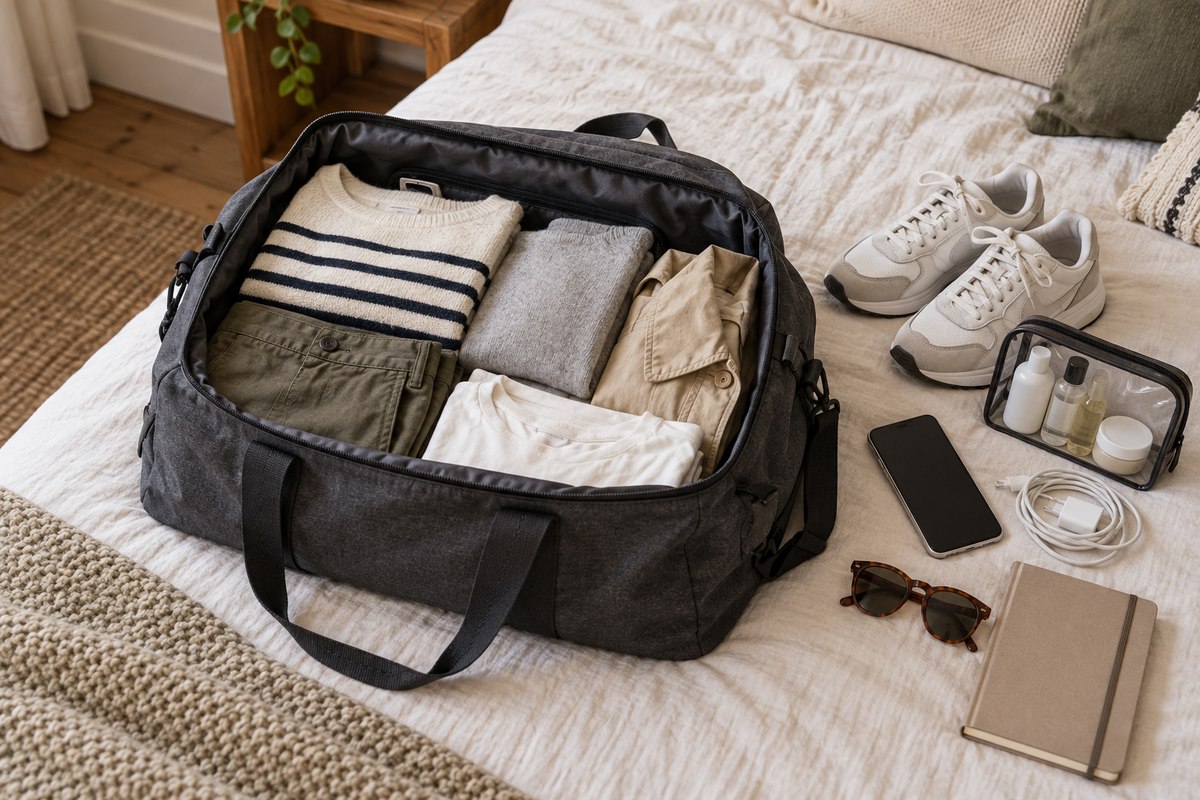
Quick answer: For a three-day, two-night city break, start with three tops in total, one or two bottoms, underwear and socks for each day, nightwear, a weather-appropriate outer layer and comfortable shoes. Add your travel documents, essential toiletries, medication and phone charger. Count the clothes you wear on the journey as part of the total, then adjust for your plans and personal needs.
Packing for three days can take longer than packing for a week. The trip feels too short for a large suitcase, yet somehow the bed ends up covered in spare jumpers, shoes and outfits for evenings you have not actually planned.
The problem usually starts with packing for possibilities. Perhaps there will be a smart dinner. Perhaps the weather will turn. Perhaps you will finally use the hotel gym.
A useful city break packing list starts with what is booked, what the forecast suggests and how you will spend your days. Here is a starting point for one adult travelling for three days and two nights.
Start With the Bag Allowance on Your Booking
Before laying out clothes, check the luggage included in your ticket.
“Hand luggage” is not a single bag size. Check the permitted dimensions, any weight limit and whether your booking includes an additional item. Use the airline’s own information for your fare rather than relying on a retailer’s “cabin approved” description.
If you already own a suitable bag, pack into that first. Buying a bigger one can make it easier to bring things you never needed.
Also consider the journey after arrival. Will you walk from the station? Use several flights of stairs? Carry the bag around before check-in?
Those details matter more than how neatly the case fits beside your wardrobe.
A Three-Day City Break Packing List
These are suggested totals, including what you wear while travelling. Adjust them for accessibility needs, personal care, activities and whether you are comfortable wearing certain items again.
| Item | Suggested total | Packing note |
|---|---|---|
| Tops | 3 | Include your travel-day top |
| Trousers, skirts or other bottoms | 1–2 | Choose pieces that work with several tops |
| Underwear | 3 changes, plus a spare if wanted | Adjust to your needs |
| Socks | 3 pairs, plus a spare for wet weather if useful | Match them to your shoes |
| Nightwear | 1 set | Choose something compact |
| Jumper, cardigan or warm layer | 1 | Wear it during the journey if practical |
| Coat or jacket | 1 | Choose for the forecast |
| Comfortable shoes | 1 pair | Wear these while travelling |
| Additional shoes | Optional | Bring only for a specific activity or occasion |
| Day bag | 1 | Ideally use it during the journey too |
This is a starting point, not a target to squeeze into every bag. A winter coat, specialist equipment or formal event can change the calculation considerably.
Plan Outfits Around the Actual Trip
Write down the main activity for each day.
For example:
- Day one: Travel, check-in and an afternoon walk.
- Day two: Sightseeing, a gallery visit and an evening booking.
- Day three: A short outing before travelling home.
Now choose clothes for those activities. If one pair of trousers works throughout the trip, a second pair becomes a deliberate choice rather than something added automatically.
Lay out complete combinations before packing. Check that your warm layer fits over each top and that your shoes work with the clothes you have chosen.
There is little value in packing six pieces that only make two outfits.
For help keeping the itinerary equally manageable, see FEAST’s tips for a smoother weekend break.
Make the Shoe Decision Early
Shoes are often the item that forces a small packing list into a larger bag.
Start with a pair you already find comfortable. A short break with lots of walking is an inconvenient time to discover that new shoes rub after half an hour.
A second pair makes sense when it has a clear purpose: a formal event, a planned activity or another genuine need. Otherwise, ask whether it will spend most of the trip at the bottom of the case.
If you do bring additional shoes, pack them so that the soles do not touch clean clothing. Avoid filling the bag around them until you have checked whether everything else still fits comfortably.
Change the List for the Weather
Check the destination forecast shortly before departure, including evening temperatures and expected rain.
For a wet city break
Prioritise suitable outerwear and footwear. A spare pair of socks may earn its space more readily than another evening top.
Think about where a wet umbrella or jacket will go when you enter a museum or return to your accommodation.
For colder weather
Check that your layers work together. A jumper that feels comfortable at home may not fit beneath the coat you planned to wear.
Wear bulky items during the journey when practical, but leave enough room to carry them if you become warm.
For warm weather
Choose clothes you expect to stay comfortable in while walking. Include appropriate sun protection and consider whether your plans involve places with dress requirements.
The forecast should guide the list; it should not produce a second suitcase of precautions.
Keep Toiletries to Your Usual Essentials
Pack the products you use during a normal morning and evening, then remove anything that has come along purely because it is travel-sized.
A basic wash bag might include a toothbrush, toothpaste, deodorant, essential skincare, sunscreen and personal care products. Add contact lens supplies or other items you rely on.
Check what the accommodation provides before packing shampoo, a hairdryer or towels. If a particular product is important to you, bring it rather than assuming the hotel will have an equivalent.
For flights, check the rules at your departure, connecting and return airports. GOV.UK states that liquid restrictions depend on the airport; the rules at one end of the journey may differ from those at the other. Consult the official hand luggage liquids guidance before packing.
Put Documents and Essentials Where You Can Reach Them
Your most important items should not be buried beneath clothing.
Keep the documents required for your journey, booking information, payment methods, phone and essential personal items accessible. Check destination-specific entry requirements separately.
Save the accommodation address and arrival instructions somewhere you can open without searching through several emails. Download tickets where the provider allows it.
If carrying medication, check the relevant travel and destination requirements before departure.
Give your keys a fixed pocket too. They are easy to forget until you are standing outside your own front door after the return journey.
Pack Technology by Purpose
A phone charger is an obvious inclusion. A laptop needs more thought.
If you have a specific reason to take it, allow room for the charger and any accessories. If it is coming “just in case”, decide what task it will perform that your phone cannot reasonably handle during three days away.
Apply the same question to tablets, cameras and headphones. There is nothing wrong with bringing equipment you enjoy using; the aim is to avoid carrying it by habit.
Check plug compatibility for your destination and identify which cables each device needs. If bringing a power bank or spare batteries, check your airline’s current carriage rules.
Keep small cables together so that you can find them without unpacking the room.
Leave Out Items Without a Clear Job
Before closing the bag, review the things you added last.
Common candidates for removal include an extra coat, several bulky books, duplicate toiletries and clothes that do not work with the rest of the list.
A useful question is: When, exactly, do I expect to use this?
If you can name the occasion, keep it if space allows. If the answer is a chain of unlikely possibilities, reconsider it.
FEAST’s packing advice for a short holiday offers another perspective on choosing what earns a place in the bag.
Test the Packed Bag Before Leaving
Zip it up without sitting on it, then carry it around for a few minutes.
Can you lift it comfortably? Can you reach the items needed during the journey? Is there space for clothing you may remove while travelling?
Leave a little room if you expect to bring something home. A bag that only closes after a careful packing routine may be frustrating when you are checking out in a hurry.
Keep a lightweight bag for worn clothing and return small items to the same pockets throughout the trip. Packing for home becomes easier when everything still has a place.
For ideas about enjoying the journey as well as the destination, read ways to make travel more relaxing.
Frequently Asked Questions
What should I pack for a three-day city break?
Start with clothes for the planned activities, underwear, socks, nightwear, suitable outerwear, comfortable shoes, essential toiletries, documents and a phone charger. Count your travel outfit within the totals.
Can I manage with one backpack?
Possibly. It depends on the bag allowance, weather, clothing and personal equipment you need. Pack and carry the bag at home before deciding.
Do I need a separate outfit for every evening?
Only if your plans call for one. Check any dress requirements and see whether a change of top or layer works with clothes you are already bringing.
Are packing cubes necessary?
No. They can help organise items, but they also take up some space. Use them if they make your bag easier to manage.
Should I roll or fold my clothes?
Choose the method that suits the fabric and bag. Removing unnecessary items is usually a more useful first step than changing how you arrange them.
What should I check on the day before travelling?
Review the forecast, luggage allowance, documents, tickets, arrival instructions and applicable security rules. Charge your devices and make sure essential items are accessible.
Explore more short-break ideas and travel guides at FEAST Magazine.