



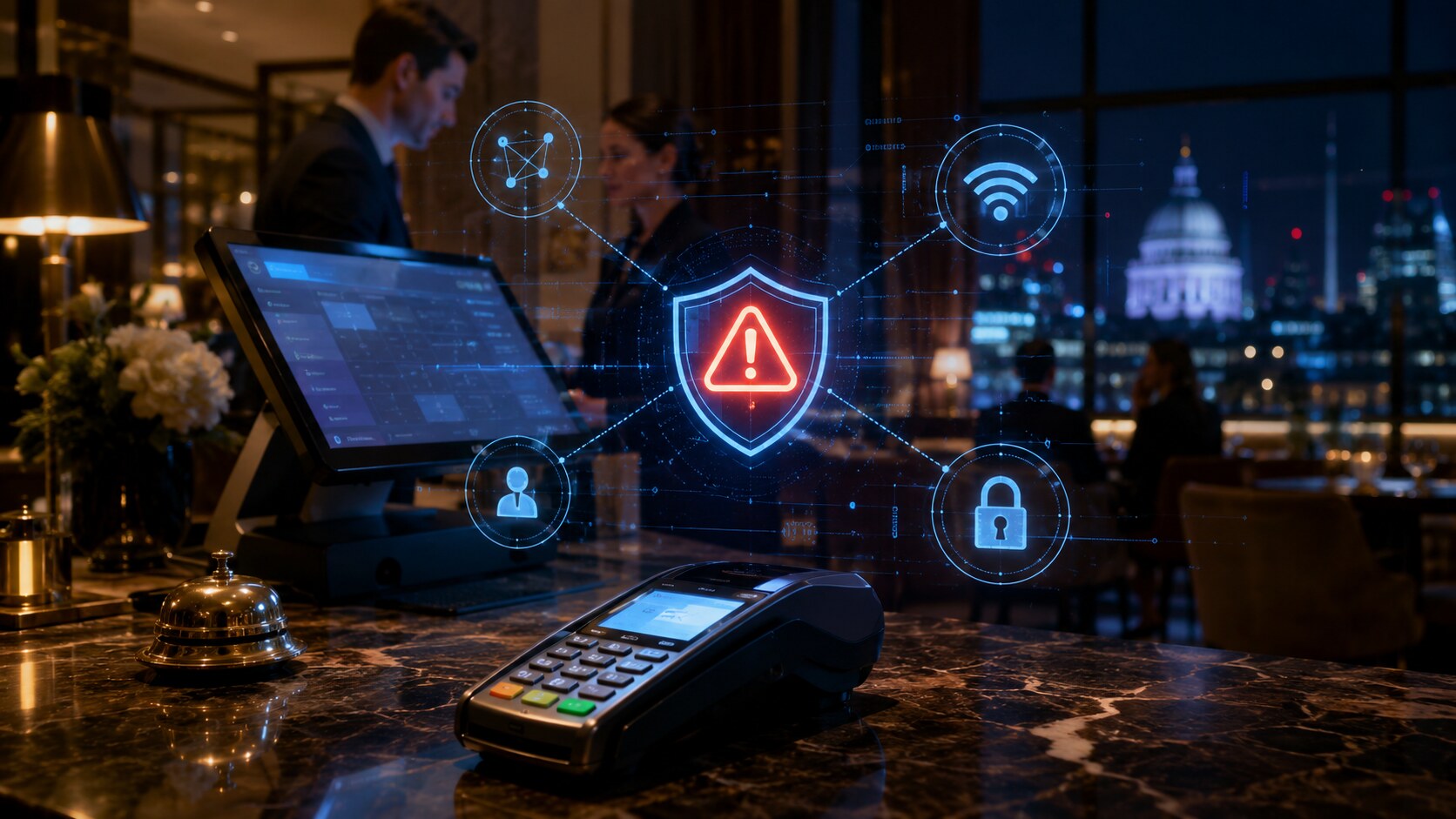
Cyber threats in hospitality put London’s restaurants, hotels and events venues at growing risk. These businesses process thousands of card payments every day. They’ve got guest names, email addresses, dietary requirements, booking histories and, in plenty of cases, passport details sitting in their systems too. But if you look at how most of these businesses actually handle cyber security, there’s a pretty obvious mismatch between the amount of data they’re collecting and the protections they’ve got around it.
Hospitality has always put people first. Guest experience and speed of service will always win over IT spending, especially on a packed Friday night. The trouble is, that mindset makes the sector an easy mark for attackers who know where to find weak spots. So let’s break down what the most common threats look like and what operators can actually do to stay ahead of them.
Cyber Threats in Hospitality: Point-of-Sale Malware
Point-of-sale (POS) systems keep hospitality running, and they’re also one of the first things cybercriminals go after. POS malware works by sitting quietly on a payment terminal and skimming card data as transactions go through. The business won’t spot anything wrong, but customer card details will be silently copied and sent off to an external server.
It tends to hit businesses that haven’t updated their terminals or applied firmware patches in a while. In a busy hotel or restaurant, those updates get pushed to the bottom of the to-do list all the time. But outdated software is one of the easiest ways in for an attacker, and honestly, one of the simplest things to fix.
Guest Wi-Fi Opens More Doors Than You’d Think
Free Wi-Fi is expected at pretty much every hotel, café and co-working event space in London now. The problem is that a lot of businesses run their guest network on the same infrastructure as their internal systems. If the networks aren’t properly separated, someone sitting in the lobby with a laptop could potentially reach POS devices and back-office systems without much effort.
Then there’s the issue of rogue access points. An attacker can set up a fake Wi-Fi network with a name that looks identical to the venue’s real one. Guests connect without a second thought, and their traffic gets intercepted. It’s dead simple for the attacker and almost impossible for the business to notice.
Good network segmentation and strong encryption will make a big difference here, along with regular monitoring of connected devices. Guest traffic should never be running along the same pathway as internal operations.
Social Engineering Targets Front-of-House Staff
Cyber threats in hospitality also target front-of-house teams, who are trained to be helpful and accommodating. That’s the exact trait attackers take advantage of. Social engineering attacks in hospitality often come through phone calls or emails pretending to be from senior management or IT support. A receptionist gets a call from someone claiming to be from the booking platform, asking them to confirm login details. A restaurant manager gets an email that looks like it’s from head office, with an attachment that installs malware the moment they open it.
These attacks work because hospitality staff don’t usually get the same cybersecurity training that office-based workers do. It’s an industry with high turnover and lots of seasonal hires, so training gaps pop up constantly, and attackers are well aware of that.
Even a short induction module on spotting phishing emails and suspicious phone calls can make a real difference. The important thing is making it part of onboarding, not some one-off session that everyone forgets about within a week.
PCI DSS Compliance Isn’t Optional
Any business that processes card payments has to comply with PCI DSS (Payment Card Industry Data Security Standard). For hospitality, that covers everything from how card data gets stored and transmitted to who can actually access the payment systems. Non-compliance raises the chance of a breach, and on top of that, it can mean fines and potentially losing the ability to accept card payments altogether.
A lot of smaller hospitality operators assume PCI DSS is only for big chains, but it isn’t. The requirements scale depending on business size, but every business handling card data has obligations it needs to meet. Running regular vulnerability scans and commissioning CREST-accredited penetration testing on payment infrastructure will help catch weaknesses before they turn into real problems, and now an increasing number of London businesses are getting wise to these facts.
Staff Training Has to Be Ongoing
Cyber threats change all the time, and a single training session won’t cut it. Hospitality businesses that take security seriously will build regular refreshers into their staff schedules. They don’t need to be long, either.
A 15-minute session every quarter covering the latest phishing tactics, or a quick walkthrough of what to do when something looks off, will be far more useful than an annual all-day course that nobody retains.
Managers and senior staff should also know the basics of incident response. If a breach does happen, the first few hours are critical. Knowing who to call and what to disconnect can limit the damage by a huge amount, and preserving evidence early on will help with any investigation that follows.
What Hospitality Businesses Should Do Next
Cyber threats in hospitality don’t always require a massive budget or a dedicated in-house IT team to address, but they do require attention. Start with the basics: make sure POS systems are up to date and keep guest Wi-Fi separate from internal networks. Build phishing awareness into your team’s routine too.
For businesses processing high volumes of card payments or holding sensitive guest data, regular penetration testing and compliance checks aren’t optional extras. They’re a cost of doing business. London’s hospitality scene is competitive enough as it is, and the last thing any operator needs is a data breach added to their list of worries.