Guests rarely mention lighting unless something is wrong. A bright circle in the ceiling, a harsh reflection on a dining table, or a bedroom that feels like a corridor at night can undo an otherwise carefully finished room. The aim of hotel and restaurant lighting is usually the same: enough light to move, eat and rest comfortably, without glare and without leaving fittings on at full output all day.
Hotel and restaurant lighting for visual comfort
Start with visual comfort, not with how many fittings you can place in the ceiling. In a restaurant, people sit opposite one another and look across the table. In a hotel bedroom, they often look up from the bed or from a desk. If the light source itself is bright and sits in the line of sight, the room feels sharp even when the surfaces are soft. Recessed downlights help when the source is set back in the fitting, so guests see the effect of the light more than the lamp. A low unified glare rating, commonly specified as UGR below 19, is a useful starting point for interiors where comfort matters. It is not a guarantee on its own. Placement, ceiling height, surface brightness and viewing direction still decide how the room feels.
Colour temperature, colour rendering and dimming
Colour temperature and colour rendering shape the atmosphere of hotel and restaurant lighting as much as brightness does. Warm white, typically 2700K or 3000K, usually suits guest rooms and dining rooms because it feels calmer and more intimate. Neutral or cooler light can be reserved for kitchens, stores and back-of-house areas, where tasks matter more than mood. A colour rendering index of Ra 90 or above helps food, timber, fabric and skin tones look natural rather than flat or grey.
Dimming is equally important. The same dining room may need a brighter setting at lunch and a lower one in the evening. A hotel corridor or lobby can run lower after late check-in, provided the route still feels safe. Check that the chosen fittings work with the dimmers or control system already in the building, whether that is a leading-edge or trailing-edge phase-cut dimmer, or a system such as DALI on a larger project.
Energy use in guest rooms and dining areas
Energy use in hotel and restaurant lighting follows from these choices. LED downlights use less power than the older sources they often replace, but over-lighting a room and then leaving it at full output wastes that advantage. Selectable wattage, a beam that puts light where it is needed, and a simple dimming scene for night hours usually save more than adding extra decorative fittings. In compact rooms, a smaller number of well-placed downlights often looks calmer than a ceiling crowded with spots. The same idea applies in a dining room: light the tables and the path between them, and treat a wall wash or a single pendant as a complement, not as a second full lighting scheme. For a real-world example of layered lighting, see Nulty’s lighting scheme for Big Mamma’s Milan restaurant.
Choosing recessed downlights for hospitality interiors
When you specify the fittings themselves, match them to the ceiling and to the room’s use, not only to a catalogue photograph. Confirm the cut-out, recessed depth and ceiling thickness, especially in a refurbishment where the opening already exists. In UK hotel and restaurant work, fire-rated downlights may be required in certain ceiling systems; the rating applies to the tested system, so the specification should follow the relevant test reports rather than a general claim. For bathrooms, some kitchen pass areas and other splash-prone interiors, look for a fitting rated IP65 on the room side of the ceiling, with the driver and connections kept in a protected void. Bezel colour and shape should follow the ceiling and the interior, so the fitting recedes once it is installed.
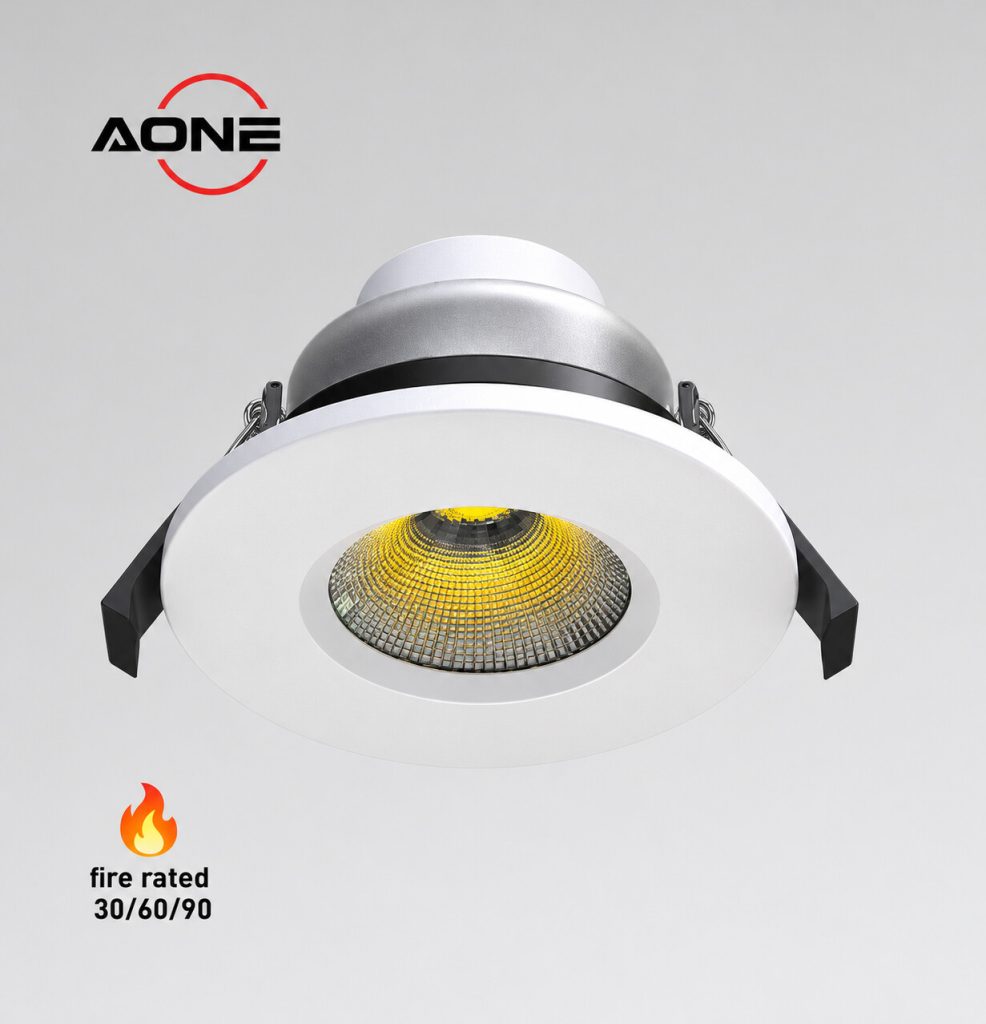
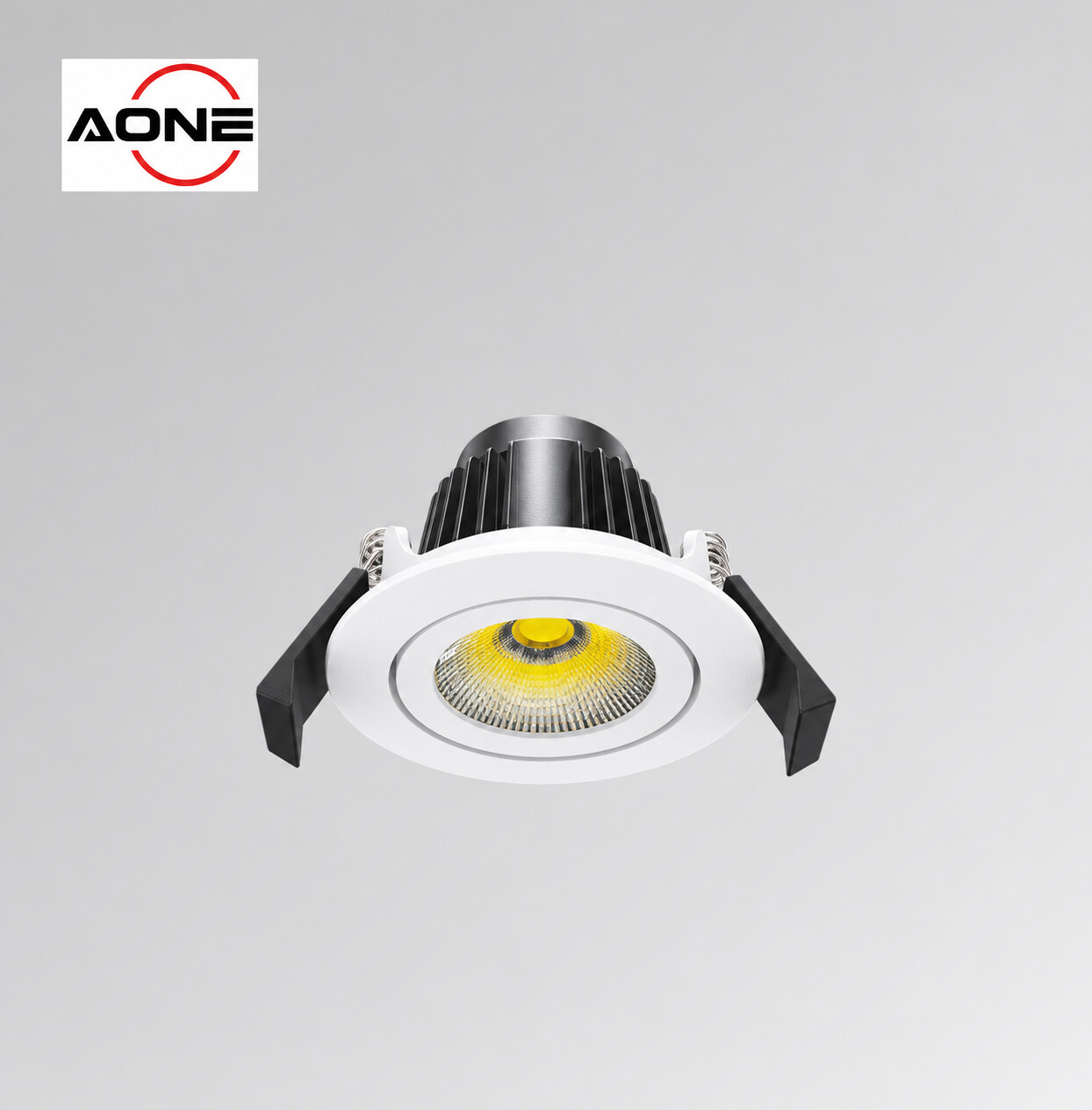
A practical example is a low-glare fire-rated downlight such as the DL98B Plus from A-ONE LED, which combines a recessed COB optic, a 50° beam, UGR below 19 and Ra above 90, with 5W or 7W selectable, IP65 protection below the ceiling, and interchangeable fixed or tiltable bezels. Final glare performance still depends on the layout. If you would like a fuller note on glare, beam and layout, this guide to choosing anti-glare downlights sets out the same decisions in more detail.
Lighting checklist before the ceiling is closed
A short checklist before the ceiling is closed is usually enough: decide where people will sit, walk and rest; choose a warm, high-quality light for guest-facing rooms; confirm dimming, fire and moisture requirements; and keep the ceiling visually quiet. Get those points right early, and the lighting supports the interior instead of competing with it.
About the author
Luke Huang is General Manager of A-ONE LED Lighting Co., Ltd., a manufacturer of LED downlights and commercial lighting based in Dongguan, China.