Breast implants and fat transfer are two options for people considering breast augmentation in Dubai. Both can change breast size and shape, but they differ in how they work, the results they can achieve and what recovery involves.
Breast implant surgery involves placing a medical-grade device to increase breast size. Fat transfer uses fat taken from another part of your body and injected into the breasts. The sections below compare the two procedures, including their results, recovery and costs.
How Breast Implants and Fat Transfer Work
What Are Breast Implants?
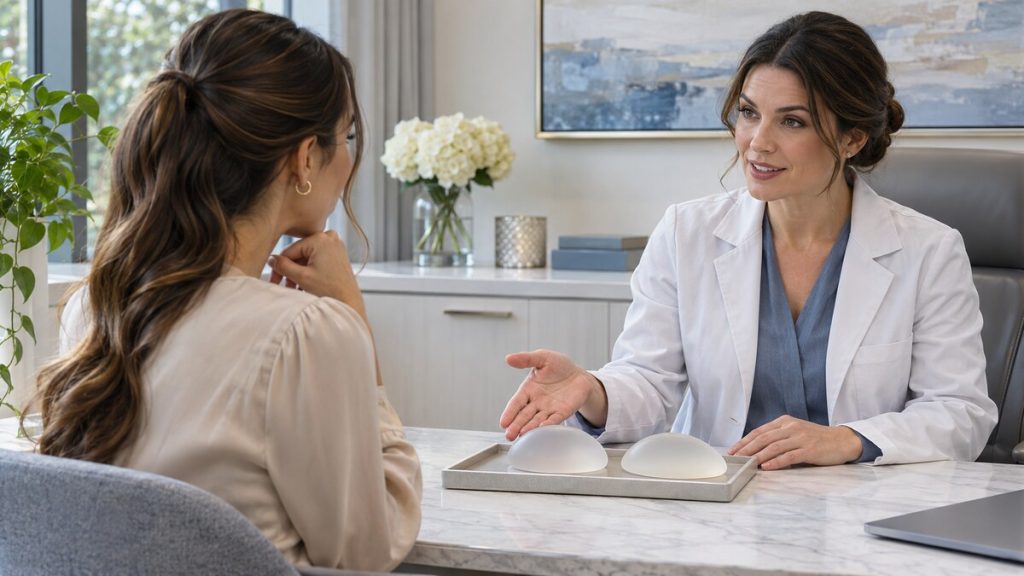
Breast implant surgery, or implant-based breast augmentation, involves placing silicone or saline implants in your breasts.
Typically, the surgeon makes an incision in the breast crease, at the edge of the areola or at another appropriate site. The implant is then placed behind the breast tissue or behind the chest muscle.
Breast implants are available in different sizes, shapes and profiles. This gives patients options for the volume and projection they would like to achieve.
What Is Fat Transfer Breast Augmentation?
Fat transfer breast augmentation, also called breast fat grafting, uses fat taken from areas such as the abdomen, thighs or flanks to increase breast volume.
The fat is processed to remove unwanted fluids and other material. The surgeon then injects the prepared fat into several areas of the breasts to adjust their shape and volume.
The procedure uses your own body fat and can also change the contour of the areas where the fat is removed.
Procedure, Results and Expected Longevity
Both options involve surgery. Knowing how the procedures and results differ can help you prepare for what to expect when considering breast augmentation in Dubai.
Procedure and Treatment Time
During breast implant surgery, the surgeon inserts the implants through a planned incision. The operation usually takes about one to two hours.
Fat transfer involves two treatment areas, the donor site and the breasts. The surgeon first uses liposuction to remove fat from the donor site, then prepares the fat and injects it into the breasts.
How Long Do Breast Implants and Fat Transfer Results Last?
Patients considering breast implants in Dubai should discuss long-term follow-up with their surgeon. Implants are not lifetime devices and may need to be removed or replaced over time, including if concerns arise about appearance, scarring or other complications.
Some of the transferred fat is reabsorbed during healing. Fat cells that establish a blood supply can remain long term, and weight fluctuations can affect their volume.
With either procedure, ageing, pregnancy, hormonal changes and weight fluctuations can change how the breasts look over time.
Recovery, Scarring and Risks of Breast Implants and Fat Transfer
Both procedures require post-operative care. Your recovery experience depends on the surgery and your individual circumstances.
Recovery After Breast Implant Surgery
Swelling, bruising, firmness and pain around the breasts can occur after implant surgery. Many patients can resume light daily activities within one to two weeks, depending on their recovery and their surgeon’s advice.
Patients should wait for their surgeon’s approval before returning to vigorous activity or heavy lifting. The surgeon may also recommend wearing a surgical bra to provide support during recovery.
Recovery After Fat Transfer
Both the donor areas and the breasts need time to heal. Bruising, swelling and soreness can occur, particularly where liposuction was performed.
Your surgeon may give you specific instructions on protecting the treated areas, such as avoiding excess pressure on the breasts. Final results can take months to become visible as swelling settles and the body reabsorbs some of the transferred fat.
Scarring Differences
Breast implant surgery requires an incision, which may be in the breast crease, around the areola or in another location depending on the surgical technique. The scar usually becomes less noticeable as it matures.
Fat transfer uses small incisions for liposuction and fat injection. The scars tend to be smaller, although marks or contour irregularities can occur where fat is removed.
Potential Risks and Complications
Both procedures can carry risks such as bleeding, infection, anaesthesia complications, changes in sensation and swelling.
Risks specific to breast implants include rupture, implant displacement, capsular contracture and the need for further surgery. Breast implant-associated anaplastic large cell lymphoma (BIA-ALCL) is a rare but recognised risk associated mainly with textured implants.
Fat transfer risks include fat necrosis, oil cysts, calcifications, uneven contours and loss of some of the transferred volume.
A qualified plastic surgeon can explain how these risks apply to you and discuss what follow-up each procedure may involve.
How Much Does Breast Augmentation Cost in Dubai?
The cost of breast augmentation in Dubai varies by surgeon, hospital or surgical facility, anaesthesia, the type of implant or procedure, and post-operative care.
The following figures are approximate guides.
- Breast implant surgery — AED 18,000–40,000 or more, depending on the implant brand, type and surgical requirements.
- Fat transfer breast augmentation — AED 15,000–30,000 or more, depending on the number of donor sites, the liposuction required and the amount of fat transferred.
Ask your provider for an itemised quote so you can see what the price includes. For more on planning for surgery expenses, see our guide to budgeting for elective surgery.
Breast Implants vs Fat Transfer: Which Option Should You Choose?
When comparing the two techniques, consider the size increase you want, your body composition and the follow-up each procedure may require.
1. A More Noticeable Increase in Size
Breast implants generally offer more options for achieving a larger increase in breast volume and projection. Your surgeon can discuss which implant sizes and profiles are suitable for your body.
2. A More Subtle Increase in Volume
Fat transfer may suit patients seeking a modest increase using their own body fat. The final volume depends partly on how much of the transferred fat remains after healing.
3. Your Body Composition
Fat transfer requires enough donor fat from an area such as the abdomen, thighs or flanks. Patients with limited donor fat may have fewer options with this technique. Implant surgery does not require a donor site.
4. Long-Term Follow-Up
Breast implants require follow-up and may need further surgery over time. With fat transfer, some of the fat is absorbed during healing, and additional sessions may be needed to achieve the desired volume.
5. Your Health and Expectations
Your medical history, existing breast tissue, skin quality, lifestyle and goals all matter. A consultation with a plastic surgeon experienced in breast augmentation can help you assess whether implants, fat transfer or another approach is suitable.
Get Started With Aesthetic International
Understanding the differences between breast implants and fat transfer can help you weigh the expected results, recovery and long-term considerations before making a decision.
At Aesthetic International, we encourage anyone considering breast augmentation in Dubai to explore their options, ask questions and seek a second opinion if they would like one. Discuss your goals and medical history with a qualified plastic surgeon so you can make an informed choice.