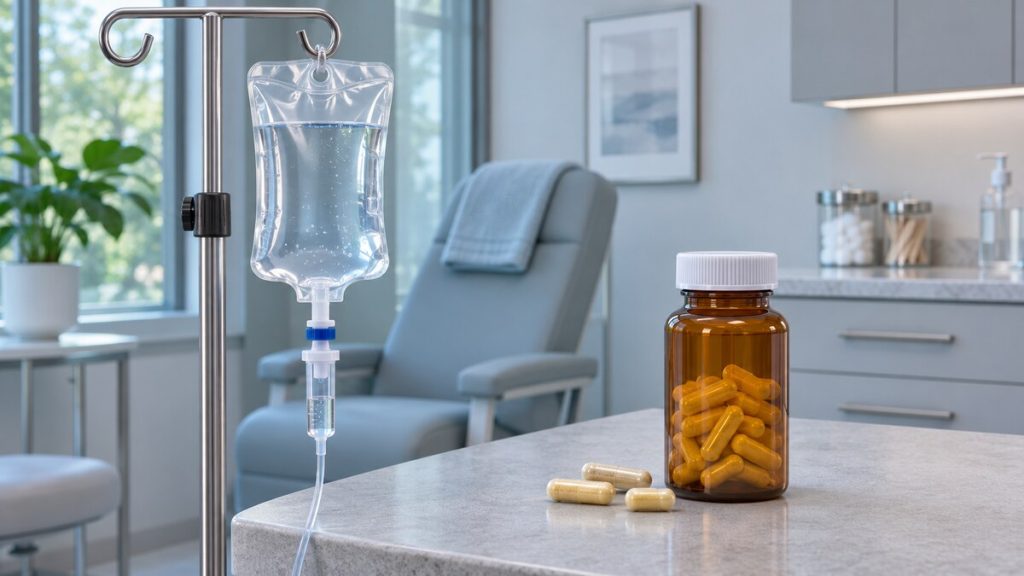
IV drip therapy and oral supplements deliver nutrients in different ways. This guide compares how they work, their potential benefits and risks, and what to consider when weighing up the two options.
IV drip Dubai therapy delivers fluids and nutrients directly into the bloodstream. Oral supplements are absorbed through the digestive system. Aeon Clinic also provides information about Nad Drip Dubai.
What Is IV Drip Therapy and How Does It Work?
Intravenous (IV) drip therapy delivers fluids, vitamins, minerals or other substances into the bloodstream through a small tube called a catheter. This route bypasses the digestive system.
Medical professionals use IV therapy to treat dehydration, deliver medications and address certain nutritional deficiencies when intake or absorption is impaired. Clinics in Dubai also offer IV drips marketed for hydration, energy and recovery.
Common Ingredients Used in IV Drips
Ingredients vary with the formulation and the purpose of the infusion. They may include:
- Vitamin C — Supports normal immune function and collagen formation.
- Vitamin B complex — Includes vitamins that help the body convert food into energy and support normal nerve function.
- Vitamin B12 — Supports red blood cell formation and neurological function.
- Magnesium — Supports normal muscle function and energy metabolism.
- Zinc — Supports immune function, wound healing and DNA synthesis.
- Electrolytes — Minerals such as sodium and potassium help regulate fluid balance and muscle function.
Hydration drips contain fluids and may include electrolytes. Other formulations contain different concentrations of vitamins and minerals. A qualified clinician can advise on the ingredients and quantities appropriate for the intended treatment.
What Happens During an IV Drip Session?
A healthcare professional reviews your medical history, medications, symptoms and reasons for seeking treatment. They may recommend blood tests if they suspect a deficiency or another underlying condition.
If an infusion is appropriate, a doctor or nurse cleans the insertion site, places a small cannula into a vein and connects it to the IV bag. The clinician monitors your response during the session.
Many wellness providers advertise sessions of 30 to 60 minutes. Actual appointment length depends on the formulation, fluid volume and infusion rate.
IV Drip Therapy vs Oral Supplements: Understanding the Differences
The main difference is how nutrients enter the body. For more background on the oral option, see our guide to vitamin and mineral supplements.
| Comparison | IV Drip Therapy | Oral Supplements |
|---|---|---|
| Delivery method | Directly into the bloodstream | Taken by mouth |
| Absorption | Bypasses the digestive system | Depends on absorption through the digestive system |
| Timing | Delivers ingredients directly into circulation | Timing varies by nutrient and formulation |
| Convenience | Requires an infusion appointment | Can usually be taken at home |
| Cost | Generally more expensive | Usually more affordable |
| Supervision | Requires qualified administration | Appropriate guidance depends on the supplement and your health |
Faster delivery into the bloodstream does not establish a greater health benefit. A review in Drug and Therapeutics Bulletin found insufficient evidence to recommend high-dose vitamin infusions for general wellness in people without a specific deficiency or medical indication.
How Much Does IV Drip Therapy Cost in Dubai?
The price depends on the formulation, the duration of the appointment and whether the infusion takes place in a clinic or at home. The following are illustrative estimates from the customer’s draft. Check the provider’s current quote before booking.
| IV Drip Type | Estimated Cost Per Session |
|---|---|
| Basic hydration drip | AED 290–500 |
| Vitamin and energy drip | AED 400–900 |
| Immunity support drip | AED 500–1,000 |
| Glutathione drip | AED 700–1,500 |
| NAD+ IV therapy | AED 1,000–2,500+ |
Ask whether the quoted price includes the consultation, nurse visit, equipment and home visit, and whether VAT or other charges apply. If a clinician recommends an oral supplement for a deficiency, that option may cost less.
Can You Get IV Drip Therapy at Home in Dubai?
Some Dubai clinics offer at-home IV drip appointments. An at-home infusion still involves inserting a cannula into a vein and requires clinical assessment.
Before booking, consider the following:
- Verify the provider’s licence. Check that the provider is licensed for home healthcare services in Dubai and that the practitioner is qualified.
- Ask for a medical assessment. The clinician should review your medical history, medications and allergies before deciding whether the infusion is appropriate.
- Check the contents. Ask which fluids, vitamins, minerals or medications are in the infusion.
- Ask about infection control. Check what sterile, single-use equipment the provider uses.
- Ask about emergency support. Find out how the provider handles allergic reactions and other complications.
The Dubai Health Authority sets standards for home healthcare services in Dubai.
Potential Benefits and Risks of IV Drip Therapy
The benefits and risks depend on the reason for the infusion, the ingredients and the dose.
Potential Benefits
- Fluid replacement. Clinicians can use IV fluids when a patient needs medically supervised fluid replacement.
- Treatment of certain deficiencies. An intravenous treatment may be appropriate in cases where oral supplementation is unsuitable or has proved ineffective.
- Bypassing digestion. IV delivery can be useful in some clinical situations involving impaired absorption.
- Controlled administration. Clinicians can deliver measured amounts of fluids and nutrients at a controlled rate.
Possible Risks and Side Effects
- Insertion-site reactions. Bleeding, tenderness, swelling or irritation can occur around the cannula.
- Infection. Contaminated equipment or improper handling can introduce bacteria into the bloodstream.
- Allergic reactions. Ingredients can cause mild or severe reactions.
- Vitamin or mineral toxicity. Excessive amounts of certain nutrients can be harmful.
- Fluid overload. Excess fluid can be especially harmful for people with kidney or heart conditions.
People who are pregnant or breastfeeding, or who have kidney, liver or heart conditions, should discuss these factors with their healthcare professional before considering an infusion.
Which Option Is More Effective for Your Needs?
The appropriate option depends on what you are trying to treat and whether there is a medical reason to use an infusion. Consider these five factors.
1. Your Nutritional Levels
If blood tests show a deficiency, a clinician can recommend treatment based on the nutrient involved and the cause of the deficiency. This may involve oral supplements or another route.
2. Your Digestive Health
If a digestive condition affects nutrient absorption, tell your clinician. They can assess whether an oral supplement is likely to work and whether another route is appropriate.
3. Your Treatment Goals
A balanced diet is the foundation for meeting everyday nutritional needs. Oral supplements can help address specific needs when appropriate. Evidence supporting routine IV vitamin drips for general wellness is limited.
4. Your Budget and Convenience
Oral supplements can usually be taken at home and generally cost less. IV drip therapy requires an appointment with a qualified practitioner.
5. Your Health and Medical History
Existing conditions, allergies, medications and individual nutritional needs can affect which option is suitable. Discuss these with a clinician before starting treatment.
Get Started with Aeon Clinic
If you’re weighing up an IV drip and an oral supplement, start by clarifying what you want to address and discussing it with a healthcare professional.
At Aeon Clinic, we believe that understanding your options makes it easier to decide. Ask what the treatment contains, what benefit you can reasonably expect and what risks to consider before going ahead.