



Quick Answer
Easy autumn dinner ideas include lentil cottage pie, roast vegetable pasta, jacket potatoes, chicken traybakes and hearty bean stews. Choose meals that share ingredients, suit your evening schedule and make sensible use of leftovers. Keep a few cupboard staples ready so dinner does not depend on another supermarket trip.
When the evenings turn darker, dinner often becomes the part of the day everyone looks forward to. A hot meal, a comfortable seat and something worth watching can make an ordinary weekday feel a little better.
Finding the energy to cook is another matter. After work, school runs or a long commute, a recipe with twenty ingredients rarely feels appealing.
Autumn cooking can be much simpler. Potatoes, carrots, cabbage, mushrooms and squash work across plenty of dishes, while tinned beans, lentils and tomatoes give you useful starting points from the cupboard.
These ideas are flexible meal suggestions rather than fixed recipes. Adjust quantities to your household, follow cooking instructions for individual ingredients and use what you already have where possible.
1. Roast Vegetable and Tomato Pasta
Roasted vegetables give a familiar pasta dinner more flavour without requiring a complicated sauce.
Cut carrots, onions and squash into manageable pieces, toss with a little oil and roast until tender. Keep the pieces reasonably similar in size so they cook evenly.
Combine them with a tomato sauce, cooked pasta and a spoonful of the pasta cooking water if needed. Finish with black pepper, herbs or grated cheese.
For a more substantial meal, add drained tinned beans or chickpeas. Frozen vegetables can also help when the fresh produce drawer looks empty.
Make it easier: Prepare the vegetables earlier in the day and keep them refrigerated until you are ready to cook.
2. Lentil Cottage Pie
A lentil cottage pie offers the comfort of a mashed potato topping with a filling built from everyday ingredients.
Start with softened onion and carrot, then add cooked lentils, tomatoes or stock, and seasoning. Let the filling thicken before transferring it to an ovenproof dish.
Top with mashed potato and bake until the filling is thoroughly hot and the surface has coloured.
Use cooked or tinned lentils for a quicker version. If using dried lentils, follow the packet instructions rather than assuming they will cook during the final baking stage.
Make it easier: Prepare extra mash when cooking another meal and set aside a portion for the pie, storing it safely.
3. Chicken and Root Vegetable Traybake
A traybake is useful on evenings when you want the oven to do most of the work.
Arrange chicken pieces with potatoes, carrots and onion in a suitable roasting tray. Add oil, garlic and herbs, leaving enough space for the ingredients to roast rather than sit in a crowded layer.
Cut vegetables according to their cooking time. Large chunks of potato may need longer than smaller chicken pieces, so choose a tested recipe if you are unsure.
Check that the chicken is cooked thoroughly before serving. The colour of the vegetables does not tell you whether the meat is ready.
Make it easier: Use one seasoning mix and serve with a simple green vegetable rather than preparing several side dishes.
4. Jacket Potatoes with Flexible Fillings
Jacket potatoes are particularly useful when everyone wants something slightly different.
Offer fillings such as baked beans, grated cheese, tuna mayonnaise or a cooked vegetable chilli. A little salad or steamed broccoli can complete the plate.
For a shorter cooking time, microwave suitable potatoes first, following your appliance instructions, then finish in the oven if you want a crisper skin.
Keep toppings simple. You do not need several open packets and three homemade sauces to make the meal feel complete.
Make it easier: Choose two fillings the household already enjoys and rotate them through the month.
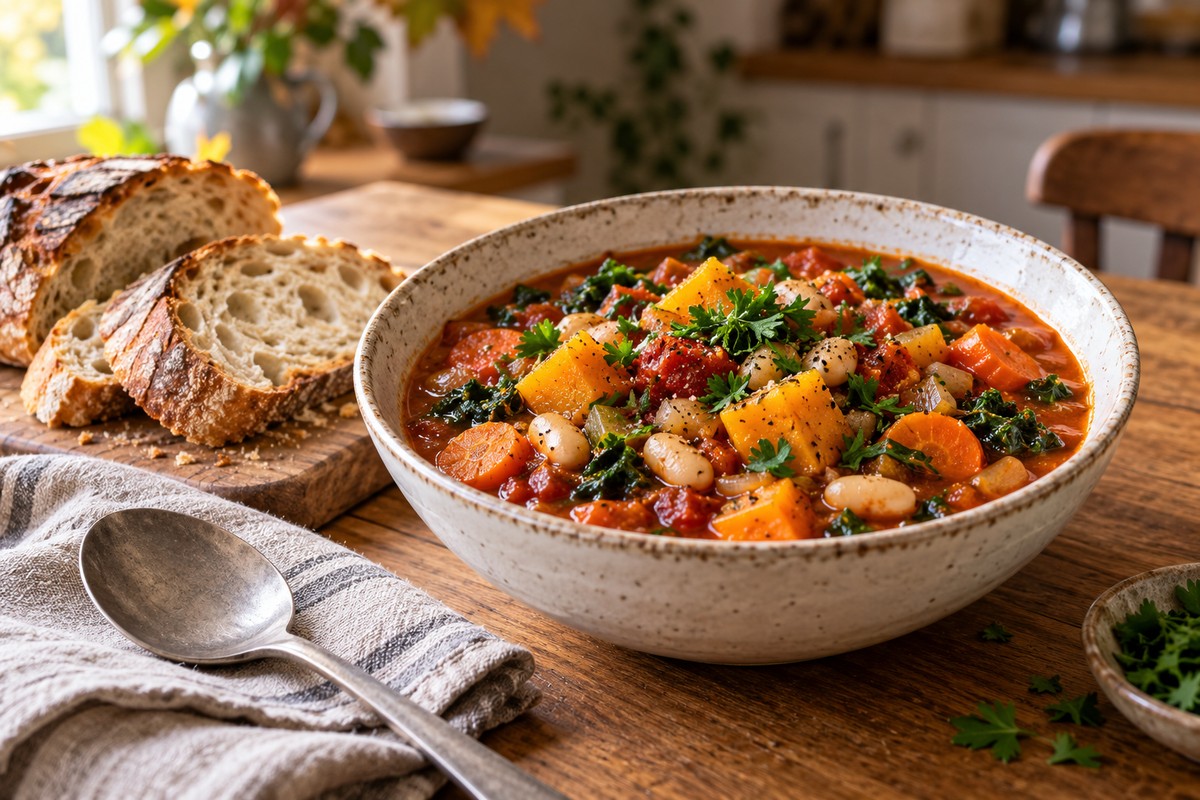
5. Mushroom and White Bean Stew
Mushrooms and white beans make a hearty combination for an evening meal served with bread or mashed potato.
Cook sliced mushrooms in batches if necessary, allowing them to colour. Add softened onion, garlic, stock and drained tinned beans, then simmer until the flavours come together.
A little mustard or a splash of cream can change the character of the sauce. Alternatively, keep it tomato-based with herbs.
If you prefer a thicker consistency, mash a small portion of the beans into the liquid.
Make it easier: Use tinned beans and serve with bread you already have, rather than adding another cooking task.
For more cooking inspiration, browse FEAST’s Food & Drink coverage.
6. Sausage, Potato and Cabbage Supper
Sausages, potatoes and cabbage make a straightforward autumn meal with plenty of room for variation.
Cook the sausages according to their packaging and roast or boil the potatoes separately. Soften shredded cabbage in a pan with a little oil or butter, adding seasoning to taste.
You could serve everything with onion gravy or mustard. Vegetarian sausages offer another option, although their cooking instructions may differ from meat versions.
Keep an eye on portions when shopping. A large pack only represents good value if you have a plan for the remainder.
Make it easier: Use the same potatoes and cabbage in another meal later in the week.
7. Carrot and Lentil Soup with Toasted Sandwiches
Soup becomes a more satisfying dinner when you give some thought to what goes alongside it.
For a simple version, soften onion, add chopped carrots, red lentils and stock, and simmer according to the lentils’ instructions until tender. Blend carefully if you prefer a smooth texture.
Serve with a cheese toastie or another toasted sandwich your household enjoys.
Change the flavour with cumin, ginger or a little curry powder. Add spices gradually, especially when cooking for people with different preferences.
Make it easier: Portion any extra soup for a future meal instead of keeping one large container that gets reheated repeatedly.
8. Creamy Leek and Pea Pasta
Leeks and frozen peas can turn a few basic ingredients into a comforting pasta dinner.
Wash leeks thoroughly, slice them and cook gently until soft. Stir in peas and a small amount of cream cheese or crème fraîche, then loosen with pasta cooking water as needed.
Add the cooked pasta and season before serving. Lemon zest can bring some freshness to a rich sauce.
There is no need to add several cheeses. One flavour you enjoy is usually enough.
Make it easier: Keep frozen peas available and use a pasta shape that cooks quickly.
9. Chickpea and Squash Curry
A chickpea curry works well when you want a meal with plenty of flavour from cupboard ingredients.
Soften onion, add your chosen spices or curry paste, then stir in squash, tomatoes and drained tinned chickpeas. Simmer until the squash is tender, adding liquid if needed.
Serve with naan, flatbread or another accompaniment that suits the household.
Check curry paste labels for allergens and heat level. A mild paste can still vary considerably between brands.
Make it easier: Buy prepared squash if the convenience is worth the price to you, or substitute a vegetable you find easier to prepare.
10. Vegetable and Bean Chilli
A vegetable chilli is a useful way to bring together peppers, carrots, tomatoes and beans.
Build the base with onion and spices, add chopped vegetables and tinned tomatoes, then simmer until the vegetables are cooked. Stir in drained tinned beans and heat thoroughly.
Serve over jacket potatoes, with bread or alongside another suitable accompaniment. Offer yoghurt or cheese separately so people can adjust their own plate.
Make it easier: Freeze suitable extra portions for evenings when cooking from scratch is unrealistic.
Plan Around Shared Ingredients
A useful weekly menu does not require seven completely different shopping lists.
Carrots could appear in a traybake, soup and cottage pie. Potatoes could become jackets, mash and roasted wedges. Tinned tomatoes work across pasta sauce, curry and chilli.
Before shopping, check what needs using and decide which evenings allow more cooking time. Leave yourself one flexible meal that can absorb a change of plans.
Compare pack sizes against the amount you will actually use. A bigger bag is not automatically cheaper once unused food is considered.
If you are planning a relaxed evening with friends, FEAST’s Lifestyle section offers ideas beyond the dinner itself.
Store Leftovers Safely
Extra portions are useful only when they are handled properly.
The Food Standards Agency’s cooking guidance advises refrigerating leftovers within two hours, eating them within 48 hours or freezing them if that is not possible. Reheat leftovers only once and make sure they are steaming hot throughout.
Divide larger quantities into smaller containers to help them cool. Label portions so you know what they contain and when they were prepared.
Follow any food-specific storage instructions rather than treating every leftover in the same way.
For more food, hospitality and everyday dining features, visit FEAST Magazine.
Frequently Asked Questions
What are the easiest autumn dinners for busy evenings?
Jacket potatoes, simple pasta dishes and meals made with tinned beans are useful starting points. Choose according to the time available and the ingredients you already have.
How can I keep autumn meals affordable?
Plan dishes around shared ingredients, compare unit prices and check your cupboards before shopping. Avoid buying extra ingredients for a single meal unless you have another use for them.
Can these meals be made vegetarian?
Most are already vegetarian or can be adapted. Use vegetable stock and check cheese, sauces and other packaged ingredients if they need to meet a particular dietary requirement.
Are frozen vegetables suitable for autumn cooking?
Yes. They are convenient for soups, stews and pasta dishes. Follow the packet instructions and account for any extra moisture they release during cooking.
Which meals are useful for batch cooking?
Soups, lentil fillings, bean chilli and some curries can be practical choices. Consider how you will cool, portion and store them before preparing a large quantity.
Do I need a slow cooker for these dinner ideas?
No. These meals can be prepared using ordinary hob, oven or microwave methods as appropriate. Choose equipment around how you cook rather than buying an appliance for one dish.