


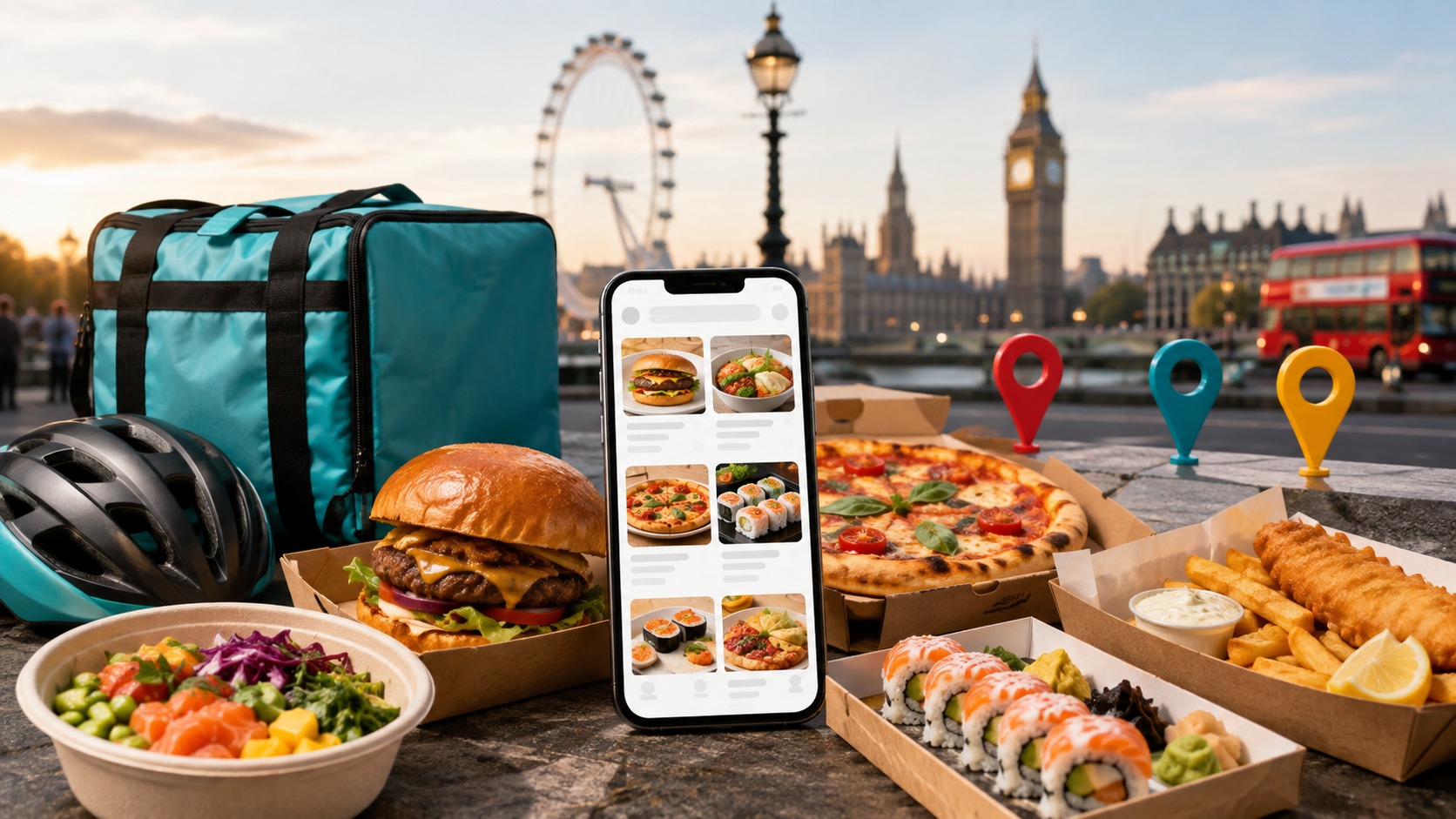
The UK does not have one food delivery app that is cheapest, fastest and best stocked in every postcode. In 2026, the real choice is between four different strengths: Deliveroo for a polished restaurant-and-grocery ecosystem, Uber Eats for broad on-demand convenience and Uber One, Just Eat for traditional local takeaway depth, and Foodhub for price-conscious users who want to compare smaller independent outlets.
Quick Answer: What Is the Best Food Delivery App in the UK?
For most people, the best app is the one that wins on the exact order you are placing. Check the same restaurant on two apps before paying because menu prices, delivery fees, service fees and promotions can differ. Deliveroo is a strong all-rounder for restaurant choice and groceries; Uber Eats is attractive if you already use Uber and can benefit from Uber One; Just Eat remains useful for local takeaways; and Foodhub is worth checking when price is your main concern.
There is also no reason to be loyal to a single platform. In practice, keeping two or three apps installed is often the simplest way to avoid paying a convenience premium that changes from one order to the next.
Food Delivery Apps UK: Quick Comparison
| App | Best known for | Best for | Membership/value angle |
| Deliveroo | Restaurants + groceries + retail | Frequent users who value choice | Plus Gold from £4.99/month; qualifying orders get delivery benefits |
| Uber Eats | Restaurants + groceries + retail | Uber users and wide city coverage | Uber One £4.99/month or £49.99/year |
| Just Eat | Takeaways + restaurants + stores | Traditional local takeaway choice | Just Eat+ gives £0 delivery on eligible £15+ orders |
| Foodhub | Independent takeaways | Price comparison and local deals | No universal membership needed; outlet pricing varies |
1. Deliveroo: Best All-Rounder for Restaurants and Groceries
Deliveroo has moved well beyond restaurant delivery. In 2026, the app covers takeaways, restaurants, supermarkets and a growing range of retail categories, which makes it useful when you want dinner and household essentials in the same ecosystem. The selection is especially strong in larger towns and cities, although the exact restaurant mix still depends on your postcode.
Deliveroo Plus is the main value lever. Current UK pricing can vary by plan, but Plus Gold is advertised from £4.99 per month with free delivery on eligible restaurant orders over £10 and shop orders over £15, alongside service-fee savings and changing member offers. That can pay off quickly for regular users, but occasional customers should compare the subscription cost with what they actually spend on delivery each month.
Deliveroo is strongest when convenience matters more than finding the absolute cheapest basket. The app’s grocery and retail expansion also makes it more useful than a pure takeaway platform for last-minute top-ups.
2. Uber Eats: Best If You Already Use Uber
Uber Eats makes the most sense for people already inside the wider Uber ecosystem. Uber One currently costs £4.99 per month or £49.99 per year in the UK and combines eligible food-delivery benefits with savings and credits across Uber services. If you use both rides and food delivery, the membership can be easier to justify than a delivery-only subscription.
The important part is to look beyond the headline delivery fee. Uber Eats can apply service fees, long-range fees and small-order charges depending on the basket and restaurant. In April 2026, Uber published a UK fee explainer showing that restaurant service fees on eligible delivery models can be percentage-based within minimum and maximum limits, while delivery charges vary by distance, demand and restaurant.
For the current breakdown, see Uber Eats’ official UK fee guide.
3. Just Eat: Best for Traditional Local Takeaways
Just Eat still has a different feel from the more lifestyle-led delivery apps because many customers use it first for the neighbourhood pizza shop, curry house, kebab shop or Chinese takeaway they already know. That broad local footprint can make it the best app outside major city centres, where premium restaurant selection matters less than whether your favourite takeaway is listed.
Just Eat+ adds a subscription-style value option. The current UK benefit provides £0 delivery on eligible orders over £15 from participating partners, although service and other fees can still apply. Just Eat also says service charges vary depending on the delivery model and basket size, so free delivery does not necessarily mean a fee-free order.
4. Foodhub: Best App to Check for Lower Local Prices
Foodhub is smaller than the three biggest platforms, but that is exactly why it is worth checking. Its pitch is built around lower commission for partner takeaways, with the argument that independent restaurants can pass some of that difference on through lower menu prices, discounts or fewer extra charges.
The main weakness is coverage. You may find strong options in one town and very few in another. The app also depends heavily on the quality and delivery operation of each local takeaway, so the experience can feel less standardised than on the largest platforms. Still, for repeat orders from independent restaurants, Foodhub can reveal a cheaper route that many users overlook.
Which Food Delivery App Is Cheapest in the UK?
There is no permanently cheapest app. A £20 meal can move from cheapest to most expensive depending on whether the restaurant marks up its menu, whether the app is running a promotion, how far the courier has to travel, whether a small-order fee applies and whether you have an active membership.
For that reason, compare the final checkout total rather than the menu subtotal. A restaurant can look cheaper on the first screen and become more expensive once service, delivery and small-order charges are added.
- Compare the same restaurant across at least two apps before paying.
- Check the restaurant’s own website as well; direct ordering can sometimes be cheaper.
- Avoid small orders that trigger extra fees unless the convenience is worth it.
- Use memberships only if your normal monthly savings exceed the subscription price.
- Do not assume a promotional code makes the whole basket cheaper; compare the final total.
Uber Eats vs Deliveroo vs Just Eat
Choose Deliveroo if…
You want strong restaurant choice plus groceries and retail in one app, and you order often enough to make a Plus membership worthwhile.
Choose Uber Eats if…
You already use Uber rides, value a single membership across transport and food, or regularly find broader availability in your postcode.
Choose Just Eat if…
Your priority is established local takeaways, especially outside the biggest city-centre dining districts.
Choose Foodhub if…
You are willing to shop around and want to see whether an independent takeaway is offering a better price through a lower-commission marketplace.
Are Food Delivery Memberships Worth It?
A subscription is worth considering when you order frequently enough that delivery savings repeatedly exceed the monthly fee. It is less attractive if you only order once or twice a month, regularly fall below the minimum basket, or tend to choose restaurants that are not eligible for the membership benefit.
The easiest test is to review your previous four weeks of orders. Add up the delivery fees you actually paid, then compare that number with the subscription price. Ignore hypothetical savings and use your real ordering pattern.
What About Grocery Delivery?
This is where the category has changed most. Deliveroo and Uber Eats increasingly compete not just for dinner but for supermarket, convenience and retail orders. That makes the apps useful for forgotten ingredients, late-night essentials and small top-up shops, although per-item pricing and fees can make them expensive substitutes for a planned supermarket trip.
For groceries, convenience is the product. If you need milk, nappies or dinner ingredients within the hour, paying extra may be rational. If you are filling a weekly basket, a supermarket’s own delivery or click-and-collect service will often make more financial sense.
How to Spend Less on Takeaway Apps
- Order direct from the restaurant when its own site offers the same menu and reliable delivery.
- Use collection if the restaurant is nearby and the saving is meaningful.
- Build orders above the minimum only when you actually need the extra food; do not spend £8 to avoid a £2 fee.
- Rotate promotions rather than staying loyal to one app out of habit.
- Check menu prices against the restaurant’s direct menu because platform mark-ups can matter more than the delivery fee.
- Cancel subscriptions you are not actively using and rejoin only when your order frequency increases.
How FEAST Has Covered Food-Tech Before
Food delivery is increasingly a technology story as much as a hospitality one. FEAST has previously explored the future of food delivery services and the practical issues involved in building a food delivery app for a startup. Readers interested in cooking at home can also compare digital tools in FEAST’s guide to the best recipe apps.
FAQs
What is the best food delivery app in the UK?
Deliveroo is a strong all-round choice, Uber Eats suits existing Uber users, Just Eat is excellent for local takeaway depth, and Foodhub is worth checking for price. The best app still varies by postcode and order.
Which food delivery app is cheapest?
There is no fixed winner. Compare final checkout totals because menu mark-ups, delivery fees, service fees, memberships and promotions change the result.
Is Deliveroo Plus worth it?
It can be if you order often from eligible restaurants or shops and your delivery and service-fee savings regularly exceed the subscription cost.
Is Uber One only for food delivery?
No. In the UK, Uber One also includes benefits connected to Uber rides and other eligible Uber services, which can make it more attractive to people who already use the wider platform.
Does Just Eat still charge fees with Just Eat+?
Eligible Just Eat+ orders can receive £0 delivery, but service and other fees can still apply.
Is Foodhub available everywhere in the UK?
Coverage varies. It is worth checking, particularly for independent takeaways, but it will not match the same selection in every postcode.
Final Verdict
The smartest way to use food delivery apps in 2026 is not to pick a permanent winner. Deliveroo, Uber Eats, Just Eat and Foodhub all have different strengths, and the cheapest choice can change from restaurant to restaurant. Keep the apps that serve your postcode well, compare the final basket when the price matters, and pay for a membership only when your real ordering habits justify it.
If you only want one starting point, Deliveroo is the strongest all-rounder; if you already use Uber heavily, Uber Eats becomes more compelling; if your favourite local takeaway is the priority, check Just Eat; and if you are hunting for a lower total, always give Foodhub a look before you pay.