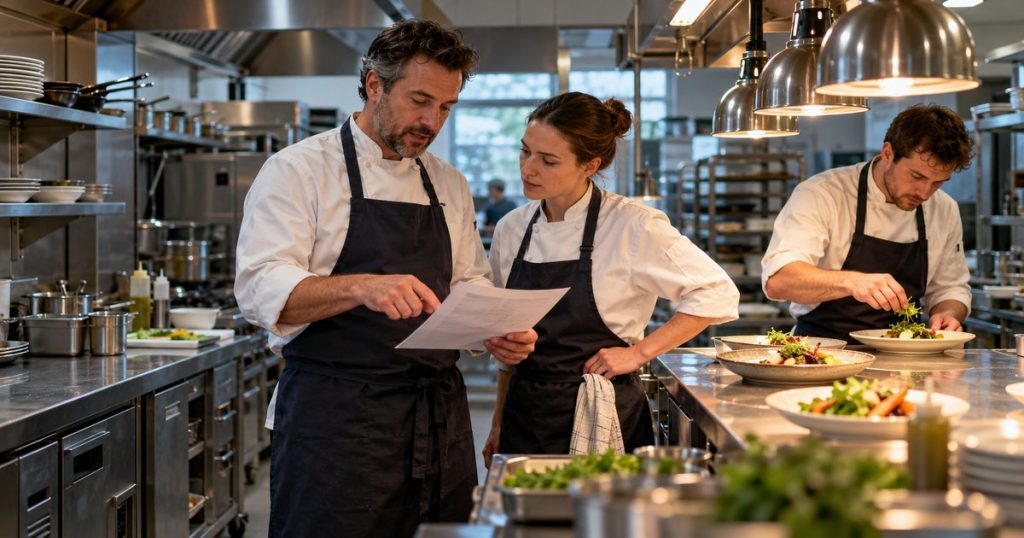
Knowing how to run a successful kitchen involves more than producing good food. Clear communication, organised preparation and a team that feels supported all help service run more smoothly, whether you manage a small café or a busy restaurant.
Kitchens bring together people with different experience and ways of working. Agreeing responsibilities and routines gives everyone a clearer understanding of what needs doing, particularly when orders start arriving.
Prioritise Kitchen Safety
Safety should be part of everyday kitchen management. Staff need to understand how to use equipment, report faults and deal with hazards without feeling pressured to take shortcuts during a busy service.
Review risks such as slippery floors, hot surfaces, sharp tools and moving equipment. Keep working areas clear and make sure employees receive training appropriate to their tasks.
First-aid arrangements should reflect the workplace’s needs assessment, including its hazards, staffing and working patterns. The Health and Safety Executive’s first-aid guidance explains how employers should determine the equipment, facilities and personnel required.
Serious workplace accidents can have lasting consequences for employees and the business. In severe cases, injured staff may seek specialist advice about amputation injury compensation claims. Preventing harm should remain the priority, rather than responding only after an incident.
Workplace safety and food hygiene both need attention. Make sure staff know the procedures relevant to their role and who to speak to when something is unclear.
Encourage Clear Communication
Open and clear communication helps the team understand priorities and raise problems before they affect service. This should work in both directions, with junior staff able to ask questions and suggest improvements.
Hold a short briefing before service. Cover expected bookings, unavailable dishes, changes to preparation and any dietary requirements that need particular attention.
During service, keep instructions concise and make sure important messages are acknowledged. If a dish becomes unavailable or an order changes, both the kitchen and front-of-house team need accurate information.
Afterwards, discuss what caused delays and what worked well. Focus on practical changes rather than blame, and make sure agreed actions reach the next shift.
Focus on Organisation and Preparation
Organisation starts with the kitchen layout. Equipment, ingredients and utensils should be positioned around the tasks being carried out, while allowing staff to move safely.
Look for repeated problems before making changes. Are people crossing the room for frequently used ingredients? Does one workstation become overcrowded? Are deliveries arriving when the team needs the space for preparation?
Review existing equipment before purchasing more. Better placement, maintenance or preparation routines may solve the problem without another appliance.
Give each station a clear preparation list and assign responsibility for completing it. Check stock before service so shortages can be addressed early.
The menu also needs to fit the kitchen’s capacity. Several dishes requiring the same equipment or extensive last-minute preparation can create a bottleneck. Review these demands when developing or changing the menu.
When introducing new dishes, coordinate the kitchen, front of house and promotional activity. Feast’s guide to planning a restaurant menu launch explains how to keep menu details and communications aligned.
Put Your People First
A kitchen depends on the people working in it. A people-first approach means listening to staff and addressing the everyday issues that make their work harder.
Ask whether preparation time is realistic, whether equipment works properly and where additional training would help. Follow through on concerns so feedback leads to something useful.
Plan rotas fairly and communicate changes as early as possible. Consider availability, rest and personal commitments alongside the needs of the business.
New starters need clear guidance rather than being expected to learn everything during a busy shift. Explain their responsibilities, show them the relevant routines and identify someone they can approach with questions.
Review What Happens During Service
Running a successful kitchen requires regular adjustments. Keep track of recurring delays, returned dishes, shortages and avoidable waste, then discuss the causes with the team.
Choose a manageable improvement, such as revising one preparation list or changing the position of frequently used equipment. Review whether it helps before making further changes.
Consistent routines, clear expectations and a supported team give the kitchen a stronger foundation for handling busy services.