



Table of Contents
- The Evolution of the Japanese Blade
- Defining Your Purpose: Decoration versus Daito
- Steel Composition and Heat Treatment Essentials
- Understanding Geometry and Weight Distribution
- The Importance of Tang Construction and Safety
- Fitting and Aesthetics: The Koshirae Components
- Maintenance and Longevity for Active Practitioners
- Navigating the Market and Making Your Purchase
- Beyond the Blade: Developing the Practitioner
The Evolution of the Japanese Blade
The katana is more than just a piece of curved steel. It represents a thousand years of metallurgical evolution, social hierarchy, and artistic expression. To choose the right sword, one must first appreciate the transition from the straight chokuto of the early periods to the sophisticated curved blades that defined the Sengoku Jidai. The curvature, or sori, was not merely an aesthetic choice but a functional innovation designed for a swift draw and efficient cutting from horseback or on foot.
When you begin your journey into sword ownership, you are stepping into a tradition that balances lethal efficiency with spiritual discipline. Modern collectors and practitioners face a market saturated with options ranging from ten dollar wall hangers to five figure masterworks. Differentiating between these requires a keen eye for detail and an understanding of how the blade will be used in a contemporary setting. Whether you seek a piece of history for your mantle or a tool for the dojo, the criteria for selection change drastically based on intended use.
Defining Your Purpose: Decoration versus Daito
The most critical decision in the selection process is determining whether the sword is intended for display or practice. A decorative sword, often referred to as a wall hanger, is designed solely for visual appeal. These are frequently made from stainless steel, which is brittle and prone to snapping if swung with force. Because stainless steel cannot handle the kinetic energy of an impact, using a decorative blade for martial arts is dangerous and can lead to catastrophic structural failure.
Conversely, a functional katana, or shinken, is built to withstand the rigors of tameshigiri, which is the art of target cutting. These blades are forged from high carbon steel and undergo specific tempering processes to ensure they can absorb shock without breaking. For those looking to transition from display to practice, sourcing a blade from a reputable provider like Next Level UK ensures that the internal integrity of the steel matches the external beauty of the craft.
Steel Composition and Heat Treatment Essentials
The soul of the katana lies in its steel. Traditional Japanese swords were made from tamahagane, a specialized steel produced in a tatara furnace. While authentic tamahagane swords are incredibly expensive and often restricted by export laws, modern practitioners have access to high quality tool steels that offer exceptional performance.
- Carbon Steel 1045: This is the entry level grade for functional swords. It is relatively soft but provides enough durability for light practice and form work.
- Carbon Steel 1060: Often considered the sweet spot for beginners, this steel offers a great balance between hardness and flexibility.
- Carbon Steel 1095: This high carbon steel is very hard and holds a razor sharp edge for a long time, though it requires more skill to maintain and can be brittle if not heat treated perfectly.
- Spring Steel 9260: Known for its incredible flexibility, this alloy includes silicon, allowing the blade to bend and return to its original shape, making it ideal for those who might have imperfect cutting technique.
The Role of Differential Hardening
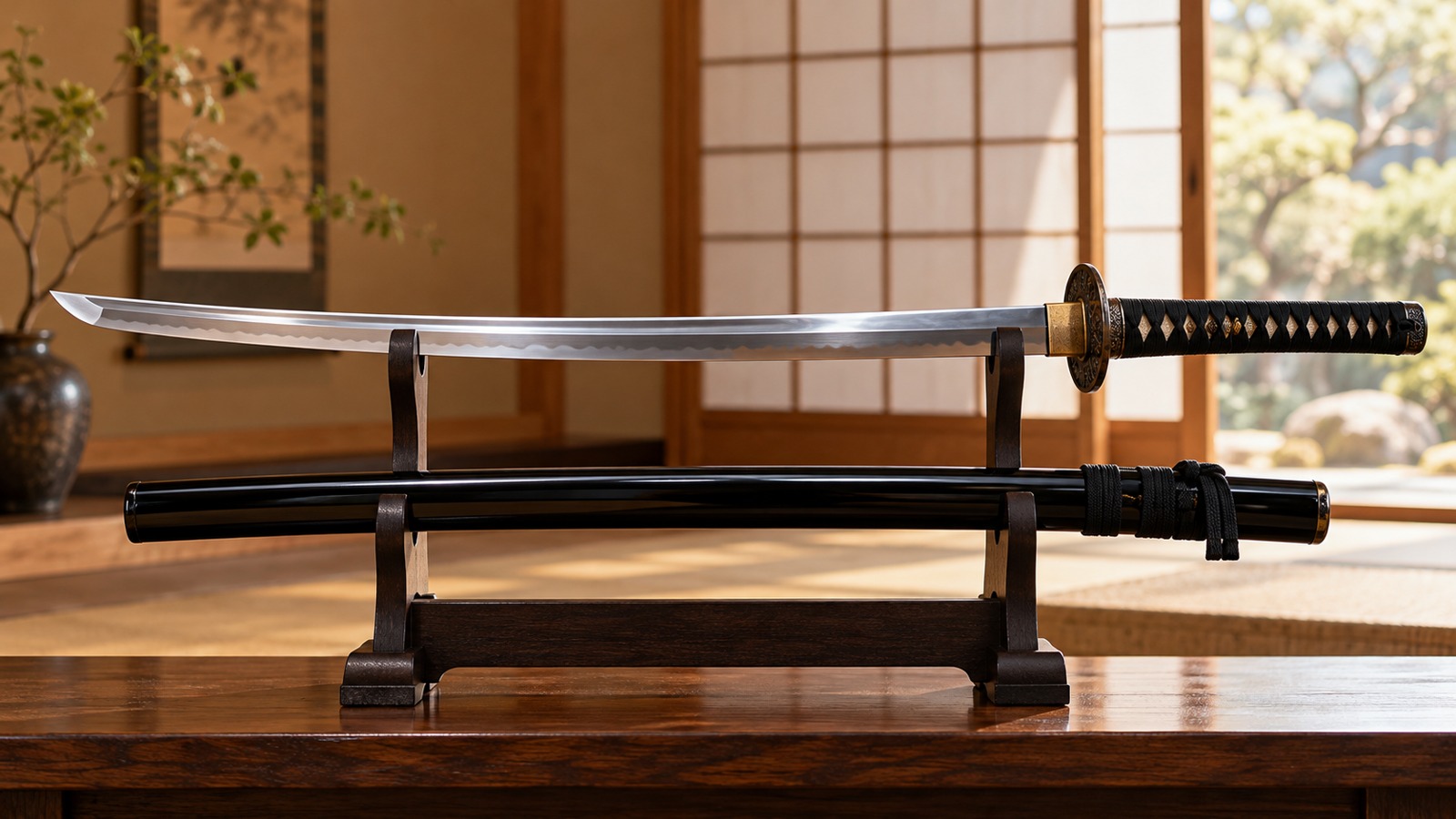
A hallmark of a true katana is the hamon, or the visible temper line along the edge. This is achieved through differential hardening, where the spine of the blade is coated in a thick layer of clay while the edge is left thin. When the blade is quenched, the edge cools rapidly, becoming extremely hard martensite, while the spine cools slowly, remaining softer and more flexible pearlite. This combination allows the sword to have a devastatingly sharp edge while the spine acts as a shock absorber. When searching for a practice blade, verifying that the hamon is real and not etched with acid is a primary indicator of quality.
Understanding Geometry and Weight Distribution
The way a sword feels in the hand is determined by its geometry, specifically the niku and the motohaba. Niku refers to the meatiness or convexity of the blade surface. A blade with high niku is excellent for heavy cutting because the rounded surface deflects resistance, whereas a flat ground blade might be sharper but more prone to chipping.
- Overall Length: The length of the blade, or nagasa, should be proportional to the height of the practitioner. A standard measurement is taken from the tip of the thumb to the floor while standing naturally.
- The Point of Balance: For a practice sword, the balance point should typically sit three to four inches in front of the tsuba, or handguard. A sword that is too blade heavy will fatigue the wrists, while one that is too hilt heavy will lack the necessary momentum for clean cuts.
- Sori or Curvature: A deeper curve aids in the slicing motion of the draw, while a shallower curve is often preferred for thrusting techniques found in certain schools of iaido.
The Importance of Tang Construction and Safety
Safety is the paramount concern when moving from display to practice. The most vital component in this regard is the nakago, or the tang. A functional katana must have a full tang that extends at least three quarters of the way into the tsuka, or handle. Decorative swords often use rat tail tangs, which are thin rods welded onto the blade. These are notorious for snapping, sending the blade flying across the room.
To secure the blade within the handle, traditional swords use mekugi, which are small bamboo pegs. A well made practice sword will have one or two mekugi that pass through the handle and the tang. You should always inspect these pegs before every practice session. If you are looking for a reliable From Display to Practice: How to Choose the Right Katana Sword Next Level UK provides options that prioritize these structural safety features, ensuring that the mechanical bond between the blade and the handle is secure enough for repeated use.
Evaluating the Tsuka and Ito
The handle construction is just as important as the blade. The wooden core should be wrapped in genuine rayskin, known as samegawa, which provides friction to prevent the silk or cotton wrap, the ito, from shifting. A loose wrap is not just a cosmetic flaw; it can lead to a loss of control during a high speed swing. A high quality ito wrap will be tight, symmetrical, and finished with secure knots at the end.
Fitting and Aesthetics: The Koshirae Components
While the blade is the functional heart, the koshirae, or fittings, define the character of the sword. These components include the tsuba, fuchi, kashira, and menuki. In historical contexts, these were often used to display the status or personal philosophy of the samurai.
- Tsuba: The handguard protects the hand from an opponent’s blade and prevents the user’s hand from sliding onto their own edge during a thrust. It also acts as a counterweight to balance the blade.
- Fuchi and Kashira: These are the metal caps at the beginning and end of the handle. They reinforce the wooden tsuka and provide structural integrity.
- Menuki: These are small ornaments placed under the handle wrap. While they are decorative, they also serve a functional purpose by filling the palm of the hand to improve grip.
When choosing a sword, ensure that the fittings are made of durable materials like brass, iron, or high quality copper. Avoid pot metal or cheap alloys, as these can crack under the stress of physical practice. The aesthetic harmony of these parts should reflect your personal taste, but their fit must be precise and rattle free.
Maintenance and Longevity for Active Practitioners
Owning a functional katana requires a commitment to maintenance. Carbon steel is highly susceptible to rust, and even the moisture from a fingerprint can cause oxidation within hours. A proper maintenance kit should include uchiko powder for cleaning, choji oil for protection, and specialized rice paper for wiping the blade.
The Cleaning Process
- Remove the old oil using a clean cloth or specialized paper.
- Apply uchiko powder lightly along the blade to absorb any remaining residue and provide a very mild abrasive polish.
- Wipe away the powder and apply a fresh, thin layer of choji oil.
- Inspect the blade for any signs of nicks, rolls, or rust spots.
Regular maintenance is not just about aesthetics; it is a ritual that allows the practitioner to inspect their tool for damage. Many enthusiasts who source their equipment from Next Level UK find that the act of cleaning the sword becomes a meditative extension of their martial arts practice. Neglecting this process will not only ruin the value of the sword but could also compromise its structural safety over time.
Navigating the Market and Making Your Purchase
The modern market for katana is vast, and it can be difficult to distinguish between a genuine tool and a clever imitation. When purchasing, look for transparency regarding the steel type, the tempering method, and the construction of the handle. Reputable sellers will always provide detailed specifications rather than vague marketing terms.
Avoid sellers who use terms like battle ready without explaining what makes the sword capable of combat. Instead, look for technical details regarding the Rockwell hardness scale, the type of tang, and the materials used in the fittings. If you are a member of a dojo, consult your sensei before making a purchase, as many schools have specific requirements for the type of sword allowed on their mats. Using a trusted vendor like Next Level UK can simplify this process by providing curated selections that meet the standards of both collectors and martial artists.
Beyond the Blade: Developing the Practitioner
Choosing the right katana is only the beginning of the journey. Once you have transitioned from a display piece to a functional practice tool, the focus shifts from the object to the individual. A sword is a mirror; it reflects the discipline, focus, and intent of the person wielding it. The weight of a real blade changes your posture, your breathing, and your respect for the art form.
For readers exploring martial arts more broadly, FEAST Magazine’s guide to getting into a new sport discusses researching different disciplines and finding local classes. This can be a useful starting point before discussing suitable practice equipment with a qualified instructor.
As you progress, you may find that your preferences change. You might start with a heavy, durable 1060 carbon steel blade for basic cutting and eventually move toward a lighter, more balanced custom piece for advanced forms. The relationship between a practitioner and their sword is one of constant refinement. By selecting a high quality starting point, you ensure that your equipment can grow with you, providing a safe and rewarding experience for years to come. The transition from display to practice is a significant milestone, marking the moment a hobby becomes a dedicated pursuit of mastery.