


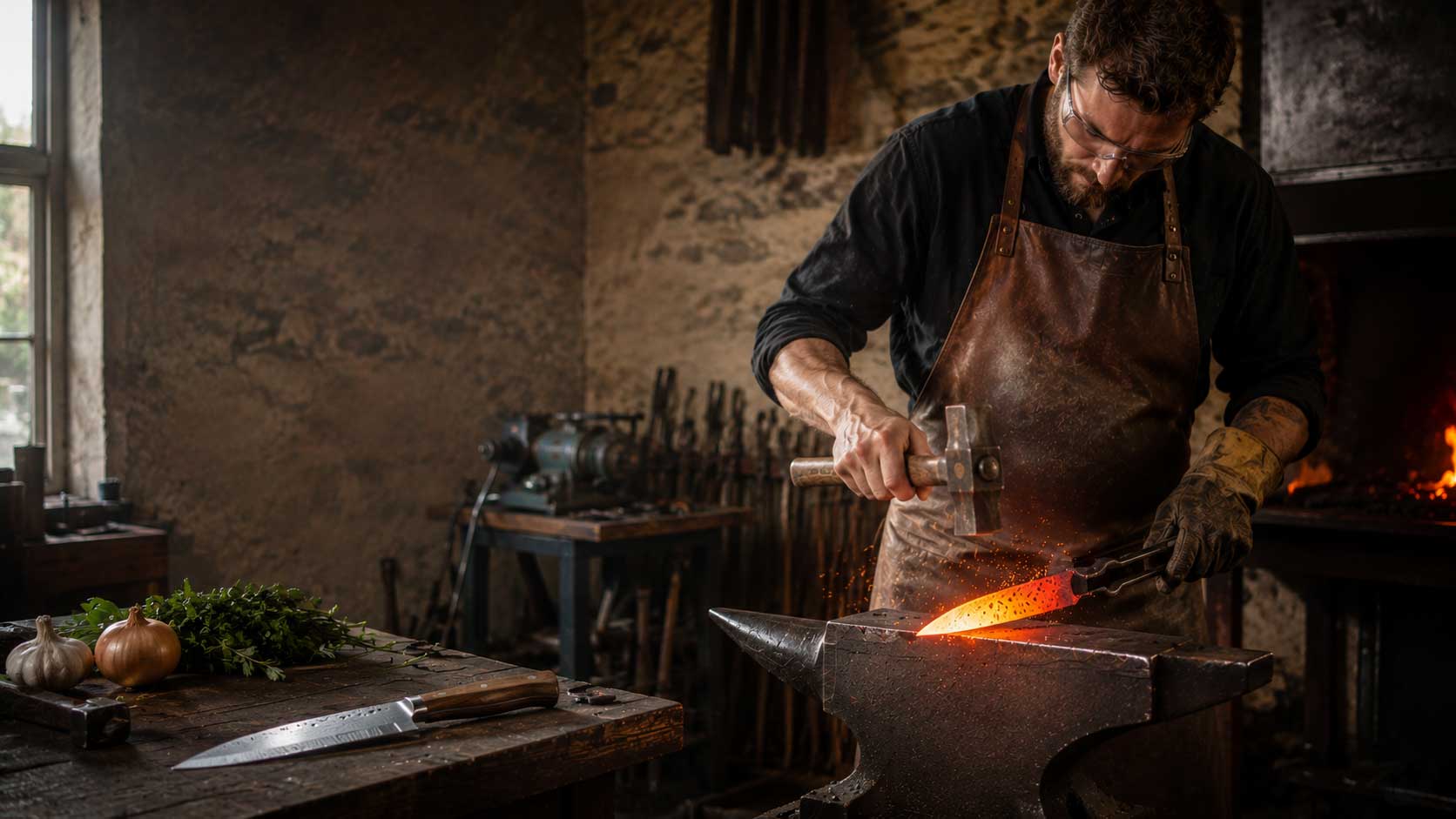
If you want to forge your own chef knife, it helps to understand why this kitchen tool matters so much. A chef’s knife gets more use than almost any other kitchen tool. You reach for it to chop a Tuesday-night onion or prepare a Sunday roast. Yet few home cooks consider where their most-used kitchen tool came from.
Most kitchen knives come from factories, where machines stamp blanks, grind edges and rivet handles. This production makes reliable knives affordable. However, if you want to forge your own chef knife, a hands-on knife making course offers a more personal experience.
I know because I run Soulful Iron, a forge in Stroud. Complete beginners spend a day turning raw steel into a practical kitchen knife. Afterwards, they take it home and use it. Having guided many home cooks through the process, I consistently see them treat their knives with greater care and understanding.
What You Learn When You Forge Your Own Chef Knife
Before making one, a knife may seem like a simple kitchen tool. You might know that premium models perform better without understanding why. Perhaps you prefer German or Japanese designs, or occasionally use a honing steel. However, shaping a cherry-red blade puts its geometry directly in your hands.
When you forge your own chef knife, every design choice starts to make sense. A thicker spine adds strength but can reduce agility. By contrast, a thinner edge slices cleanly but may chip more easily. You also learn how bevel angles and steel types affect sharpness, durability and edge retention.
It’s similar to when a home cook first bakes their own bread and then views supermarket loaves differently. Making something yourself provides a practical vocabulary that product labels cannot offer. Consequently, you can choose, use and maintain kitchen knives with greater confidence.
Why Knife Forging Feels Like a Digital Detox
A day at the forge usually lasts seven or eight hours. During that time, you heat the steel, shape it with a hammer, grind the profile and fit the handle. The process also includes hardening, tempering and sharpening the blade. Because your hands stay busy and the steel needs attention, checking your phone quickly becomes irrelevant.
Anyone who enjoys complex cooking will recognise the feeling. A slow ragu, fresh pasta or long-fermented sourdough can make time seem unimportant. Eventually, you become completely absorbed in the task. For cooks who find that focus restorative, working at the forge feels like a natural next step.
Why a Handmade Chef’s Knife Fits Better
Factory knives suit an average hand, but your grip may be different. Most home cooks simply adapt to an awkward handle or inconvenient balance point. Making your own knife lets you shape the handle around your natural grip. The weight and balance can also match the way you prefer to work.
That personalised fit matters more than it may seem. Usually, the knife you reach for is the one that feels comfortable and dependable. Once the blade fits naturally, you stop fighting the tool and start cooking with it. As a result, everyday chopping, slicing and carving can feel more controlled.
A Handmade Chef’s Knife Creates a Memorable Story
Cooks naturally collect stories about food and the kitchen. Perhaps yours involves a five-year-old sourdough starter or salt accidentally added to a pavlova. Another might feature a fishmonger demonstrating how to fillet a turbot. Saying, ‘I made this knife,’ belongs comfortably in that collection. When someone asks about it while you carve a roast, the story usually earns genuine interest.
People often ask whether a knife made in one day can perform well. Yes, it can. The result may not match a specialist custom gyuto, but it remains functional, balanced and properly sharp. Good carbon steel and correct blade geometry also make it durable and easy to sharpen. More importantly, its personal value encourages owners to maintain it properly.
How to Forge Your Own Chef Knife on a Knife Making Course
The day welcomes complete beginners, so previous metalwork experience is unnecessary. You do not need exceptional strength because heated steel moves more easily than many people expect. Tools, steel, safety equipment and instruction are all provided. In addition, small groups allow each participant to receive focused guidance at the anvil.
If you’re curious, the knife making course runs regularly at Soulful Iron in Stroud. The forge is about 90 minutes from Paddington by train, making the surrounding countryside ideal for a weekend visit. Moreover, gift vouchers remain valid for 12 months.
Most home cooks spend a lifetime using knives. Spending one day making one can transform how you understand your most important kitchen tool. For anyone ready to forge your own chef knife, a practical knife making course offers an experience that continues long after the forge cools.