



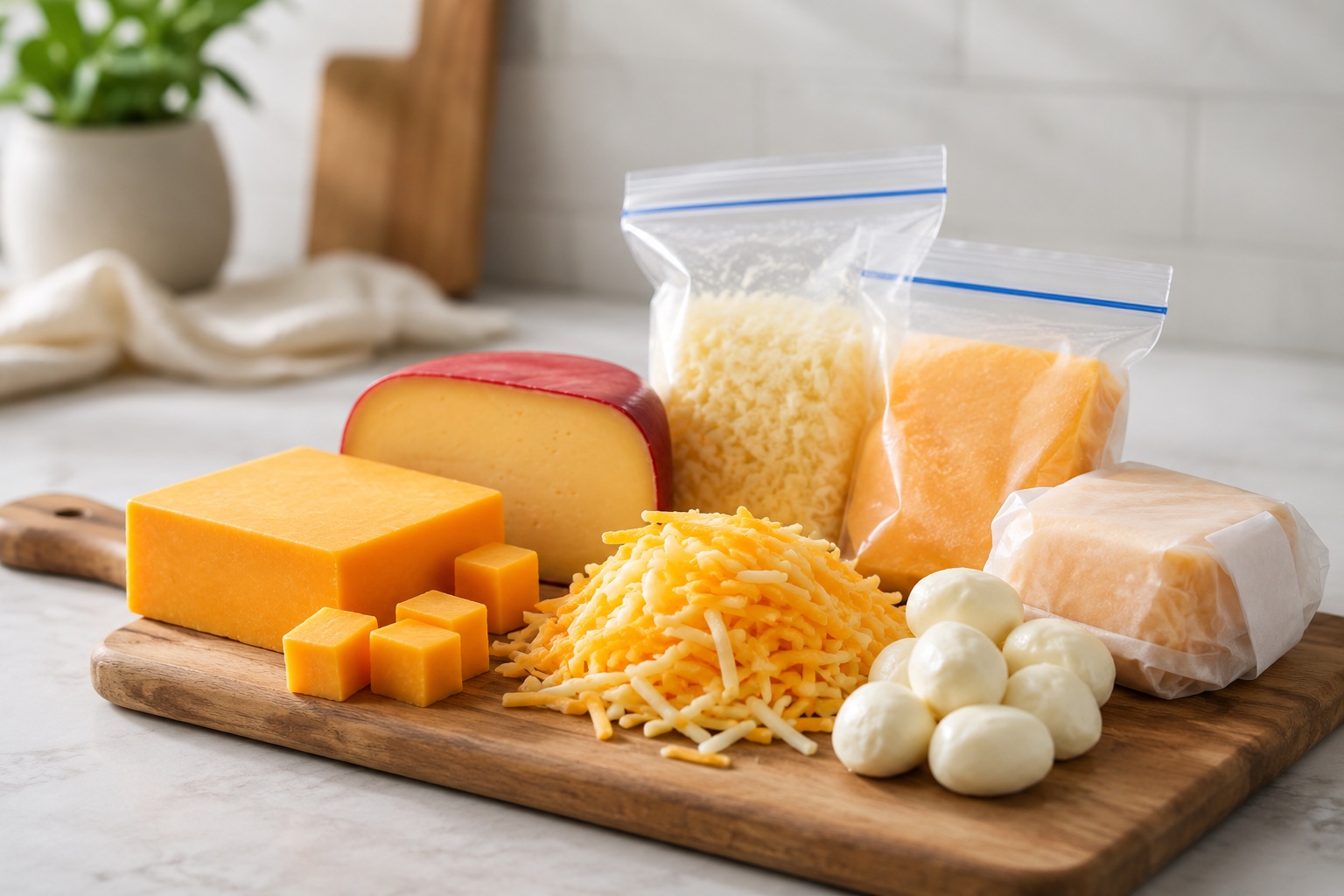
| QUICK ANSWER Yes, you can freeze many types of cheese. Hard and semi-hard cheeses such as cheddar, Gouda and Swiss generally cope best, although they may become slightly drier or more crumbly after thawing. Grated cheese is especially convenient to freeze. Soft, high-moisture cheeses such as ricotta, cottage cheese and some cream cheeses can separate or turn grainy, so they are usually better used in cooked dishes after freezing rather than served fresh. |
Buying cheese in a larger block can be good value, but it is not always easy to finish it before the quality starts to decline. Freezing can be a practical way to reduce waste, save leftovers and keep useful portions ready for cooking. The important point is that not every cheese reacts to low temperatures in the same way.
As FEAST has explored in its coverage of cheese trends in the UK, cheese varies enormously in moisture, fat content, ageing and texture. Those differences affect what happens in the freezer. A mature cheddar and a tub of ricotta may both be cheese, but they should not be expected to thaw with the same texture.
This guide explains which cheeses freeze well, which are better kept in the fridge, how to package cheese properly, how long to keep it for best quality and how to use it after thawing.
Key Takeaways
- Hard and semi-hard cheeses usually freeze better than soft, high-moisture cheeses.
- Grating or portioning cheese before freezing makes it easier to use only what you need.
- Freezing can change texture even when flavour remains acceptable, so thawed cheese is often best for cooking.
- Wrap cheese well and keep air exposure to a minimum to reduce freezer burn and odour transfer.
- Always check the pack instructions and freeze food before any applicable use-by date has passed.
What Happens to Cheese When You Freeze It?
Cheese contains water held within a network of proteins and fat. When that water freezes, ice crystals form. During thawing, the structure does not always return to exactly the same state, which is why some frozen cheese becomes more crumbly, dry, grainy or prone to releasing moisture.
The effect is usually more noticeable in cheeses with a lot of moisture. Firmer cheeses tend to have less free water and a denser structure, so they generally retain their usefulness better. This does not mean a frozen block of cheddar will be identical to a fresh block, but it can still be excellent for melting over pasta, adding to toasties or stirring into sauces.
That makes freezing particularly useful if you regularly cook dishes such as mac and cheese or use cheese as a topping for pizza and baked dishes.
Which Cheeses Freeze Best?
As a general rule, cheeses intended for grating, melting or cooking are the easiest to freeze successfully. The table below is a practical quality guide rather than a substitute for the storage instructions on the pack.
| Cheese type | Freezes well? | Likely texture after thawing | Best use after freezing |
| Cheddar | Yes | May become slightly crumbly | Sauces, toasties, pasta, baking |
| Gouda / Edam | Yes | Usually good, sometimes drier | Melting and cooked dishes |
| Swiss-style cheese | Yes | Can become more crumbly | Sandwich melts, gratins, cooking |
| Low-moisture mozzarella | Yes | Usually freezes well when grated | Pizza, pasta bakes, toppings |
| Parmesan / hard grating cheese | Yes | Generally holds up well | Grating directly into recipes |
| Feta | Fair | Can become more crumbly or watery | Baked dishes, salads if texture is acceptable |
| Brie / Camembert | Not ideal | Soft texture can change noticeably | Cooked dishes rather than cheeseboards |
| Ricotta / cottage cheese | Not ideal | May separate or turn grainy | Lasagne, bakes, fillings |
| Cream cheese | Variable | Can become grainy or crumbly | Cooking, icing or dips if texture is acceptable |
Can you freeze cheddar cheese?
Yes. Cheddar is one of the more freezer-friendly cheeses, particularly if you plan to cook with it later. For best results, divide a large block into smaller portions before freezing. You can also grate it first, which makes it easy to add straight to hot dishes without thawing the entire pack.
Frozen cheddar works particularly well in comfort-food recipes and melted toppings. If you are planning a full meal, FEAST’s guide to what to eat with mac and cheese has plenty of pairing ideas where grated cheddar can be put to good use.
Can you freeze grated cheese?
Yes, and this is often the most convenient method. Spread freshly grated cheese loosely in a freezer bag, remove as much excess air as practical and freeze it flat. Once frozen, you can break up any small clumps and take out a handful whenever you need it.
For pizza, pasta bakes, jacket potatoes and cheese-topped casseroles, there is often no need to fully defrost grated cheese first. Add it to the dish and allow the cooking heat to melt it.
If pizza is a regular use for your frozen mozzarella or cheddar, see FEAST’s ideas for what to serve with pizza for easy sides and meal combinations.
Can you freeze mozzarella?
Low-moisture mozzarella, especially the grated type sold for pizza, generally freezes well. Fresh mozzarella packed in liquid is more delicate because of its higher moisture content. It can be frozen, but expect more liquid and a softer or less springy texture after thawing.
If you freeze fresh mozzarella, it is sensible to use it later in a cooked dish rather than relying on it for a fresh caprese-style salad where texture is a major part of the experience.
Can you freeze Parmesan?
Hard grating cheeses such as Parmesan-style cheese are well suited to longer storage because they contain less moisture than soft cheese. Grating before freezing is convenient, and the cheese can often be used directly from frozen in pasta, soups, risotto or baked dishes.
Can you freeze Brie, Camembert and other soft cheeses?
You can freeze many soft cheeses, but the bigger question is whether you will enjoy the result. Brie and Camembert may lose some of their smooth, creamy texture after freezing and thawing. If presentation and texture matter, such as on a cheeseboard, fresh is usually the better choice.
If the cheese is destined for a cooked starter instead, the texture change may matter less. FEAST’s appetiser recipe guide includes ideas built around cheese, dips and sharing plates where leftover cheese can be repurposed creatively.
How to Freeze Cheese Properly
Good packaging matters as much as the type of cheese. The aim is to limit air exposure, prevent freezer burn and stop the cheese absorbing smells from other foods.
- Portion it first. Cut large blocks into amounts you are likely to use at one time. Smaller portions freeze and thaw more evenly and prevent repeated thawing of the same block.
- Wrap tightly. Wrap blocks or wedges closely in suitable freezer wrap, then place them in a freezer-safe bag or airtight container. Press out excess air where possible.
- Freeze grated cheese flat. Place grated cheese in a thin layer inside a freezer bag. Freezing it flat saves space and makes it easier to remove small amounts.
- Label clearly. Write the cheese type and freezing date on the packaging. This prevents mystery bags and helps you use older food first.
- Keep the freezer cold. A domestic freezer should be maintained at about -18°C. Avoid leaving the door open for long periods, which can cause temperature fluctuations.
Freezing is also a useful food-waste habit. FEAST has previously covered common foods many people do not realise they can freeze, alongside broader ideas for eating more sustainably and reducing waste.
How Long Can You Freeze Cheese?
There is no single perfect freezer time for every cheese. Storage advice varies by cheese type, packaging and manufacturer, and freezer recommendations are usually about maintaining quality rather than making a frozen food suddenly unsafe on a particular day.
For the best eating quality, use frozen cheese within a few months where practical. Hard and semi-hard cheeses generally tolerate longer frozen storage than very soft cheeses. Grated cheese is convenient to keep in rotation because small amounts are used frequently, reducing the chance that it will sit forgotten at the back of the freezer.
If the cheese has a use-by date, freeze it before that date passes. If the pack says the product is unsuitable for freezing, follow the manufacturer’s instructions.
How to Defrost Cheese Safely
For blocks, wedges and soft cheeses, the simplest method is to move the portion from the freezer to the fridge and allow it to thaw gradually. Keeping it wrapped while it defrosts helps reduce moisture loss and limits the chance of it picking up odours.
UK Food Standards Agency guidance on freezing and defrosting food describes freezing as a way of pausing deterioration and advises consumers to follow pack instructions and defrost food correctly. For a general household rule, avoid leaving perishable food to thaw for long periods on a warm kitchen worktop.
Once thawed, use the cheese promptly and follow the label instructions. If the texture has become crumbly or slightly watery but the cheese has been stored and defrosted correctly, using it in a cooked dish is often the best way to make the most of it.
Can You Refreeze Cheese?
Repeated freezing and thawing is not ideal for quality. Each cycle can cause further moisture loss and texture damage. The better approach is to freeze cheese in smaller portions so you only defrost what you need.
If a cheese has been thawed, always consider how it was handled, how long it has been out of refrigeration and what the packaging says before deciding what to do next. When in doubt, prioritise food safety over saving a small amount of cheese.
Best Ways to Use Cheese After Freezing
Thawed cheese does not need to look perfect to be useful. In fact, cooked dishes are where frozen cheese performs best because melting, stirring or baking makes small texture changes far less noticeable.
- Pasta sauces and macaroni cheese
- Pizza and flatbread toppings
- Lasagne and pasta bakes
- Cheese toasties and grilled sandwiches
- Jacket potato toppings
- Omelettes, frittatas and savoury bakes
- Soups, gratins and casseroles
- Scones, muffins and other savoury baking
For dishes that already combine cheese with sauce and pasta, texture changes are rarely a major problem. FEAST’s guide to lasagne storage and shelf life is useful if you are also planning to store or freeze a finished meal rather than the cheese on its own.
Common Mistakes When Freezing Cheese
Freezing a huge block: A very large block takes longer to thaw and encourages you to defrost more than you need. Portion first.
Leaving too much air in the pack: Air exposure increases the risk of freezer burn and can dry the surface.
Expecting soft cheese to thaw perfectly: High-moisture cheese may separate. Plan to cook with it if texture changes.
Forgetting to label it: Dates and names matter once several similar freezer bags are stacked together.
Using freezer storage to rescue already spoiled food: Freezing does not make spoiled food fresh again. Freeze cheese while it is still in good condition and within its date guidance.
Ignoring the manufacturer’s label: Packaging instructions are product-specific and should take priority over general advice.
The same principle applies across the kitchen: smarter storage starts before food is on the verge of being thrown away. FEAST’s tips on minimising food and packaging waste explore other practical ways to reduce unnecessary waste.
Is Frozen Cheese as Good as Fresh Cheese?
For a cheeseboard, delicate sandwich or dish where texture is central, fresh cheese usually wins. For cooking, the difference can be much less important. A slightly crumbly cheddar still melts; grated mozzarella still browns; Parmesan still adds savoury depth.
The useful question is therefore not only “can you freeze cheese?” but “how will I use it afterwards?” If you freeze with the final dish in mind, you are much more likely to be happy with the result.
Readers looking for more inspiration can browse FEAST’s Food & Drink section and Recipe section for practical ways to turn stored ingredients into meals rather than waste.
Frequently Asked Questions
Can you freeze cheese slices?
Yes, many firm cheese slices can be frozen. Separate slices with baking parchment if they are likely to stick together, then wrap or bag them well. They are best used in toasties, burgers or other melted dishes after thawing.
Can you freeze a block of cheese?
Yes. Hard and semi-hard blocks can be frozen, but smaller portions are more practical. Large blocks can become more crumbly and take longer to thaw.
Can you freeze shredded cheese in the original bag?
If the unopened packaging is suitable for freezing and the manufacturer allows it, you may be able to freeze it as sold. Once opened, remove excess air and seal the bag well or transfer the cheese to a freezer-safe container.
Can you freeze cheese sauce?
Many cheese sauces can be frozen, although they may separate slightly after thawing. Reheat gently and stir or whisk to help bring the sauce back together. Sauces thickened with dairy or starch can vary, so freezing a small test portion is sensible if quality matters.
Can you freeze cottage cheese?
It can be frozen, but the texture commonly becomes grainier and more watery. It is usually better used after thawing in lasagne, pancakes, bakes or other cooked recipes rather than eaten plain.
Can you freeze cream cheese?
Yes for some uses, but freezing can make cream cheese crumbly or grainy. It is normally more successful in cooking, baking, icing or dips than as a smooth spread after thawing.
Does frozen cheese go bad?
Freezing at a consistently cold temperature greatly slows spoilage, but quality still declines over time and poor packaging can cause freezer burn. Always consider how the cheese was stored before freezing, follow label instructions and discard food that shows clear signs of spoilage after thawing.
Can I cook with cheese straight from frozen?
Grated hard or semi-hard cheese can often go directly into hot dishes such as pizza, pasta bakes and sauces. Larger blocks and soft cheeses are easier to use after thawing in the fridge.